Cannes Film Festival

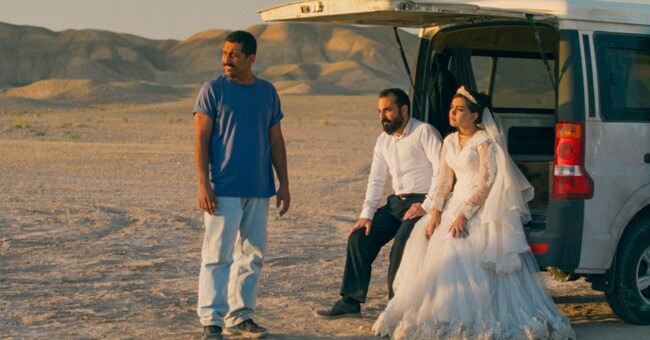
"A Simple Accident', Jafar Panahi masterful

The Iranian dissident director has signed a film of great intensity: to be rewarded
by Andrea Chimento

3' min read

3' min read

Jafar Panahi's presence on the red carpet was, for fans, one of the biggest thrills of recent years: in competition at Cannes was 'A Simple Accident', signed by one of the most committed auteurs of world cinema, who finally came out of Iran and paraded on the famous steps of the Croisette to accompany his latest work.

House arrest, time in prison, and a ban on making films never stopped the great artist, who was able to show how cinema is a weapon to fight against injustice and is something that cannot be stopped in any way.

Loading...

After the very powerful 'Bears Don't Exist', Panahi makes a full return to fiction cinema to tell the story of a small group of people, convinced they have found the persecutor who tortured them in the past and ready to take revenge.

Many of the typical themes of Panahi's cinema can be found in this film, shot without permission, starting with that of the journey and the use of a microcosm of characters to narrate something much broader and universal.

The vision opens with a family travelling at night when their car accidentally hits and kills a dog: with this small sequence, Panahi immediately begins to talk about the themes that he will be interested in developing later on, between a sense of justice and oppression.
A memorable ending

.

"A Simple Accident" is an extremely successful socio-political allegory, capable of alternating the tones of farce with those of tragedy, combining them to arrive at a result of great dramaturgical and stylistic strength. Together with the characters, we spectators are also faced with moral dilemmas and questions about how we would behave if we were really confronted with our alleged persecutor.

However, in such a dark and brutal operation, there is room for a great deal of humanity, demonstrated above all by a touching sequence in which the wife of the alleged torturer is ready to give birth to her second child.

If the film already has an overall enviable staying power, the growth of the concluding part is impressive, thanks above all to a very long piano-sequence, in which the victims find themselves deciding what to do with their alleged tormentor, which is likely to remain as one of the most cinematically significant moments of the year.

This is followed by a final scene, entirely consistent with the cinema of the director of 'Taxi Tehran', which will remain in the minds of those who have seen it for a long time, even after the credits have finished. The feeling is that the film will end up on the palmarès, enriching its director's already very rich trophy cabinet of awards.

A Magnificent Life

A Magnificent Life

Away from the competition spotlight, 'A Magnificent Life', Sylvain Chomet's much-awaited return to animated cinema, fifteen years after the beautiful 'The Illusionist', is also positively remarkable.

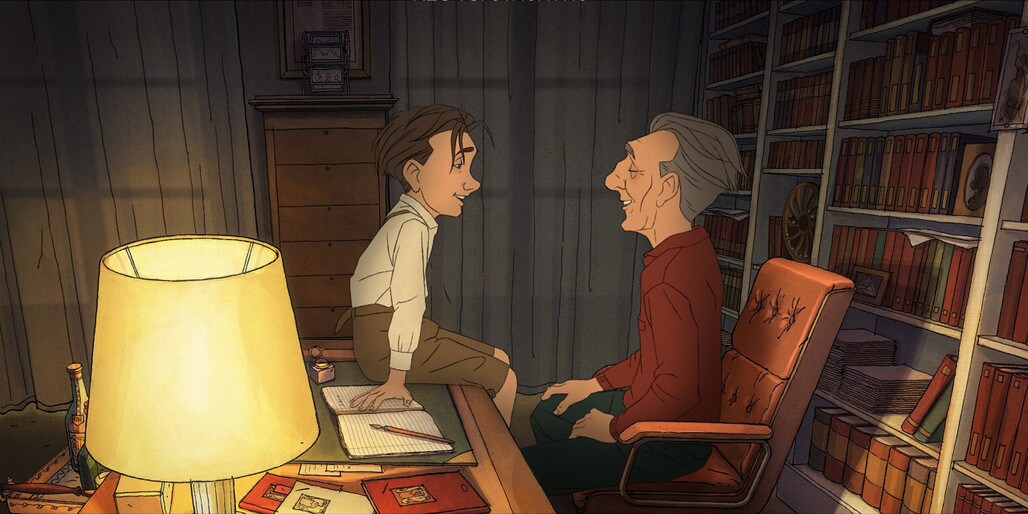
At the centre of the plot is the figure of Marcel Pagnol, the great playwright and film director, to whom Chomet dedicates a truly touching work.

The film opens with Pagnol ready to write a novel about his existence: on paper, he can recount his childhood, his Provence, his first loves. As he drafts the first pages, the child he once was, little Marcel, suddenly appears to him, bringing back memories word after word.

With his classic animated style, able to evoke the past of this technique, Chomet directs a true poem in motion, capable of reflecting on the power of the word in cinema, after he had reasoned extensively on the language of silent cinema in his previous works (in addition to 'The Illusionist', based on a script that was never completed by Jacques Tati, 'Appointment in Belleville' should also be mentioned).

Perhaps compared to his past titles, 'A Magnificent Life' is more schematic, but the strength of the images and the emotional force with which Chomet recounts Pagnol make one overcome any doubts in the face of an operation that we hope very soon to be able to see again in Italian cinemas.

Copyright reserved ©
Loading...

Brand connect

Loading...

Newsletter

Notizie e approfondimenti sugli avvenimenti politici, economici e finanziari.

Iscriviti