Family & Trends

A solution for Bernard Arnault

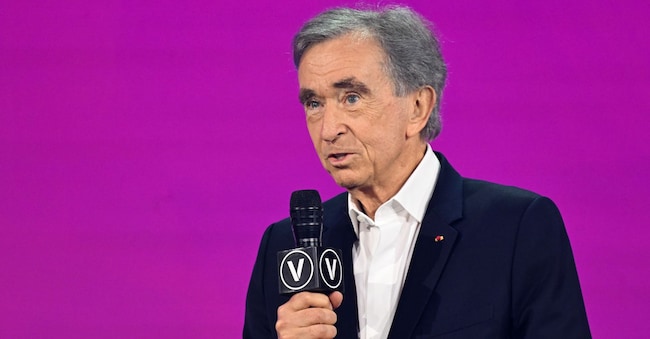
Bernard Arnault, amministratore delegato del gruppo francese del lusso LVMH. (AP Photo/Emma Da Silva)

6' min read

Translated by AI
Versione italiana

6' min read

Translated by AI
Versione italiana

The latest familyandtrends stated: “For Bernard Arnault, the main dilemma remains: who to appoint as his successor”; among the recurring comments on the article was the question of which of his sons was the most suitable. The answer is all of them.

Arnault inherited a property business; he is therefore not a first-generation entrepreneur, but he is a (co-)founder of LVMH. The journalists at *Le Monde* did not dwell on this important fact; instead, they chose to focus on: “he has a lift all to himself”, “he makes a point of arriving at meetings exactly one minute after everyone else [to show that he is the boss]”, “he has installed an app on his phone that displays the group’s figures, shop by shop”, “he is perfectly capable of turning up at a meeting with a clockwork mechanism in his hand or examining the closure of a handbag from every possible angle”. Their surprise is more surprising than Arnault’s behaviour itself: if the ‘Gauche Caviar’ spent a little more time in the business world, they would know that such behaviour is commonplace amongst a great many entrepreneurs. Admittedly, the business of having shop-by-shop data on his phone certainly sparked a bit of envy among the five entrepreneurs who read familyandtrends and a few headaches for their IT managers, who were immediately contacted to get the same thing, but otherwise it’s all about efficiency and an obsession with the product: things at which Italian entrepreneurs are world-class.

Loading...

As with any founder, however, it is not possible for Arnault to be succeeded by just one person. The founder embodies all three of John Davis’s spheres: family, property and business; to ensure continuity, it is necessary to create a system – one which, in the experience of familyandtrends, is also rather sophisticated. Here is a proposed solution for Bernard Arnault.

The roles must be allocated on the basis of the CVs of the five children; a rota must be drawn up and then adapted over time, in this proposed ‘solution for Arnault’, this will take place in four phases in order to address the twenty-three-year age gap between Delphine, the eldest daughter from his first marriage, and Jean, the youngest son from his second marriage. It is also necessary to establish certain family governance structures, for which there is currently no evidence, and for each successor to hand over their delegated powers, not the business itself; so that each position is held for a fixed term but membership is for life. Below is an initial proposal for the future of the five children; naturally, this will then need to be refined, adapted and amended under the responsibility of a committee (which may be part of the board) comprising trusted individuals. The first steps will take place in 2032, when Bernard will be 83 years old and two years away from the age limit of 85: the period 2026–32 will be crucial for validating the assumptions made; this will provide a clear roadmap of how things will unfold if the successors meet expectations. Should they not, the committee will be able to refine, adapt and even completely overhaul the plan.

Frédéric is to become PDG (Chairman and Chief Executive) of LVMH. He will play a leading role in the management of the group; indeed, he is the only person to have completed the full cycle: strategy and digital development at TAG Heuer, managing director of the same brand, then CEO of a multi-brand division (Hublot, TAG Heuer, Zenith), and then, from 2025, CEO of Loro Piana, the group’s third-largest brand by revenue and the most challenging in terms of its supply chain. He is the only one of the brothers to serve as General Manager of Financière Agache, the intermediate holding company between the limited partnership and the operating subsidiaries. In 2032, when he takes up the post of CEO, he will be 38 years old; for those who may have doubts about his young age, it is worth recalling that Bernard acquired Boussac/Dior at the age of 35.

Delphine will be chair of Agache Commandité and of the “Conseil de Surveillance”. She will play a leading role in the ownership structure and will retain her position as non-executive chair of Christian Dior Couture. She is already chair of the limited partnership and has the longest service record, both in terms of age and length of service with the company. Her background includes EDHEC and the LSE, McKinsey, and twenty years at Dior and Louis Vuitton; she has served on the board of directors and the executive committee of LVMH, and has extensive experience in other sophisticated governance structures, for example as a director at Ferrari and Havas. The move from Chief Executive Officer to Chair of Dior would not be a demotion: it is a shift from the sphere of management to that of ownership. This would introduce a further element of balance into the system, with a CEO in a supporting role and a chairperson in the lead. She will also need to play a permanent role as custodian of the group’s creative talent: this is a function she already fulfils, having created and presided over the group’s award for young designers for over a decade. As Bernard himself pointed out in his masterful letter of reply to *Le Monde*, in the luxury sector the scarce resource is not capital, but creative talent. It is, moreover, a role that no external manager could fulfil with the same legitimacy.

Antoine will be chairman of Christian Dior, the (newly formed) family council and the foundations. He will play a leading role at the heart of the entrepreneurial family. His background includes degrees from HEC and INSEAD, twenty-five years’ experience in branding, communications and sustainability, an operational presence within the group’s media arm, and non-executive chairmanships at Berluti, Loro Piana and Les Journées Particulières. He is the brother with the greatest network of relationships and reputation, and throughout his career he has shown less focus on day-to-day operations and financial results. He will be the guardian of the family’s identity, the point of contact with the government and the press, and responsible for patronage. He is also the only one who has already demonstrated the ability to speak on behalf of the entire family. He, too, will have a permanent role: institutional ambassador and guardian of the entrepreneurial spirit. What the family risks losing in the succession is not a person, but the very essence through which a maison is acquired, repositioned and grown. If it remains solely in the founder’s mind, it dies with his passing. Codifying and teaching this through the training programmes the group already has in place for management and artisan trades is a key task; it requires family authority, and it would be difficult for an external consultant or manager to do this in the family’s place. It is the difference between finding the best manager and ensuring an entrepreneurial vision for every generation. From 2030 onwards, and for an indefinite period, Antoine will hold the permanent role of institutional ambassador and guardian of the entrepreneurial spirit.

Alexandre will be Deputy Chief Executive, responsible for M&A and development. He will play a leading role in managing acquisitions. He is the only one with proven experience in extraordinary transactions: he acquired Rimowa at the age of twenty-four and led the company for four years; he managed the integration and repositioning of Tiffany following a $15.8 billion acquisition; since 2025, he has been Deputy Chief Executive of Moët Hennessy, where he led a restructuring involving a 13 per cent reduction in the workforce, in a division in which Diageo holds a 34 per cent stake. He will be entrusted with the art of deal-making, a trait that has always characterised Bernard and the entrepreneurial spirit of LVMH.

Jean, aged 28 and the youngest of the group, will have to prove himself in order to progress and still has a great deal to demonstrate; he could do so within the Montres & Joaillerie division (Tiffany & Co., Bulgari, TAG Heuer, Hublot, Zenith, Chaumet and Fred). In the future scenario outlined here, his role will be in management, with progressive advancement. His CV includes a degree in mechanical engineering from MIT and a degree in finance from Imperial College, training in watchmaking, and the building from scratch of Louis Vuitton’s haute horlogerie division; he could become a true master of the family’s craft, the only one with technical product expertise in the watches and jewellery sector (he would essentially be the one to ‘turn up to a meeting with a watch movement in his hand’, as Le Monde reports Bernard does today). He will need to develop his skills by tackling a profit and loss account, perhaps at a medium-sized maison for two to four years, then within a division. He will also take on the role of chair of the New Generations Committee within the family council: given his age and future standing, he is the one who, more than anyone else, will have a vested interest in being involved and will command credibility amongst the third generation.

This is the first proposal for continuity that familyandtrends would put forward to Bernard if asked; Arnault will certainly have better advisers. As the French entrepreneur said, LVMH’s legacy “is nurtured, protected and passed on”: it is entirely up to him to decide how.

Loading...

Lecturer in Family Business Strategy – University of Turin – bernardo.bertoldi@unito.it

Copyright reserved ©
Loading...

Brand connect

Loading...

Newsletter

Notizie e approfondimenti sugli avvenimenti politici, economici e finanziari.

Iscriviti