European Union

One step closer to the EU: Western Moldova looks to Brussels

Along the Romanian border, Europe is already an everyday reality: people cross the Prut to shop, work in Romania and benefit from EU funds for schools, roads and cultural centres

by Oxana Bodnar

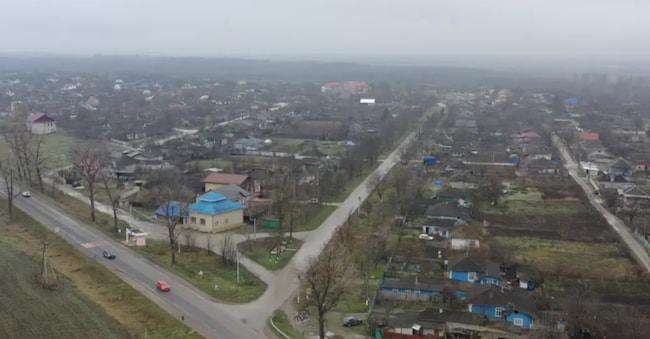
Zagarancea (© HotNews).

4' min read

Translated by AI
Versione italiana

4' min read

Translated by AI
Versione italiana

A few kilometres from the Romanian border, in the western regions of Moldova, Europe is not a geopolitical abstraction but a concrete experience: higher salaries, modern infrastructure, more efficient public services. Those who live along the Prut - the river that separates Moldova from Romania and coincides here with the EU's eastern border - know first-hand what it means to be EU citizens. And many aspire to those same conditions without having to cross the border.

An official candidate for membership since 2022, Moldova reaffirmed its European orientation in the 2025 parliamentary elections, when the Action and Solidarity Party (PAS), led by President Maia Sandu, won a clear parliamentary majority. But the election result did not erase the internal rifts: more than half of the voters who did not choose PAS turned towards the Patriotic Bloc, an openly pro-Russian formation. A polarisation that is not only political, but also geographical and identity-based, and which makes Chișinău's European path as strategic as it is fragile.

Loading...

Iași closer than Chișinău

For many Moldovans living close to the Romanian border, Russia is distant not only geographically, but also in their collective imagination.

In order to understand what it is like to live just across the EU's eastern border, I visited two families in Zagarancea, in the Ungheni district. Iași, the main centre of north-eastern Romania, is only fifteen kilometres away as the crow flies; the Moldovan capital, Chișinău, is over 120 kilometres away.

Vitalie Scripcaru has been a music teacher for 30 years and now runs the cultural centre in the village. He not only works with children, but also organises activities for the elderly. He greets me on a Sunday in late December with his wife, daughter, son-in-law and grandchildren: hot tea, homemade cakes and the stove on.
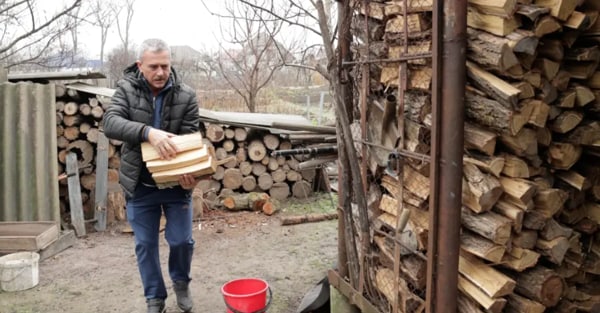
Vitalie fuori dalla sua abitazione (© HotNews)

The family recently bought a TV set and is thinking of buying a second one. For such expenses they usually cross the border. "I arrive in Iași very quickly, because we are practically on the bank of the Prut. I bought the TV in Iași because it is cheaper there and the VAT is also reimbursed,' says Vitalie.

The reference is to the tax-free regime, which allows non-EU residents to obtain VAT refunds on purchases made at authorised establishments, provided that the gross value of the goods exceeds EUR 175.

A motorway between Romania and Moldova

Iași is already part of everyday life in Zagarancea, but soon it will be even more so. With funds from the EU's SAFE programme, the first kilometres of the motorway link between Romania and Moldova are under construction.

A new bridge over the Prut will be built in the vicinity of the village and is expected to be in operation by autumn 2026. The project is worth a total of EUR 30 million, of which EUR 16.4 million will be financed by the EU.

'To go to Romania now we have to go over the Sculeni bridge: it takes thirty minutes to get there, then we stay at the customs for one or two hours, depending on the day - but when the new bridge is ready we will be able to reach Iași in twenty minutes,' Vitalie adds.

According to him, Moldova's entry into the EU could at least partially reverse the migration flow of recent years. In 2004, the municipality of Zagarancea had 3,300 inhabitants; today there are about 2,900.

'Many of our neighbours have gone abroad, to Europe; some have even left for Russia. With the situation in our country after independence, life here has not been very easy,' he says.

Cristina, the daughter, worked for the municipality before her parental leave as part of a project financed with European funds: 'We never thought of leaving: we want to live in the country, we want to work in the country, we want to raise our children here.

Between 2021 and 2025, Zagarancea benefited from 16 million Moldovan lei from national and European programmes - approximately 810,000 euro - according to data provided by the local authorities.

"I see my future here"

After the Scripcaru family, the visit continues to Semeni, another village in the Zagarancea municipality. Maria Cimpoeș and two of her children, Rafael and Tatiana, live here; the eldest is studying medicine in Chișinău.

Maria has been working for eighteen years as a nurse at the district hospital in Ungheni. "I love my job, I do it with dedication and empathy towards anyone who suffers," she says.

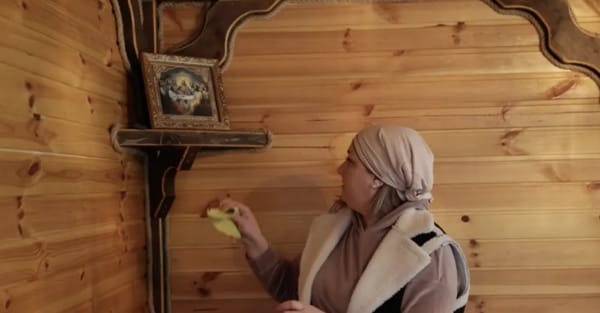
Maria (© HotNews)

Rafael and Tatiana are part of the local dance group 'Unghenenii'; Tatiana also studies piano. "I like dancing and promoting Moldavian traditions. We went to Romania for several competitions; there I saw a country much more developed than ours,' Rafael says.

Maria lists the projects implemented thanks to European funds, including the renovation of the Palace of Culture in Ungheni, which now offers more opportunities to young people in the area.

She is convinced that Moldova also has a lot to offer. 'Beautiful people, both in appearance and soul, and beautiful values that we cherish and preserve,' she says. And Tatiana concludes: 'I also see my future here at home.

*This article was written by Oxana Bodnar (HotNews) and is part of the EU project NEIGHBOURS east, a journalistic collaboration between newspapers from European countries.

Copyright reserved ©

Brand connect

Loading...

Newsletter

Notizie e approfondimenti sugli avvenimenti politici, economici e finanziari.

Iscriviti