
A super fighter jet to shift Tokyo’s strategic stance
Japan is increasingly aware of its role in maintaining the political and military balance in the Asia-Pacific region
by our correspondent Marco Masciaga
 Aggiungi Il Sole 24 Ore
ai preferiti su Google
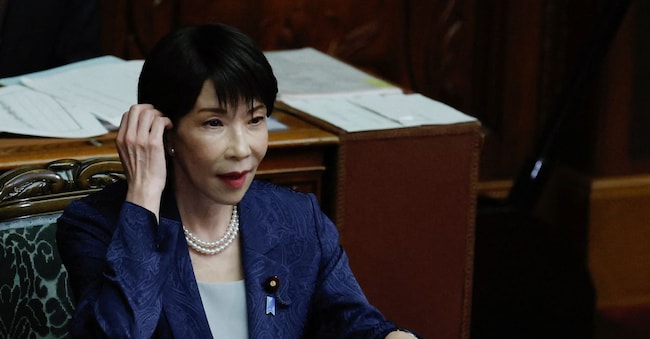
NEW DELHI - When Japanese Defence Minister Shinjiro Koizumi attended the Farnborough International Airshow last July, he did so in a dual capacity. That of both buyer and seller. Spurred on by Prime Minister Sanae Takaichi, Tokyo has accelerated a process that began in 2016, when then Prime Minister Shinzo Abe coined the concept of the Free and Open Indo-Pacific.
Over the past 12 months, the most notable initiatives have been the decision to make clear the inevitability of intervening alongside Taiwan in the event of a Chinese invasion; the faster-than-expected increase in the defence budget and the lifting of many restrictions on arms exports.
Of the three new developments, the one that could not fail to attract attention at Farnborough was the third. Not least because Koizumi posed for a photograph alongside a 1:1 scale model of the sixth-generation fighter that will be at the heart of the Global Combat Air Programme (GCAP), the trilateral project involving the United Kingdom, Italia and Japan.
In addition to the development of a manned aircraft, the programme developed by Edgewing – a joint venture between the British firm BAE Systems, the Italian firm Leonardo and the Japanese firm JAEIC – aims to create an air combat ecosystem, integrating advanced sensors, artificial intelligence and the ability to operate in coordination with autonomous and unmanned systems.
The development of the most ambitious defence programme ever undertaken by Japan is taking place against a backdrop of rapid change. This is due to China’s growing assertiveness and the United States’s reduced willingness to provide assurances to its Asian allies. It is no coincidence that Japan is rapidly rethinking its strategic posture.

