
A supply chain worth 9% of GDP: all the numbers of logistics
The sector employs 1.4 million people, has a turnover of more than 120 billion and handles 1200 million tonnes of goods

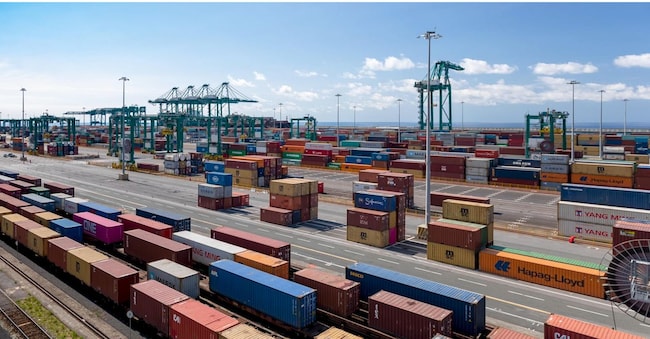
A sector worth 9% of Italy's GDP, which is the third largest in the European Union with a market share of around 10%, which employs 1.4 million people and is made up of several tens of thousands of companies including transport companies, logistics operators, and couriers. The logistics system in Italia - considered by some to be just a hidden supply chain, by others a real engine of the economy - boasts important numbers but an efficiency that is not yet top-notch, if it is true that the World Bank's performance index ranks it 19th in the world. Industrial companies, says a Contship-SRM Intesa Sanpaolo report, consider it to be one of the decisive factors for their competitiveness and, a recent analysis by Cassa Depositi e Prestiti, assesses its multiplier effect on the national economy: for one million invested in the sector, 2.1 million are generated in additional overall production.
Companies, vehicle fleet and goods transported
The sector - to which various studies attribute around 80-85 thousand companies between transport, warehousing services and couriers, even though the National Road Transport Register alone (according to the 2025 statistics of the official magazine TIR) counts over 99 thousand active companies - sees a clear imbalance in favour of transport companies compared to those in the services sector and a marked fragmentation with a few large national groups and a multitude of micro and small companies. In the road haulage sector, although companies with no more than 5 vehicles at their disposal account for more than half of the total, those that have increased at a significant rate in recent years are those that are more structured and have a larger fleet: the number of companies with more than 100 vehicles is close to 1100. Hauliers specialising in the transport of perishable goods at controlled temperatures are growing both in number (65 thousand) and in vehicles (184 thousand), those authorised for hazardous goods are stable at 6300 with a fleet of over 50 thousand vehicles. In total, the circulating fleet of companies operating on behalf of third parties exceeds 900 thousand units: among trucks alone, 60% are Euro 6 class while electric vehicles are less than 1% but growing rapidly, a sign of the desire for renewal.
In 2024, 1200 million tonnes of goods were transported, 90% by road (in 10 years this segment has grown by 30%) and the rest by rail. In road transport, Italia has a share of more than 8% in Europe despite having a less developed motorway network than other EU countries, while in rail transport it is more than 6% despite having less infrastructure than Germany and Poland. Looking at volumes, transport for third parties is widely dominant, especially as delivery distances increase.
The challenges: from intermodal to consolidation
And the challenges of the future? According to Contship-SRM, they are first and foremost intermodality, which is still little used among both manufacturers and logistics operators, and digitalisation, for which 6 out of 10 companies will increase their resources in the next five years. AI solutions are still for very few. Another trend is that of competitive selection, whereby more structured companies are growing and the number of aggregation operations is increasing.
Economic Uncertainty and Contracts
In the immediate future there is also the need, in the face of heightened uncertainties in the economic environment, to regulate the relationship between principal and supplier of logistics or transport services more precisely. According to the Contract Logistics Observatory of the Politecnico di Milano, today's contracts make much more use of indexation to protect against the various cost variables (fuel, Istat adjustments, labour costs, Ets, energy costs) and the updating of contracts is more frequent. But risk management clauses are also changing and there is a demand for structured collaboration to find shared solutions in a rapidly changing framework.


