Mediterranean

A trip to Malta, Caravaggio’s unusual island

This small archipelago (comprising Gozo and Comino) is a treasure trove of natural beauty, millennia of history and Baroque towns; it is also home to new, fashionable venues and trendy hotels

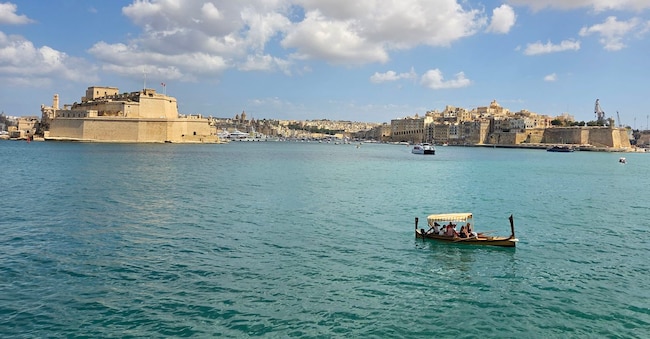
La baia della Valletta: sullo sfondo le città di Vittoriosa e Cospicua Simone Filippetti

8' min read

Translated by AI
Versione italiana

8' min read

Translated by AI
Versione italiana

Along the busy and chaotic Triq Santu Wistin, one of the first signs you come across as you walk towards the beach at St. George’s Bay in Malta is that of the EF school, famous for its international English courses. The town of St Julian’s is the heart of the island’s nightlife, and has always been a hub for young people who, after their morning lessons, flock to the beach in the afternoon and to the maze of disco-bars in the evening. Now, however, a new complex is transforming the area into a destination for adults and more sophisticated tourists as well.

Viaggio a Malta

Photogallery6 foto

Once upon a time, there were study holidays

This small Mediterranean archipelago, which also includes Gozo and the islet of Comino – home to the most beautiful beaches – has for decades been associated solely with summer language schools: this is a legacy of Malta’s history, as it was a British colony for a century and a half; indeed, in the past, St Julian’s Beach itself was home to a garrison of British soldiers devoted to the country’s patron saint: hence the name of the bay, which today is dotted with private parasols belonging to the various modern hotels lining its shores.

Loading...

Geography has shaped the history of the country, the smallest in the European Union but also one with an ancient past: for millennia, right up until the invention of motorised ships, Malta was an essential stopover for voyages across the Mediterranean. From the Romans, who conquered it after the Second Punic War against Hannibal, right up to Napoleon during his Egyptian campaign, all the sailing ships that plied the seas had a limited range, and nature placed the island right halfway between Sicily and Africa. And again during the Second World War, Malta served as a base for the British fleet, and it was from there that the invasion of Sicily was launched. Everyone, sooner or later, passed through Malta: the Apostle Paul, on his journey to Rome, ended up on the island after his ship was wrecked. Even the illustrious Michelangelo Merisi, better known as Caravaggio, during his wanderings as a fugitive, landed in Valletta, where he was hosted by the Knights Templar.

The first known settlers on the island were the Phoenicians, and even today the eyes decorating the bows of many boats are a Punic legacy, but the island was already inhabited: around 5,000 BC, unknown Sicanic peoples built a Mediterranean Stonehenge, 1,000 years before the Pyramid of Cheops (the site of Hagar Qim can still be visited today).

Between Magaluf and Crete

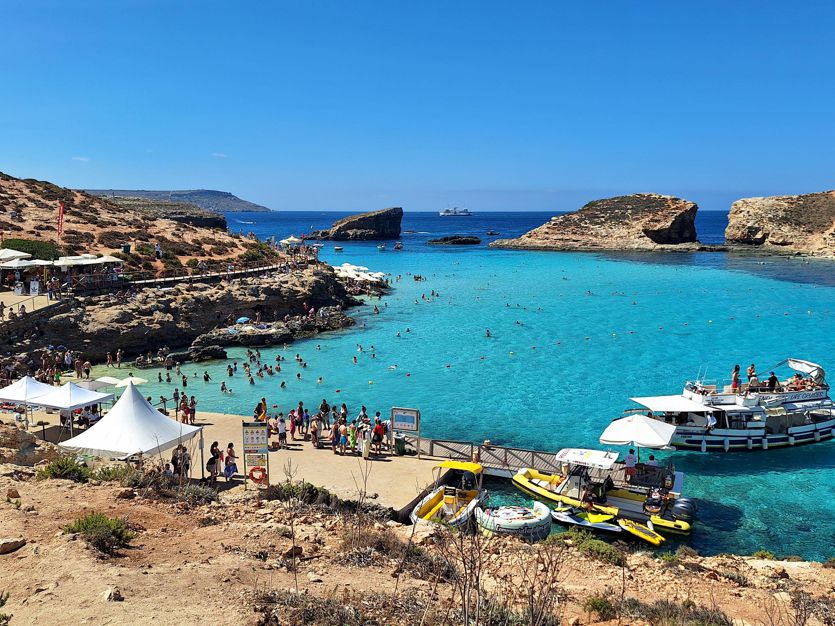
It may not be the first choice that springs to mind when you think of a Mediterranean island, but Malta combines the three essential ingredients for the ideal holiday: pristine beaches and crystal-clear seas, nightlife and culture. Whilst not necessarily to be enjoyed all at once, these three elements are sure to satisfy every kind of tourist: from the British revelry in St Julian’s disco-pubs, to the megalithic temples, from the enchanting Blue Lagoon (immortalised in the 1980s film of the same name) to the Lisbon-style bay windows of Valletta, Malta is an intriguing blend of Magaluf, the infamous resort on Majorca, and Knossos, the site of the Minoan civilisation on Crete.
Bellezze Naturali

Sull’isolotto di Comino, tra Malta e Gozo, la spiaggia Blue Lagoon è la più bella di tutto l’arcipelago

With five Italian cities connected by direct flights, the archipelago can be reached from anywhere in the country: KM Malta Airlines, the national carrier, operates direct flights to Rome, Milan, Catania and, from this summer, Palermo as well; ITA Airways flies from Fiumicino Airport; whilst Ryanair flies from Catania. For those wishing to bring their car, there are ferries from Genoa, Civitavecchia and Naples.

What’s new in St Julian’s

In Malta, hordes of young people flock to St Julian’s, with its endless string of bars and clubs. But the area is undergoing a transformation to cater for a more mature and affluent tourist demographic: dozens of skyscrapers are home to the most famous hotel chains, from Hyatt to the pink-façaded Westin Fragonara. The Intercontinental-Voco complex, linked by a walkway suspended twenty metres above the ground, is the most popular choice, partly due to its location on the main street: the former is a huge, and overcrowded, hotel, but with a huge swimming pool on the tenth floor and rooms all featuring large terraces. Those seeking exclusivity can opt for the suites, a separate section on the top three floors, complete with a private infinity pool; its younger sibling, the Voco, is more of a boutique hotel, very well-maintained and less crowded.

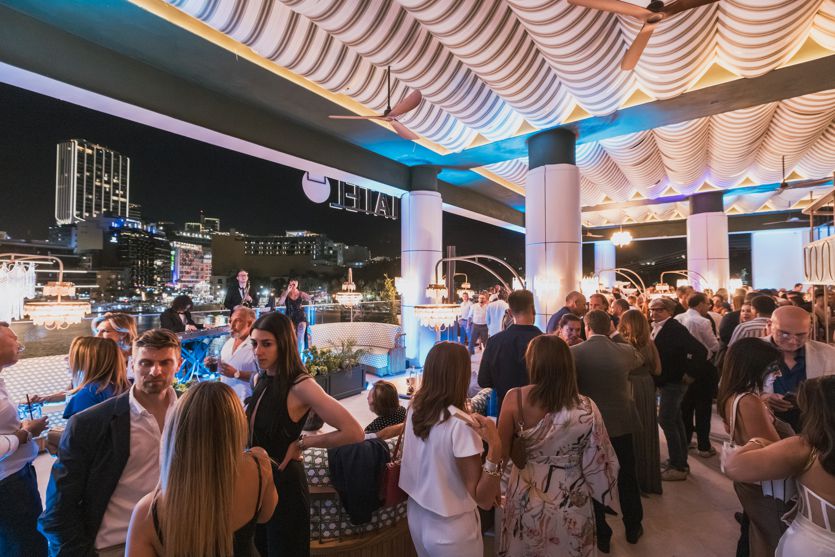
In St Julian’s, the big news for summer 2026 is the ‘arrival’ of superstar Cristiano Ronaldo. Tatel, the latest addition to the restaurant chain launched by the Portuguese star and Manuel Campos Guallar, has opened its doors. Founded in 2014, the chain offers a Spanish atmosphere, part Billionaire and part upmarket dining. Following openings in Madrid, Ibiza, Valencia, Dubai and Riyadh, the Malta venue joins the line-up with the same 1920s-inspired aesthetic, live music and entertainment. The complex, which offers a beautiful view of the bay, also houses a Hard Rock Café, and this summer it is set to become St Julian’s new hotspot: in August, a new hotel, also under the Hard Rock brand, will open, along with another high-end debut: the French Bagatelle will open its first restaurant, building on the reputation it has established in New York.

CR7 a Malta

Il famoso calciatore ha inaugurato a St. Julian un nuovo ristorante della sua catena Tatel

Credit: DCATANIA

A more mature and sophisticated clientele, looking for beach life but without the excesses of St Julian’s, will find at Sliema an excellent compromise: the extensive pedestrianised seafront offers breathtaking views of Valletta and the eastern side of the bay, including the former Manouel Lazzaretto. The Barcelo operates a hotel in a modern skyscraper, whilst the prize for the dinner with the most picturesque view goes to the dual-venue restaurant Tora – Manta: on level -1 is a restaurant serving Chinese fusion whilst on the floor below, at sea level, there is a beach club serving Mediterranean cuisine: the sea-front swimming pool, where you can book sun loungers independently of the restaurant, is perfect for spending afternoons and enjoying aperitifs: the best time is after sunset, with the city lights coming on in the background and the breeze blowing in from the bay.

Cannoni & Cannoli

The island’s capital, Valletta, founded by the exiled Knights of Rhodes – heirs to the Templars and devotees of St John – seems tailor-made for travellers. The entire historic centre – in fact, a triumph of Sicilian Baroque architecture brought south, based on the urban design of a pupil of Michelangelo – is a pedestrianised area where every street leads to the sea.

A must-visit spot for an ice cream to eat on the go, for a coffee at the long galvanised counter, or to sample the fig and honey sweets, or the Maltese version of Sicilian cannoli, is the historic Caffè Cordina: founded in 1837, right in the heart of the Victorian era, it is a local institution.

The entrance to the historic centre is marked by the imposing Triton Fountain: on the left-hand side, amongst the palm trees, stands the Phoenicia Hotel, famous for having hosted, in its ballroom, Princess Elizabeth of England, fresh from her wedding to Prince Philip, on her honeymoon shortly before becoming the future Queen Elizabeth II. The approach to the city was designed by Renzo Piano, the Italian architect who also designed the Malta Parliament, which you come across immediately upon entering: it is a modern building that sparked much controversy when it was inaugurated. The flight of steps next to Parliament leads up to the Barraka Gardens: a green oasis within the city offering the finest view of the bay. On the terrace on the lower level of the gardens, every day at 12 noon and 4 pm, soldiers in British colonial army uniform fire blank shots from cannons. There is an admission charge, but the ceremony can also be viewed for free from the gardens; do arrive early as the event tends to be very crowded, much to the delight of the children.

The most important cultural attraction in Valletta (and indeed the whole archipelago) is, once again, Italian: the oratory of the Cathedral of St John houses the largest painting by Caravaggio. The painter was on the run from the Pope and, after Naples, had found refuge amongst the Knights of Malta, who even admitted him into the Order: but even not far from Italia, the turbulent genius found no peace: he was arrested and then fled to Sicily, but stayed just long enough to paint the Beheading of St John the Baptist. The Cathedral, where a typical British telephone box and postbox, in the traditional red colour, stand out on one side, is a very crowded area, but you only need to turn the corner to find quiet and unexpected spots where you can rest between one monument and another: along Strait Street, a shaded alleyway, a few outdoor tables serve sushi from AKI: the actual restaurant is underground, a veritable feast of sophistication. This is the Maltese branch of the famous, Michelin-starred Japanese restaurant in London, although in reality the Maltese one was the first to open, created by the De Bono family, followed by the more famous British establishment. The idea of a Japanese restaurant in the heart of the Mediterranean might make tourism purists turn up their noses, but the yellowfin tuna served at AKI is strictly locally sourced, whilst dishes such as the incredibly tender black cod are sure to satisfy even those who don’t visit Malta specifically to eat Japanese food. The wine cellar, too, is of the very highest standard.

In keeping with the island’s Anglo-Italian syncretism, after a refined lunch at AKI, it’s worth walking a few metres down the street to find the sign for Mark&Spencer, the department store of the British middle class: a quick pop inside the shop is like going shopping in London.

Football sticker enthusiasts will find their own little slice of heaven in the city: the stationery shop Anastasi is a paradise for Panini collectors. It sells old albums and all the latest collections. It’s also a meeting place for collectors: outside the entrance, young and old alike swap stickers.

Malta’s dual Italian-Anglo-Saxon identity also shapes its nightlife and entertainment scene: this summer, the island will host performances by DJ Fatboy Slim, a huge star in the UK but virtually unknown in Italia, whilst Italian stars such as Loredana Bertè and Ricchi&Poveri will also be performing.

Away from the Mad Crowd

To escape the now ubiquitous overtourism, the solution in Valletta is to head down to the harbour, passing through the historic Lascaris Bastions, and board a gondola – the local version of the more famous boats – fitted with a canopy for shade and outboard motors (the oars are purely for decoration). On the other side of the bay, the three villages of Vittoriosa (Birgu), Cospicua and Senglea – the Three Cities – offer a refuge from the crowds just a few minutes’ boat ride away; the crossing costs 2.5 euros and also offers a stunning view. Here, still in the same Baroque architectural style featuring yellow stone, the atmosphere is much more relaxed, peaceful and, above all, local and authentic.

Un calabrese a Malta

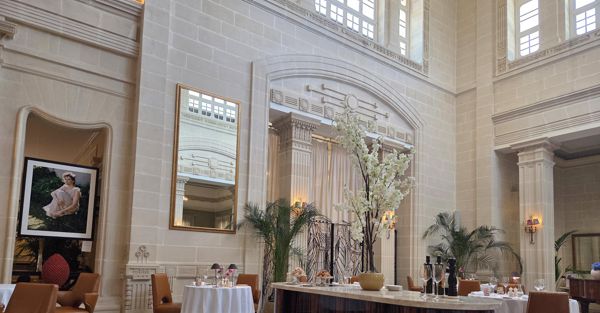
Il ristorante di Francesco Mazzei al Villa Corinthia, tra sale eleganti e una cucina superlativa

In Malta, you can also experience the most unusual adventure a tourist could have: being on a small island but never seeing the sea. This unusual experience is offered by Villa Corinthia, in the village of Attard, 20 minutes from Valletta. The hotel, founded by the Pasini family in an old 1920s building reminiscent of *The Leopard*, features colonial-style suites and offers views of the area’s only green space, the lush San Anton Park. At the rear, hidden from view, lies a secret garden with a multi-level swimming pool inspired by a megalithic temple: it is a private beach surrounded by greenery, complete with a restaurant and bar. Hotel guests choose it precisely for its total privacy and the chance to retreat. The real gem of Villa Corinthia, however, is the restaurant: the famous Calabrian chef Francesco Mazzei, who made a name for himself in London with his restaurant Sartoria, has opened his own restaurant within the hotel: it offers a culinary experience of the highest calibre. The menu is simple in terms of ingredients, yet luxurious in terms of quality and ambience: fregula with seafood is one of the signature dishes, alongside raw red prawns, caught in Malta, or scallops in hollandaise sauce.

Due to timing issues, Thomas Hardy, the famous English writer, was unable to draw inspiration from the Three Cities or Villa Corinthia for his novel Away from the Madding Crowd, but he would certainly have liked them.

Copyright reserved ©
Loading...

Brand connect

Loading...

Newsletter

Notizie e approfondimenti sugli avvenimenti politici, economici e finanziari.

Iscriviti