The general meeting of the Cremona Industrialists’ Association

‘A turning point in Europe to save the industry’

President Ferraroni: “We need to review the rules governing the green transition and provide Brussels with sufficient funding to meet the challenges that lie ahead”

4' min read

Translated by AI
Versione italiana

4' min read

Translated by AI
Versione italiana

A call on Europe to launch an industrial policy that supports the manufacturing sector. And a request to the Government to pass a forward-looking budget law that does not seek immediate popularity.

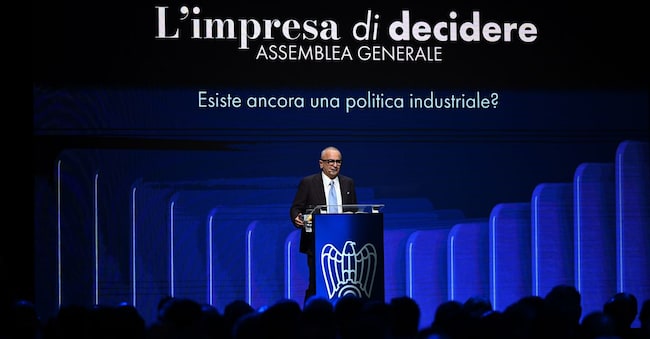
‘The challenge of decision-making’ – the slogan of the annual general meeting of the Cremona Industrialists’ Association – essentially sums up the thrust of President Maurizio Ferraroni’s speech, in which he calls first and foremost on Brussels to make a decisive change of course and take swift action, bearing in mind that ‘the time for analysis is over’. For a Europe – he explains – which 70 years ago placed industry at the centre of its vision and which today, by contrast, risks falling into crisis precisely on the two pillars upon which it was founded: manufacturing and energy.

Loading...

The hope is that we will be able to make choices that are just as bold and forward-looking as those of the past, first and foremost by reviewing the rules on the ETS and CBAM. ‘This isn’t how we save the planet,’ explains Ferraroni, ‘we’re simply shifting emissions elsewhere by importing products from countries that adopt less stringent environmental standards.’

The fear is that our manufacturing sector is crumbling in the face of unfair competition. “We Europeans,” he explains, “must compete whilst complying with regulations and bearing costs to which many of our competitors are not subject.”

The call to Brussels is therefore to launch a decisive industrial policy, ‘which has so far remained more a matter of intention than of action’.

The starting point in this direction must be energy itself, envisaging a transition based on realistic targets and sustainable timelines, diversifying sources without ruling out any solution from the outset, and addressing the issue of nuclear power without prejudice. The ultimate aim is to create a European market that transcends national borders, ultimately ensuring more competitive prices. In general, Ferraroni explains how it is essential to combine environmental and economic sustainability: ‘without this balance, we are condemning our continent to an inexorable decline’.

These are critical and significant issues that need to be addressed, and in light of this, the budget under discussion – amounting to 2,000 billion – appears inadequate, given that the resources must be commensurate with the ambitions and challenges that this historic moment demands. ‘The risk,’ he explains, ‘is that, once again, political short-sightedness and national interests will take precedence over the urgent need to make decisions, condemning Europe to inaction precisely when it most needs to act.’

On the subject of resource management, Ferraroni echoes the view expressed by many of Confindustria’s regional branches, which view with concern the prospect of national centralisation in the management of cohesion funds. “The regions,” he explains, “must continue to play a decisive and direct role in setting priorities for their own territories, because only those with first-hand knowledge of local conditions are able to make appropriate and timely decisions.”

Italia, meanwhile, in light of the rapid evolution of Artificial Intelligence, is being called upon to step up its efforts in the field of technology, by planning at a public level the digital and energy infrastructure needed to support a transformation that is revolutionising production processes.

According to the most recent studies, it is estimated that 27 per cent of the hours currently worked in Europe could be automated; on the other hand, the rapid adoption of new technologies could contribute to productivity growth of up to 3 per cent per annum.

Loading...

Whilst, on the one hand, businesses must ensure they are prepared by investing in technology and making training a strategic priority, the public sector is called upon to create a favourable external environment in terms of the necessary infrastructure.

On a day when Istat reports that GDP has stagnated in the third quarter and inflation has surged to 5.4 per cent year-on-year, the hope is that the Budget Bill will move in this direction – a serious, balanced and forward-looking piece of legislation that ‘does not seek immediate consensus but has the courage to envisage, where necessary, even unpopular decisions, and is able to rise above the interests of individual groups’.

‘Because governing,’ he explains, ‘means thinking not about the next elections but about future generations.’

‘The future isn’t something we wait for,’ concludes Ferraroni, ‘but something we build. And to build it, we must have the courage to make decisions and take action. Right now, because tomorrow will already be too late.’

The Voice of Europe

The meeting was brought to a close by Raffaele Fitto, Commissioner for Regional and Cohesion Policy, who identified dialogue and mediation as the way forward to ensure Europe functions as effectively as possible. “It is not enough, nor is it helpful, to say that everything is going wrong,” explains Fitto, “but let us instead try to understand, given the current circumstances, how we can take action to improve the situation.” Compromise solutions are called for, for example, regarding the EU budget, with the Commission’s proposal of 2,000 billion, which is opposed by a ‘downward-revising’ stance taken by certain Member States, led by Germany.

As far as the management of cohesion funds is concerned, Fitto believes there is no risk of centralisation, because the primary aim of the reform proposal is simplification. “We currently have 500 spending programmes,” he explains, “and in future there will be 27 national plans.”

Fitto also welcomes the Commission’s new proposal to review the mechanisms of the ETS system, with a ‘clearer and less rigid’ trajectory and more free allowances: in short, a significant effort to revise these rules.

The underlying idea, therefore, is to work towards unity by finding common ground. And to do so – explains Fitto – ‘it is clear that the position of a single country cannot be that of Europe as a whole’.


Copyright reserved ©
Loading...

Brand connect

Loading...

Newsletter

Notizie e approfondimenti sugli avvenimenti politici, economici e finanziari.

Iscriviti