
Political stability is good, but we need more growth
On 4 September, the Meloni government became the longest-serving in the history of the Republic

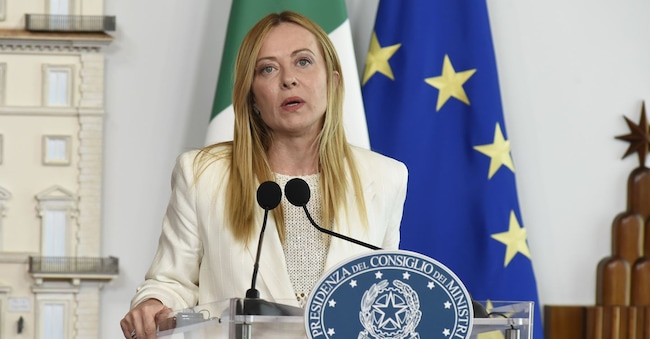
The four years of the Meloni government have left the country with greater stability, but not with a greater capacity for development. The government’s record cannot be assessed solely in terms of the reduction in the deficit, the stability of the labour market or improved market sentiment, when Italia continues to grow at a pace too slow to sustain productivity, wages and public finances in the long term. In 2023, the Italian economy grew by 1 per cent, in 2024 by 0.7 per cent and in 2025 by 0.5 per cent. And the latest GDP growth estimates for 2026 range between 0.5 per cent and 0.9 per cent. These figures paint a picture of a country that is standing still rather than moving forward; they do not alter the trajectory nor mark the long-awaited break with the past. With a year to go until the election – barring a snap election – there is no shortage of scope for action. But the time available must not be squandered on electoral strategies and short-term measures.
Paradoxically, Italia does not suffer from a lack of action, but from an excess of fragmented measures and a lack of long-term vision. There is too much day-to-day spending and too little investment, albeit on the rise thanks to the NRRP. Public spending must be reallocated towards investments with structural effects on infrastructure, education, research and innovation. The key issue today is not just how much GDP is growing, but how expenditure is distributed and what impact it has on the system’s ability to generate value in the medium to long term. We need a more efficient public administration, a simpler tax system and public expenditure geared towards future results rather than present returns.
There is also another issue that cannot be ignored: demographics. In 2025, the number of births fell to 355,000, compared with 393,000 in 2022. This is not merely a social statistic, but a long-term economic constraint. Fewer births today mean a smaller workforce tomorrow, fewer taxpayers, and a reduced capacity to fund pensions and welfare. No economic strategy can be considered credible unless it takes this point into account. If Italia wants to break out of its current state of anaemic growth, it must start here.
On the political front, the government can claim to have delivered a period of intense legislative activity and a greater ability to steer the public agenda – credit must be given where it is due. Today, Italia is undoubtedly less fragile than it was yesterday, but there is still too little economic growth to speak of a revival. Stability has been achieved, but a turning point has yet to materialise. The positive signs on the horizon are faint: we might describe them as mere survival. And Italia no longer needs to survive; it needs to get back on its feet.


