
A woman's point of view
Many of the works in competition feature a female figure with excellent performers: Hüller and Seydoux with the triumph of the film about Mann

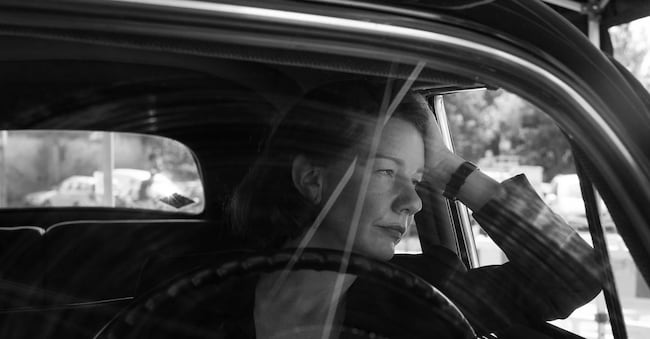
Until a few years ago, it was very difficult to find a female protagonist of a story - except for eccentric personalities and stories for better or worse - let alone a female presence behind the camera. This first part of the 79th edition of the Cannes Film Festival veers in a revolutionary direction. The competition started with Vita di una donna (Life of a Woman), in which Gabrielle Conti (a Léa Drucker with a highly mobile sensibility) portrays the everyday life, always uphill between professional and private life, of the head of the maxillofacial surgery department in a French public hospital. Gabrielle initially possesses an impenetrable and monastic ability to control everything, but then director Charline Bourgeois-Tacquet - who directs her by subtraction - injects a grain of sand into the screenplay she has written that makes everything jam: passion, in this case homosexual passion. Declined in a way that is finally 'normal' and not as a scabrous exception, it precipitates, however, the rest of the film, which, with a fake Italian part in Turin (perhaps for production requirements), renders artificial a simple story that the best cinema would know how to make miraculous.Similarly, Fukada Koji's Notes to Nagi sees two young women find each other: Yuri (Shizuka Ishibashi) has arrived in the small rural village of Nagi from Tokyo to model for her former sister-in-law Yoriko (Takako Matsu), a sculptress. The camera captures the fascinating stages of sculpture as the two 'sisters' heal each other's emotional wounds by talking. In this way, the director gives substance to the protagonists' need for beauty, crushed by the spoiling of everyday life: as the Russian invasion of Ukraine breaks out on television, the gunshots of a military base that the country has had to accept, in exchange for a magnificent museum of contemporary art, are imposed. This beautiful message is loaded, however, by two homosexual experiences, without an interesting and credible graft. There is nothing surplus to requirements, on the other hand, in The Gentle Monster by the ever-interesting Marie Kreutzer, the director who liberated poor Princess Sissi from candy in The Empress' Corset. A Léa Seydoux vibrating with grief - to deserve the Palme - sometimes compressed, sometimes exploded, shows us all the impossibility for a partner in love to realise that the father of her child is a paedophile. Kreutzer, also a screenwriter, does not go into the horror of pornographic material, but into the even worse anguish of those who have to face the unspeakable urges of a loved one, including the need to want to believe lies. Underestimated by critics, it is a tenacious, intense and courageous film that moves through the story of experimental pianist Lucy and Philip (Laurence Rupp, excellent), a struggling filmmaker, perhaps frustrated by Lucy's success, developed at the same time as an aspect of the personal life of the commissioner investigating the case, devoid of heroism and only seemingly distant from the families involved.Once again it is a woman, Erika Mann (Sandra Hüller: what can one say about her unlimited interpretative capacity?) who holds up, from the second row, the plot of Paweł Pawlikowski's Fatherland: impeccable black and white, almost deep, square format that imposes a concentration on the story in an almost Bertoluccan Conformist aesthetic. The story recounts the fictional journey - but based on documents interweaving various real journeys - of Tomas Mann's (Hanns Zischler) return to Germany in the footsteps of Goethe, attempting to unite with literature what the Second World War had torn apart and the Iron Curtain would separate in an armed truce. Mann's faith in the power of art and pessimism in blood relations are contrasted with the cynicism of Erika, who accompanies him, towards culture as a political weapon, to which is added the utter despair at the voluntary death of her brother Klaus (August Diehl), to which Mann reacts with cold dignity. The theatrical context is sometimes shot from below, sometimes from above, depending on the moods of the protagonists. Only the steady hand of the director renders the rigour of that time that froze feelings and that only the music of Wagner and Bach is able to release. The film is already on the launching pad for the Palmares, but for this writer, in dissonance with the rest of the international critics who praise it, although it is perfect, it does not have the same magic and awe as the Oscar-winning Ida. Two women, Virginie Efira and Tao Okamoto, are the protagonists of All'improvviso by Ryūsuke Hamaguchi, which focuses on an urgent theme: the need in an ageing society to care for the elderly in structures that contemplate listening and respecting the dignity of the guests, with references and quotations also to the Basaglian experience in asylums. The encounter between Marie-Lou, who attempts to introduce these theories in her retirement home, and Japanese theatre director Mari, who is trying to cure a cancer, creates a common path to "make the impossible possible", just like Basaglia. Admirable intent, but not very credible and too slow. But still, the writer goes against the grain of the international critics who judge it a masterpiece. Less happy was the return of Asghar Farhadi in his Parallel Stories, which confirmed the Iranian director's ability to make and unmake psychoanalytic plots. The Parisian context in which the film develops, however, pushed it towards a cerebrality that did not help. In Iran he anchored his albeit complicated scripts to a grounding that closed the circle perfectly (About Elly, A Separation, The Client, A Hero). Here, the stories of a once-successful writer, Sylvie (Isabelle Huppert), are intertwined with those of her neighbours whom she spies on and about whom she writes a novel of betrayal and bloodshed. Into the scenario enters a homeless man, Adam (Adam Bessa), who in turn infiltrates Sylvie's novel as an author. Remake of the sixth part of Krzysztof Kieślowski's The Decalogue (1988-89), Don't Commit Impure Acts gives a magnificent performance by Huppert in the senile role of a rubbish hoarder in the total mixing and swaying of the planes of reality and fiction; but the real plot, unfortunately real, is the death, on the very day of the official screening, of Krzysztof Piesiewicz, mentioned in the credits, with whom Kieślowski had written Chapter 6.There were also moments of great joy on the Croisette, such as the surprise honorary Palme d'Or award to John Travolta at the premiere of his debut film Night Flight to Los Angeles. Sincerely incredulous and moved, wearing a white beret to cover his baldness, he said: 'This is more than an Oscar', while his graceful, intimate and personal film about the flight that took him and his mother to Los Angeles, meticulously crafted and Wesandersonian in its details, drew much enthusiastic applause from the audience during the screening. Equally applauded was the remarkable The match, by Juan Cabral and Santiago Franco, a documentary reconstructing the Argentina-England match at the 1986 World Cup. Maradona's two goals and the Faulkland/Malvinas war as seen through the eyes of the players of that time reunited . The opening film also brought a smile: Pierre Salvadori's Electric Venus. Set in the Parisian Belle Époque amidst amorous skeletons, metempsychosis and séances - halfway between Romeo and Juliet (very broadly) and Woody Allen -, the film glides along nicely thanks also to the skill of the actors and a happy ending. The French really know how to sustain their cinema.


