Olympics

'World leadership built on twenty years of investment'

The interview with Italian Tennis and Padel Federation President Angelo Binaghi

by Marco Bellinazzo

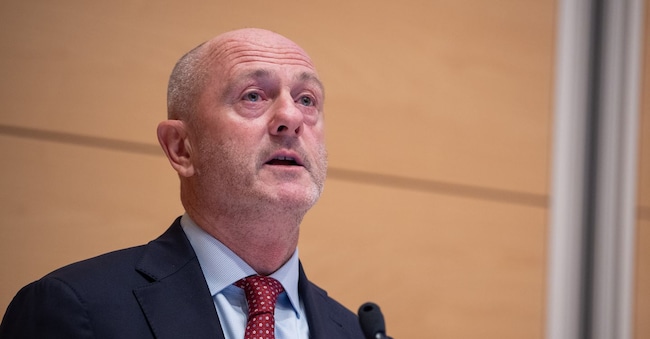
Angelo Binaghi. (LaPresse)

5' min read

Translated by AI
Versione italiana

5' min read

Translated by AI
Versione italiana

Those who know Angelo Binaghi, president of the Italian tennis and padel federation since 2001, know that he does not have a disposition for diplomacy. But probably, if Angelo Binaghi had had an accommodating nature, he would not have been able to implement the revolution that has hoisted Italian tennis to world leadership, making it a model of sport-business. Of course, as fate would have it, on 16 August of that same year a certain Jannik Sinner was born some ten kilometres south of the Austrian border; but it would be a gross error to reduce the success of Italian tennis to the rise of the San Candido champion.

The strength of the Italian movement is in fact measured by the performance of dozens of high-level athletes, a constantly expanding base, the ability to attract and strengthen major events, as well as a management hinged on economic-financial rigour and the constant search for expertise.

Loading...

No result, of course, is gained forever. No small problems remain, such as the lack of facilities in relation to the demand for tennis, not idyllic relations with the political authorities and topics of discussion, from public contributions to the governance of the Atp Finals.

President Binaghi, is the pursuit of football a provocation or a goal?

A goal. We are much closer today in terms of practitioners and fans than we were 10 years ago. And then we win and football does not. With this in mind, I don't understand why football, which has a little more than our membership, is still allocated more than twice as much from Sport and Health. For 2026, 35 million against 16. The distribution model that imposes a cap on annual increases is too welfarist and takes resources away from those who earn them on the field.

How did this journey begin? When you took over the baton from Federtennis, there were less than 130,000 members and federal revenues of under 15 million.

From a technical point of view, we turned the system upside down with the Integrated Area Plans to decentralise and incentivise the aggregation of clubs in the area and raise their quality. We financed private teams in relation to the potential of the players. Teams that we now assist on demand with our technical-scientific sector. This has made private academies flourish. Before, the Federation with its technical centre was actually fighting academies and clubs. Then in recent years we have eliminated many fees, from affiliation fees to those for organising tournaments, in order to leave more funds available for clubs to develop. Finally, we have focused on the Italian nursery, exactly the opposite of football or other sports.

How?

By requiring that in the league matches of the 12,000 Italian teams, at least half of the players must be internally trained. Before, to play in Serie A, for example, it was enough to 'buy' two first-class players from outside. Now the youth sectors of the clubs are taken care of. In addition, we have increased competitiveness by including promotions and relegations. At the same time, we broadened the base to increase the demand for tennis. We have worked on two fronts.

Which ones?

With pay TV alone, tennis was disappearing. Since 2008 we have invested in Supertennis by ensuring that tennis on television was free and accessible to all. On the other hand, we have strengthened the 'Racquets in the classroom' programme that started in 2014 and that in the 2025 edition, in addition to primary and secondary schools, first and second grade, has also been extended on an experimental basis to kindergartens, so as to bring even more students closer to the world of the racket. The aim is to initiate children into sport, also involving disabled children, and perhaps to recruit, thanks also to the scholarships (1,000 of 250 euro to be used for activities to be carried out within the club that has adopted each child's school, ed), young people with greater aptitudes. We invest significant resources every year in educational kits, contributions to clubs for memberships and adaptation of facilities. In 2024 we invested 12.6 million, in 2025 about 19 million, in an operation that last year involved 2,348 schools throughout Italy, thanks to the support of 921 clubs and almost 1,300 technicians. Approximately 800,000 children were able to play a cycle of 15 tennis, padel or volleyball lessons free of charge and, in 2025, pickelball tournaments were added.

As the demand for tennis increased, there was a problem with the courts, not least because in the meantime, with the explosion of padel, which you incorporated into the federation, many clubs had converted their spaces.

To address these shortcomings, this year we signed an agreement with the Istituto per il Credito Sportivo e Culturale to help the approximately 700 affiliated clubs with excess demand and the new clubs that want to open facilities in 'uncovered' municipalities. There are currently no courts in more than 70% of Italian municipalities. It will be possible to finance the interventions with Icsc loans granted without any guarantee or, in the case of newco, with a minimum guarantee of 20% of the capital and without interest and expenses, because they will be subsidised by the Federation, which has earmarked 10 million. We want to make the tennis system grow even more, which already employs more than 50,000 people between club employees and instructors.

To train the new Sinners and Musettis we need more and more trained professionals.

And that is why we have implemented a training system based on several levels of qualification, which today involves more than 15 thousand professionals, from instructors to national technicians. But it is not enough to obtain a qualification. To maintain membership of the Register, we have introduced the obligation for everyone to attend a refresher course every two years.

His detractors claim that he has gone overboard. Now he also wants to turn the Federtennis into a bank?

Once again, we are forerunners. After all, we are only trying to make the Federation more efficient. SportPay, which we have created thanks to our technology partner TPPay, owned by TAS Group, is the first payment circuit dedicated to the world of sport and will allow affiliates and members to exchange money at zero cost, with advantages for the clubs, which among other things will have liquidity always available, and for the Federtennis which will benefit from the interest on the sums deposited.

The Fitp is in the market to acquire an Atp 500 or 250 tournament, after the failure to acquire the Atp slots in Madrid and Miami meant that the dream of a fifth Slam in Rome has been abandoned.

We will see what opportunities will present themselves. We will be ready. And on the fifth Slam, I can assure you that we have not given up....

Copyright reserved ©
Loading...

Brand connect

Loading...

Newsletter

Notizie e approfondimenti sugli avvenimenti politici, economici e finanziari.

Iscriviti

Tutto mercato WEB