
A2A, 4.9 billion for electrification: Milan at the heart of the transition
The energy group has inaugurated its new primary substation in Comasina (Milan) and is increasingly focusing on infrastructure for the green transition

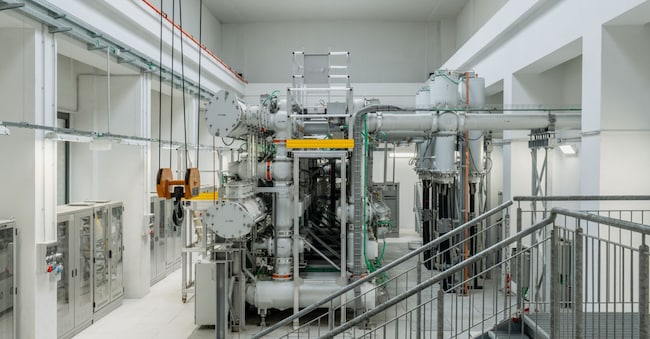
A2A has inaugurated the new Comasina primary substation in Milan, and has reaffirmed its strong focus on the energy transition and green energy. The upgrading and digitalisation of the networks represent a strategic pillar of the Group’s 2035 Plan, which allocates €4.9 billion to electricity infrastructure. In this context, the Lombard capital is the main ‘epicentre’ of the electrification drive, given rising consumption and projections for connection requests from data centres. For this reason, the strategic plan of Unareti (an A2A Group company), also looking ahead to 2035 for the city of Milan, provides for a further €2 billion in investment.
The new Comasina main substation is up and running
The new Comasina primary substation, built by Unareti as part of the plan to develop and upgrade Milan’s electricity network at a cost of over 38 million, increases the system’s efficiency and supports the city in the gradual electrification of consumption and the ongoing urban transformations, ranging from the spread of electric mobility and heat pumps to the growth in generation from renewable sources. “Milan boasts one of the highest densities of electricity demand per square kilometre in Europe, and its demand is set to grow with the ongoing processes of electrification and digitalisation. This is why our strategy focuses on increasingly efficient, flexible and smart networks, capable of supporting the city’s development: the Comasina primary substation is proof of this,” emphasised the CEO of A2A, Renato Mazzoncini. He added: “Over the last five years, we have allocated around 800 million to the renewal and expansion of the distribution infrastructure, modernising the urban grid and strengthening its capacity to support growing loads. This is a further step – and not the last – in A2A’s commitment to Milan.”
“The opening of the new main substation in the Comasina neighbourhood is a further step towards strengthening the local electricity grid and demonstrates A2A’s concrete commitment to the city,” said Elena Grandi, Councillor for the Environment at Milan City Council -. This strategic infrastructure will improve the quality of service, whilst also reducing the risk of grid overloads and contributing to greater efficiency and sustainability. Furthermore, a new primary substation will, in future, simplify the set-up for a new solidarity-based energy community, contributing even more to Milan’s energy transition.”
Milan: the heart of electrification
As mentioned, all of this forms part of a broader group strategy, under which Unareti has invested a total of around 800 million over the last five years to renew and expand Milan’s electricity distribution network and the associated infrastructure. Over the last three years, four new primary substations have come into service (Rozzano, San Cristoforo, Mugello and Comasina) have come into service, to which the Scalo di Porta Romana substation will be added by the end of the year (bringing the total to 16, a 45 per cent increase compared with 2020). These are significant facilities in terms of their complexity and size, crucial nodes in the electricity grid that supply power to the city by receiving it at high voltage from the national operator and converting it to medium voltage, thereby optimising the management of the local electricity system.
It should be noted that Unareti has also carried out essential development and refurbishment work on other assets within Milan’s distribution network. Over the last five years, the number of secondary substations has increased by approximately 10 per cent (528 new ones), and more than 200 have been completely refurbished. In addition, over 400 km of underground cables have been replaced and upgraded, with the aid of algorithms that enable the prioritisation of sections requiring work, and a further 250 km of network has been laid to enable the connection of new customers.


