
A2A, the carbon neutrality challenge is won in cities
According to a study conducted by the company led by Renato Mazzoncini and Teha, it emerges that economies of scale are generated in urban centres, making them optimal ecosystems for combating climate change. A 270 billion euro investment package for decarbonisation.

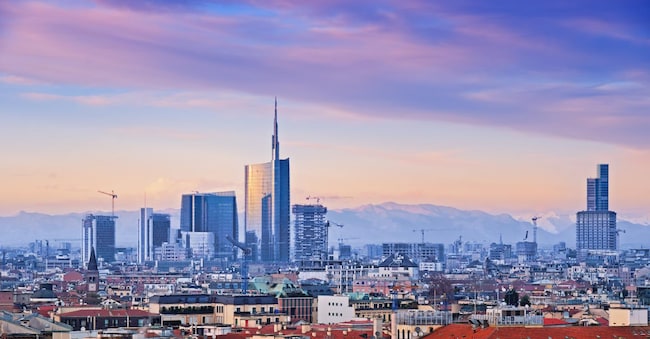
(Il Sole 24 Ore Radiocor) - A 270 billion euro investment package to enable the process of decarbonisation and the improvement of efficiency and quality of life in Italian cities by 2050, activating a series of technological and service levers already available today and reducing city emissions by more than 50%. This is what emerges from the Position Paper 'Urban Sustainability. Decarbonisation, electrification and innovation: opportunities and solutions for future-fit cities", produced by Teha Group in collaboration with A2A and the scientific contribution of ASviS, presented during the 50th edition of the Cernobbio Forum. According to the survey, urban centres are already characterised by an intrinsic efficiency that also brings with it an overall efficiency: the 112 capital municipalities covered by the analysis consume 29% of the national energy total, compared to approximately 60% of the GDP generated.
By 2050, urban residents will reach 70 per cent
In 2007, for the first time in history, the world population residing in urban areas exceeded that in rural areas (50.1% versus 49.9%). From 2007 to 2024, residents in urban areas rose further to 58.3% and the forecast is that this share could rise to around 70% by 2050. To date, Italy has the lowest percentage of residents in urban areas among the Big-5 European countries (besides Italia, the UK, France, Spain and Germany are considered), at 72.6%, compared to 78.0% in Germany, 82.1% in Spain, 82.3% in France and 85.1% in the UK.
Urbanisation trends are linked to the economic and social 'catalyst' role of cities themselves. In Italia, the 112 capital municipalities covered by the study - covering 7% of the national surface area - generate 60% of the country's GDP. Moreover, urban areas are already characterised by an intrinsic efficiency, which the survey assessed on three levels: building thermal, networked services and mobility. These require less heat consumption (-21% per unit area), generate density economies for water, electricity and gas networks, and support less use of individual vehicles for travel. Notwithstanding the efficiency that characterises these places, the concentration of activities in urban areas makes it necessary in the coming years to combine this efficiency with increasing sustainability and quality of life: in 2050, with the current trend of urbanisation, emissions in Italian cities could grow by 18%. It is not surprising, therefore, that six out of ten priorities reported by European mayors relate precisely to activities and projects that combine the well-being of citizens and sustainable development.
The 100 Pilot Cities
To capitalise on this need, the European Commission has launched an initiative that sees 100 European cities (12% of the European population) committed to a path of decarbonisation and improved quality of life. Each of these cities (of which nine are Italian: Bergamo, Bologna, Florence, Milan, Padua, Parma, Prato, Rome and Turin) must develop its own Climate City Contract, including a climate neutrality master plan for buildings, transport, waste management and related investment plans. In the study, a number of capitals were identified where projects are being carried out to combine and increase quality of life and sustainability in their areas. In detail, Teha has identified seven exemplary ones in this sense (Milan, Brescia, Messina, Bergamo, Varese, Cremona and Cosenza), transversal with respect to the geographical area they belong to and size class.
"Cities have assumed a central role in social and economic development, becoming real catalysts for innovation and sustainability. Data indicate that, by 2050, the ongoing process of urbanisation could lead to 70% of the world's population living in urban areas; a percentage that rises to over 80% in Italia and that will have a consequent impact on emissions, up by 18%, and energy consumption. At the same time, however, density makes cities particularly efficient: at a national level, they consume 29% of energy but produce 60% of GDP," commented Roberto Tasca, president of A2A. "European mayors indicate as a priority the need to combine development and sustainability; to do so, it is essential to implement decarbonisation strategies and invest in new technologies. Such an approach will not only help improve the quality of life of citizens, but also stimulate sustainable economic growth by making urban centres attractive and able to raise the quality of life of those who live in them'.


