
A2A, how to meet the waste heat recovery challenge
The company led by Renato Mazzoncini has set up a series of initiatives in Bergamo, Milan and Brescia to make a concrete contribution to the decarbonisation of the country.

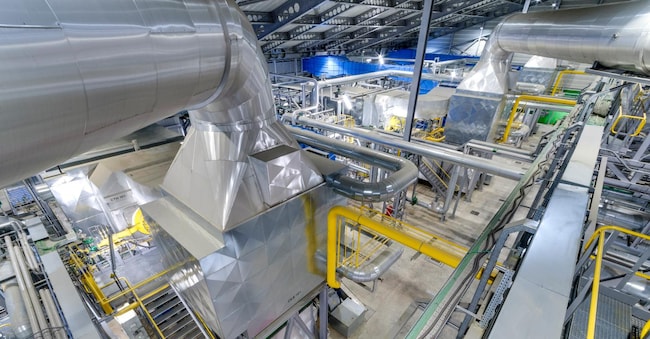
(Il Sole 24 Ore Radiocor) - In the long march towards decarbonisation by 2050, the recovery of waste heat can play an important role. A tool that is often not given the right weight among green solutions but that instead can represent a development lever for the country. One of the first in Italia to believe in it was A2A, which, through a series of initiatives based, on the one hand, on the district heating network and, on the other, on the recovery of heat from plants, companies and even data centres, has given rise to a series of projects that may one day become a model to be exported.
Bergamo, from the Rea Dalmine waste-to-energy plant new clean heat
The latest initiative put in place by A2A concerns the city of Bergamo. In September, in fact, an agreement was signed for the recovery of the heat generated by the Rea Dalmine waste-to-energy plant, enabling A2A to expand the district heating network in Bergamo without having to use fossil fuels. From next autumn, the Group will in fact be able to bring clean heat to the city, heating up to 11,000 more flats, thanks to the waste heat from the Rea Dalmine plant. With the new cogeneration set-up, which consists of a new turbine and a heat exchanger, for the same amount of waste treated, in addition to producing 95 thousand MWh of electricity per year, heat equal to90 thousand MWh of heat will be recovered, most of which is today dissipated into the atmosphere. This will increase the plant's energy conversion efficiency from 27% to over 80%.
Overall, the project entailed an investment of approximately 30 million euro, of which more than 20 million for the construction of the connection to the district heating network and for the works at the Goltara power station (storage and pumping system), the responsibility of A2A Calore e Servizi; and approximately 9.5 million for the construction of the new cogeneration section, the responsibility of Rea Dalmine. Today, Bergamo's district heating system extends over 87 kilometres, heats approximately 37 thousand equivalent flats and avoids the emission of 20 thousand tonnes of CO2 into the atmosphere.
In five years, A2A Calore e Servizi plans to extend the network by a further 22 kilometres, with environmental and economic benefits for households. Thanks to the recovery of heat from Rea Dalmine, 11,000 boilers will be turned off, eliminating the same amount of CO2 that a system of 25,000 photovoltaic panels would eliminate. The new district heating extension will reduce carbon dioxide emissions by about 15,000 tonnes per year.
In Milan, Italy's first project for data centre heat recovery
A2A's commitment to the process of decarbonisation is also demonstrated by the first project to recover heat from data centres in Milan: Retelit's "Avalon 3" data centre. This will make it possible to serve 1,250 more households a year, saving 1,300 tonnes of oil equivalent (TOE) and avoiding the emission of 3,300 tonnes of CO2 with environmental benefits equal to the contribution of 24,000 trees.


