Quotate Italy

A2A, electricity reorganisation in Lombardy 'Ready to accelerate with new plan

by Cheo Condina
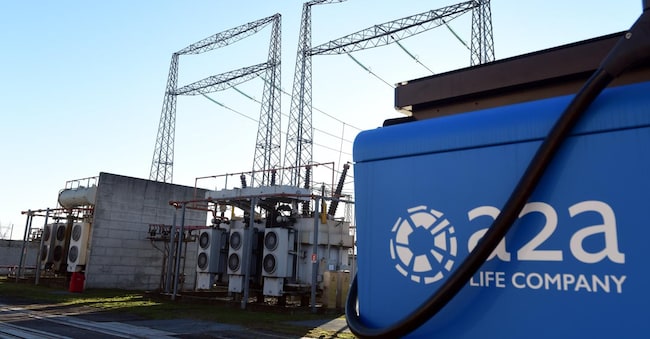
TRALICCI ALTA TENSIONE UNARETI A2A

5' min read

5' min read

"An agreement between two major system players that work together for the electrification and energy transition of the country and that crowns four years of great sustainable growth for A2A, which has now become a national operator with a long-term horizon: the plan of great development and investment that we will present the day after tomorrow will be proof of this". These are the words of Renato Mazzoncini, CEO of A2A, commenting in an interview with Il Sole 24 Ore on the purchase of electricity networks in Lombardy from Enel for over 1.2 billion, or "the largest operation in the sector ever carried out in Italy, which allows us to increase the installed electricity meters by 70% to 2.1 million, becoming the second largest player in the country, as we are in generation, sales, and renewables". Not only: all this will bring additional investments of 1.4 billion and the group's electricity Rab to 3.4 billion in 2035. With one awareness: "The time for territorial aggregations is over: A2A and the country need deals that develop fundamental assets for the path towards Net Zero at 2050 and that we, as a company, can realise with our own resources".

Electrification: in a word, is that what the operation is all about?

Loading...

A2A has a great history on the network, both Aem Milano and Asm Brescia have been investing in it since the beginning of the century, as has the country, which by the 1980s had reached 80% of its current infrastructure. Then there was a physiological stagnation in development, while today investments must be relaunched. Both because several installations are becoming obsolete, for example 60% of primary cabins are more than 30 years old. And, above all, because the large-scale penetration of renewables requires a much more important and strategic role for networks, dictated more generally by electrification and trends such as artificial intelligence, which will lead to exponential increases in consumption. In Milan today we have a peak power of 1.7 GW but we will have demands from data centres of up to 2-3 GW. Globally, 20 trillion investments are expected in electricity grids between now and 2050, 584 billion in Europe alone and up to 60 billion in Italy between 2020-2030.

How much will A2A invest in the assets it is taking over from Enel, i.e. the networks in the province of Milan that it does not already own and the densely populated Val Trompia from an industrial point of view?

Until 2020 we invested an average of 40 euros per year per meter, in the three-year period 21/23 we have increased to 150 euros and this is the pace we will keep for the next thirty years: for the networks surveyed by Enel this means forecasting 1.4 billion euros in the period 2025/2035. In these heavily inhabited and industrialised areas, we expect an increase in peak electric power of up to 50% in a decade, against a national average of 30%. At the beginning of the millennium, both Aem and Asm had already bought parts of the grid from Enel: today we are completing a path that will take our electricity Rab from 700 million in 2020 to 3.4 billion in 2035, with an average annual investment of almost 400 million when fully operational.

The acquired networks have an estimated Ebitda of around 100 million, against an enterprise value of over 1.2 billion. Isn't that a bit high as a multiple?

One cannot reason with multiples for an infrastructure of this nature, with great development prospects dictated by the green transition and with a considerable capacity to absorb investments to be put into Rab: it is like buying a field to sow that will yield great harvests in the future. The only applicable method is the Discount Cash Flow method on the basis of which we have calculated the value. In the next ten years the average Ebitda will be between 120 and 140 million, and then exceed 350 million in 2050.

How will you finance the operation?

We have gained financial flexibility, we are closing 2023 with a very low leverage, 2.4 times the ratio of net debt to ebitda; we will evaluate all options that will allow us to maintain our current rating, without reducing investments in other, equally crucial, segments, such as renewables, on which we intend to raise the bar even higher.

P would you open up the capital of electricity networks to some funds?

The new plan will have all the answers on this issue.

The Bersani Decree envisages that electricity grids will go out to tender in 2030. Have you foreseen this possibility?

There is no feedback on this today at the European level and no country, including Italy, is actually considering it. In any case, I believe that for us, more generally, it would be more of an opportunity than a risk.

In four years A2A has doubled its mol and almost tripled its investments, becoming a national operator.

When I presented the first 10-year plan I saw understandable scepticism, but looking at the long term is the only way to have perfect visibility and travel fast, without exposing the company and shareholders to risk. On average we have invested 1.5 billion a year and we do not intend to stop, quite the contrary. All this, however, was possible because we started from a solid and healthy base, which stemmed from consolidation in the territories, a phase that I consider to be over. In the large multi-utility sector, there is no need for further consolidation.

The mayor of Milan, Giuseppe Sala, has spoken of a willingness to dilute itself in the face of a major growth project.
To date this is not on the table, as the mayors have also made clear recently. As a manager, I don't get into the dynamics between shareholders, for me it is more important to see how the company can continue to grow on its own strength.

With the latest rains and snowfall, do you foresee a record year for hydropower?

We finished 2023 with the reservoirs at full capacity and that hasn't happened for a few years, but what makes us more optimistic are the latest, heavy snowfalls. I would say we are off to a very good start, we are expecting a very positive year, maybe within the average of the last few years which is 4.1 TW of annual production. Of course on hydro there is an open and crucial issue: the need for new investments, without which it will be impossible to reach the Pniec targets. But, as we have already said in all forums, including institutional ones, without a stable and certain regulatory framework there is a risk of paralysis.

Copyright reserved ©
Loading...

Brand connect

Loading...

Newsletter

Notizie e approfondimenti sugli avvenimenti politici, economici e finanziari.

Iscriviti