
'Normal and disabled together at the Games'
Ganeshamoorthy, gold medallist in the discus throw, considers a unified edition and confesses to receiving racist messages: 'But they are the ignorant ones'

2' min read
2' min read
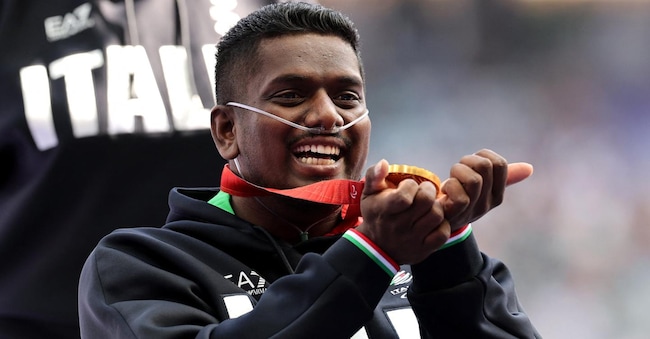
A few more days in the world's amusement park that is the Olympic Village, then Rigivan Ganeshamoorthy, discus throw gold medallist, category F52, will return home, to his native Rome. During the interview in the brightly-lit spaces of the Village, he holds the medal around his neck, which is heavy - in every sense - he caresses it and almost cannot believe what he has done. He is Paralympic champion, he sang the Italian anthem, hundreds of messages arrived: 'When I turned on my mobile phone after the race, I had over a thousand requests on Instagram and more than 400 messages on whatsapp, including insults about the colour of my skin, but they are the ignorant ones, not me'. Rigivan, known to everyone as Rigi, 25 years old, is blunt, direct, has the sunshine of the Roman dialect incorporated with his smile and now has to manage the notoriety, which came with the gold and a series of six historic throws, including three consecutive world record throws, now set at 27.06 metres.
The disease and the sport that saves
He doesn't quite know what's happening to him, TV and radio searching for him and him clutching his medal and telling his story, still moved. Sport came to him at the age of 18 and a half, after a disability caused by a rare autoimmune disease that affects the peripheral nerves and is progressive, and worsened further after a fall: 'I was being treated at Santa Lucia in Rome, there was a very strong wheelchair basketball team there and I started. Then the club closed down and swimming came in, fencing, which I also like a lot but is too dangerous for my oxygen tubes, and finally athletics'. With last year's successes at the Italian championships in the discus throw F54-55 and the shot put F55. Now the notoriety also thanks to the frankness with which he told Elisabetta Caporale at the end of the competition: 'What can I say? I dedicate the medal to my mother, in Rome, ar decimo municipio. Tomorrow se vedemo. This is for the whole Italian nation and for the disabled at home'. He dreams of a good cacio e pepe or a frittatona with asparagus, but above all of his historic Cadillac, fake rust-coloured from the 1960s: 'I think of Rome 60 and I dream of a single Olympics for able-bodied and disabled people together.


