
Abodi: 'A change of system is needed, a new president is not enough'
The Minister for Sport and Youth Affairs during the hearing at the Senate Culture Commission on the prospects for reforming football in Italia expressed his views on the upcoming federal elections

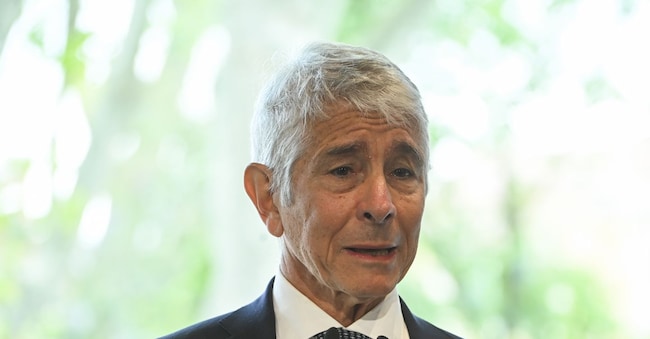
No to regime or name changes. Yes to real reforms that translate into system changes. The message that the Minister for Sport and Youth, Andrea Abodi, launched during the hearing at the Senate Culture Commission, regarding the prospects of reform in Italia football (a topic on which the same commission adopted a specific resolution), comes the day after the Lega di Serie A indicated its candidate for the next FIGC elections, Giovanni Malagò, and the coming into the field of the president of the National Amateur League, Giancarlo Abete.
"With respect to the entitlements that the federal components have to look for a new president," Abodi stressed, "I have always said from the very first moment that I expected, and I still expect, that the effort of these weeks will focus on bringing out a programme. "What I expect is a turnaround that, while legitimately protecting individual interests, knows how to enhance the common matrix of interests, which are those that guarantee results on the one hand, and the broadening of football's social base on the other. Internal contradictions cannot be overcome with the choice of a president, I am ready to do anything to contribute to a change of register'.
Abodi then added, with reference to the almost unanimous vote that supported the last re-election of resigning Figc president Gabriele Gravina: 'It did not take 98.7 per cent of the consensus to implement the programme drawn up. The experiences of these years allow us to say that it will be difficult to surprise us with new solutions. What was lacking was the ability to combine the interests of the various federal components. This does not mean that we should force our hand, the autonomy of sport must be protected, but I would like to be reasonably certain that this is not just a change of presidents'.
The Minister for Sport and Youth Affairs recalled how his presence in Parliament was not related to the difficulties of the moment, but to an awareness of chronic problems that would have to be addressed 'even in the case of success with Bosnia, but now we must build on this sporting disaster to find a common matrix for measures to make football competitive from a sporting and social point of view'.
The government's initiatives to intervene in the football sector were listed by the minister, starting from the launch of the Independent Commission for the accounting supervision of professional clubs to that of the Commissioner for stadiums, which has been fully operational for a few days, due to a long bureaucratic definition process. Abodi reiterated how the horizon of the interventions on the facilities must be broader than that related to the 2032 European Championships, given the backwardness of Italian stadiums, and how the Ministry of the Economy has already made available to clubs that intend to take action a contribution in equity of 100 million, in addition to other forms of support connected, for example, to the Italian Fund for Sport.


