
Abruzzo: the ‘right to remain’ for inland areas in Brussels
Following the European Week of Regions, Marco Marsilio, President of the region and leader of the Conservatives in the Committee of the Regions, has called for targeted investment, local rail networks, climate resilience and greater weight given to local areas through cohesion policy

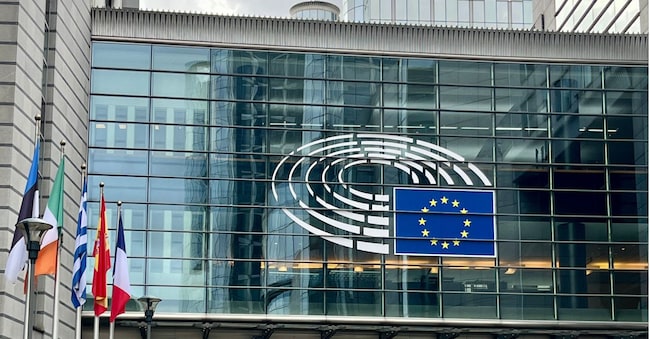
The freedom to choose. The ‘right to stay’ – the freedom to live and work in the place where one was born without being forced to leave – is the demand that Marco Marsilio, President of the Abruzzo Region and of the ECR Group (Conservatives and Reformists) at the European Committee of the Regions, has brought before the European institutions. The call is for inland areas to be placed at the heart of development policies: targeted investment, adequate transport links and an effective role for the regions in the governance of cohesion.
“The future of Europe is also being built in small towns, in the mountains, in rural areas and in regions furthest from major centres,” said Marsilio. “We need a change of perspective: we must recognise inland areas as regions in which to invest.” Hence the reference to the proposal by the European Committee of the Regions to allocate at least 20 per cent of resources to integrated territorial development strategies and to the link between the right to move and the right to remain – a cause also close to the heart of the European Commission’s Executive Vice-President and Commissioner for Cohesion, Raffaele Fitto.
This link took concrete shape during the European Week of Regions and Cities, when the Committee’s plenary session unanimously adopted the opinion for which Marsilio is the rapporteur, focusing on a sustainable and interconnected transport system. The text calls for the completion of the TEN-T networks and high-speed rail to proceed hand in hand with the expansion of local and regional railways, so as not to create a two-speed Europe. ‘The right to stay goes hand in hand with the right to move around,’ he explained, saying he was ‘proud’ of the consensus achieved amongst regions from 27 countries and across the political spectrum. “If people who are born, live and reside in inland or outermost regions do not have the opportunity to reach the major urban centres where services are concentrated,” he added, “they are then forced to move, choosing to live more comfortably in places closer to where services and work are easier to find”. In a region comprising 305 municipalities, 85 per cent of which have fewer than 5,000 inhabitants, mobility “is not just an infrastructure policy but a policy on access to opportunities”.
Building ‘more resilient and competitive regions’, said Marsilio, is a goal that must be achieved even ‘in the face of the increasingly evident effects of climate change’. Introducing the debate on ‘climate resilience’ and the Mediterranean Pact, Marsilio emphasised that the EU ‘must take another step forward’: dedicated investment in adaptation, simpler and more accessible financial instruments, greater integration between environmental and cohesion policies, and full recognition of the role of the regions in governance. ‘For Abruzzo, climate resilience is not simply an environmental policy but an economic and social policy’, because it affects citizens’ safety, the competitiveness of businesses, the resilience of infrastructure and the future of inland areas.
During European Week of the Regions in Brussels, there were two events organised by the Abruzzo region: the conference ‘Abruzzo and Europe’s Inner Areas’, held at the Belgian-Italian Chamber of Commerce and organised as part of the Voce di Formez PA project to raise awareness of the measures under the 2021–2027 Cohesion Agreement, and the tasting event ‘The Soul of the Apennines’. Emanuela Murri, head of implementation for the Agreement, put it this way: “The aim is not just to prevent young people from leaving, but to build professional ecosystems around them so that they stay, return or choose to move here.”


