
From memory, the future: a village in Abruzzo starts again from tradition and textile innovation
In Calascio, the Istòs School was inaugurated, led by the Lisio Foundation, which aims to preserve tradition by bringing it together with sustainability. And a new centre at the University of Chieti-Pescara aims to revive the region's wool industry


Its first meaning is 'ship's mast', the second 'loom', also a vertical object since the women of ancient Greece wove standing upright. The meanings of the term istòs meet today in a new project, which starts from looms with the ambition of reaching far away, like a ship blown by the wind. Istòs, in fact, is the name of the School of Calascio for perfecting weaving, wools and native vegetable fibres, inaugurated in the Abruzzi village and born as part of the 'Rocca Calascio - Luce d'Abruzzo' project, which received 20 million euro through the Pnrr to enhance the territory, afflicted by depopulation.

The school's leader is the Fondazione Arte della Seta Lisio of Florence, which has always been committed to the valorisation of Italy's textile heritage, also through training. Together with other local partners - such as the Chiù weaving mill and the Lamantera wool mill - Istòs aims at preserving the region's textile memories and the value of local wool, of which Abruzzo was an important producer until the middle of the last century and which is now collected in minimal quantities.
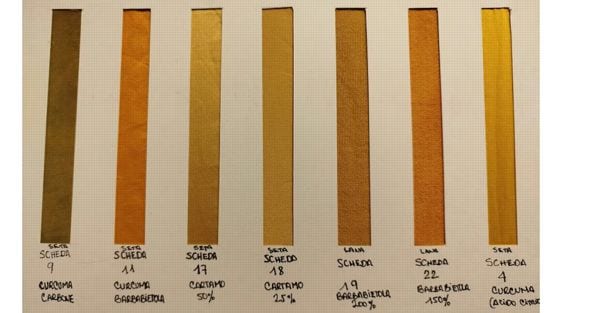
In the village, which with its mediaeval fortress is a symbol of the Gran Sasso and Monti della Laga National Park, a cultural and production hub is thus taking shape, which until June, but also afterwards, will offer professionals and enthusiasts courses dedicated to mountain knitwear, dyeing with natural pigments, rural costumes, but also technologies for circular fashion. "It is a great challenge, but a very exciting one," says Elena Baistrocchi, director of the Lisio Foundation. "We have brought looms and machinery, the idea is to create a place that is a centre of memory, research and innovation and that can be an attraction for the area, but not only. Moreover, our founder, Giuseppe Lisio, was originally from Roccamontepiano, in the province of Chieti, so for us this project also represents a return to the region'.
One of Istos' many objectives is to attract the interest of large companies towards Abruzzi wool, already the protagonist of capsules proposed by Loro Piana and Brioni, whose success has been determined not only by the quality of the fibre, but also by its narrative density. For centuries, the fleece of the region's merino sheep has fuelled the wealth of its villages, and if places like Calascio risk desertification, it is also due to the progressive disappearance of the wool industry.
Again with funds from the NRP, and again in Abruzzo, the National Observatory FiLA (Sustainable Native Wool Production Chain) was set up, a project of the architecture department of the 'G. d'Annunzio' University of Chieti-Pescara, which aims to map the local wool supply chains, put them in relation and propose a circular economy model that restores value to a product that is now considered a waste product of the food industry. In Abruzzo, according to FiLA, a year ago there were 126,022 sheep, distributed among 4,135 farms, of which, however, only 11 claimed to be rearing to produce wool.


