
Nonsensical user interfaces with too many touch controls: The car is not a smartphone and physical controls are needed
Ergonomics in the latest models seems to have been forgotten and at stake is road safety

The reveal of the interior of the Ferrari Luce, the Cavallino's first electric car (which many enthusiasts probably missed), turned the spotlight back on the intricate relationship between design, materials, technological innovation and user interface.
Curiously enough, which took place in California and not Maranello, the presentation triggered a veritable media hype, coincidentally in Apple style, where too many felt the need to speak out, including digital creators and mobile phone influencers who have never seen a Ferrari except on the road. All this for a reason: the interior in question was conceived by former Apple designer Jony Ive and his design studio LoveFrom. And therein lies the key point: Ive has reintroduced the usual formal and material language, seen and revised, in so many Apple products, made of aluminium turned from solid with numerically controlled machines and Gorilla Glass. The result is pleasing, at times innovative, but in the end we are faced with a Ferrari with a giant Apple Watch set into the dashboard and aesthetic solutions that are clean and linear but not very exciting and, for this reason, clearly not in keeping with the legendary Italia brand whose DNA is based on adrenalin and passion.
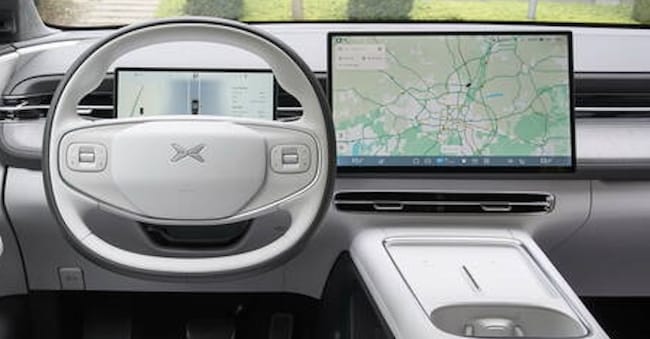
But perhaps the Maranello company, in a car that to call it divisive is an understatement, wanted to involve Apple fanboys in a sort of 'Apple car' and thus create a great deal of attention online (however, provoking an unparalleled wave of criticism on social media). Beyond that, Ferrari had the merit of having rekindled the light, it has to be said, on the excess of displays and touch controls. Of course, it didn't need to be said by Sir Jony Ive, in his automotive debut, that physical controls are preferable to touch controls in cars, as it is one of the big issues in today's car. The excess of digital on-screen controls (useful for cutting costs according to the less is more equation: fewer buttons = less expense) is becoming emergent in today's models, especially Chinese ones, with their nonsensical ergonomics that don't please EuroNCap or even the Chinese government. Once again, it must be reiterated that the car is not a smartphone on wheels and it is time to say no more to over-engineering, the insane art of making simple things complicated. As Henry Ford used to say: 'everything that isn't there, doesn't break' (and doesn't become obsolete, we might add). And among the hi-tech things to be eliminated, a place of honour goes to retractable handles, a symbol of form that hates function; it is no coincidence that, after years of 'Teslara' emulation, they have been banned in China due to their dangerousness.


