
Excise duties, another extension of rebates Aid to trucks and local transport
Friday in the new fuel decree. Giorgetti: 'Covers not easy without a derogation to the Pact', but first clarifications with the Commission
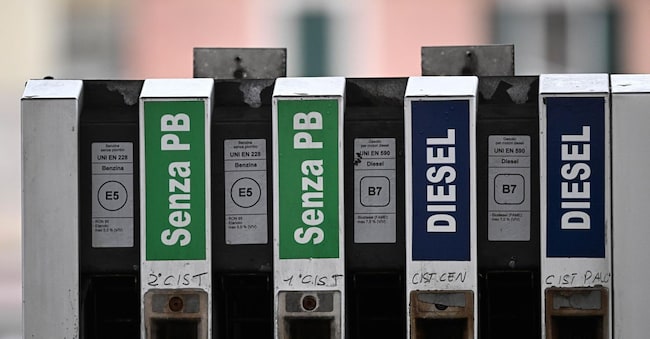
In the council of ministers scheduled for Friday at 7pm, 'measures will certainly be taken on road transport and local public transport'; 'to renew the rebate on excise duties we are working on the coverage', an undertaking 'which is never easy in the absence of derogations to the pact'.
The grid of the fourth fuel decree to be approved the day after tomorrow began to take a definite shape in the words delivered to journalists yesterday by Giancarlo Giorgetti on the sidelines of the G7 Finance. On the second and final day in Paris, which closed with the declaration in which the finance ministers emphasised that 'a rapid return to free and safe transit through the Strait of Hormuz and a lasting solution to the conflict are imperative', the Italian account holder continued to weave the diplomatic web to open a few gaps in EU tax rules.
The objective is not related to Friday's decree, which will once again have to rest on domestic resources now the subject of yet another hunt in the General Accounting Office. But it is indispensable for the next steps, when it comes to drawing up broader measures against the fallout of the Middle East crisis on the economy and on energy prices for businesses and households. All the more so since the 'lasting solution' to the conflict evoked by the G7 is still struggling to appear on the horizon.
First Openings in Brussels
On this point, yesterday Economy Commissioner Valdis Dombrovskis said that the EU executive continues "to follow the situation closely and to assess what kind of response it requires and will require, and it is in this spirit that we are also examining Italia's request". The one pronounced by Dombrovskis is not a prejudicial 'no' to the proposal toextend to energy the preventive green light to the national safeguard clauses already recognised since last year for defence. The debate "will continue in all the useful and necessary forums to arrive at a solution", Giorgetti explained, reiterating that "there is not only the derogation; there are many ways to arrive at the result and we are exploring them all".
Beyond the official declarations, the impression is that of an attempt to build bridges between Rome and Brussels, in a geopolitical scenario that continues to be stingy with good news.
The road is strewn with obstacles, raised above all by the different interests dictated by the budgetary conditions of individual countries. But it can pass through various forms of flexibility that are more or less explicit in the EU fiscal rules, which for example ask the Commission "not to follow a mechanical approach" in the overall assessment of national budgets, called on to take into account "the deviation, as well as relevant mitigating and aggravating factors, such as significant inflationary developments and exceptional circumstances, where applicable" (thus the Code of Conduct of the EU Pact in Chapter 5, the one dedicated to monitoring the corrective path followed by countries in excessive deficit procedure, such as Italia).
The issue is set to return on Friday morning at the informal Eurogroup meeting in Cyprus. Where Giorgetti will stay for a few hours before flying back to Rome, for the meeting with the hauliers and then for the evening council of ministers.


