
Accorsi travelling with Ulysses: resisting the sirens of social media
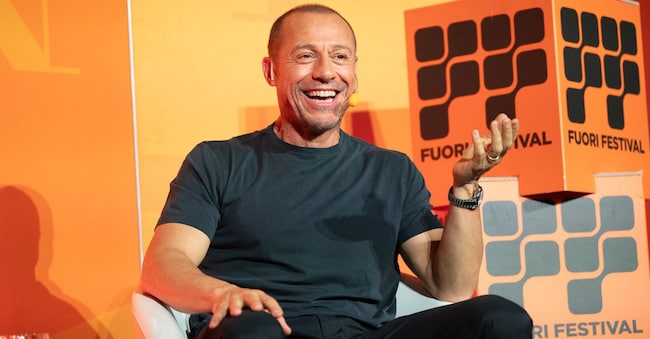
Stefano Accorsi, actor, director and producer, spoke on stage at the Trento Festival about his idea of economy, his projects on climate change and his most recent work inspired by the myth of Ulysses and the Odyssey

3' min read
3' min read
"Remember that behind every war there are always economic and commercial motivations," our history teacher used to tell us in secondary school. This struck me because we were not used to conceiving of it that way. Apart from the sad example of wars, I think that economics is a very interesting form of motivation for human beings. So I am very interested in it, I am passionate about it, just as I am passionate about geopolitics and politics in general'.
Stefano Accorsi, actor, director and producer, spoke on stage at the Trento Festival about his idea of economy, his projects on climate change, and his most recent work inspired by the myth of Ulysses and the Odyssey. "The economy is a great engine, also cultural: think of the patrons who have financed art and invested in culture. Art is inseparable from economics, and economics is always behind the things that matter,' he said.
Sustainability in theatre
.Combining art and science to bring the story of sustainability and ecology issues to the theatre without catastrophism but with empathy. This is the aim of Planetaria, a project of which Stefano Accorsi is artistic director and which offers free shows and meetings on the theme of sustainability for adults and children.
"We hypothesise future scenarios, imagining our world as it could be a hundred years from now," the actor says, "dramatising everything, but following the impulses given by some scientists dealing with specific issues, who are on stage together with the actors. "The idea for the project, which is in its second edition this year,' continues Accorsi, 'came from a study according to which the catastrophic approach to these topics is counterproductive, and also from the fact that literature and theatre are areas where talking about these topics is more effective'. Theatre 'is the place,' he says, 'in which everything exists, and everything together: drama, comedy, farce, tragedy', and therefore becomes the right place to tell stories, because 'we believe that more than a thousand pieces of information, emotions leave an important mark'.
Ulisse and the 'sirens' of social
.Early 2026 will see the arrival of a new show by Accorsi, an engaging monologue inspired by Ulysses and the mythical journeys of the Odyssey, a metaphor for the desire for exploration and knowledge of the unknown that all men share. "In most stories Ulysses is the narrator of himself and this made me reflect on the power of storytelling that made him immortal," explains the actor. "He's a very fascinating and contradictory character, he's really just a man who wanted to go home, who didn't want to go to war and that's why he pretended to be crazy," he adds. If we were to bring the myth of the Odyssey into the contemporary, what siren song would Ulysses have to endure today? 'Everything social, because it captures our concentration and turns it into distraction. And even if we are aware that social is 'addictive', we do not deprive ourselves of it'.


