
Conti gives the go-ahead to the EU plan. Giorgetti: ‘Dark clouds on the horizon’
The Budget Policy Document has been approved. Funding is targeted at 7–8 billion from the banking sector, the energy sector and the gambling industry

The draft budget to be sent to Brussels by tomorrow evening has received a vote of confidence from the Council of Ministers. The approval given yesterday at the cabinet meeting is essential to set the Dpb – the Draft Budgetary Plan – in motion, ahead of its submission to the European Commission for review. However, the announcement is light on figures.
The figures will only begin to take shape once the text has actually been sent to Brussels and published. The statement issued overnight by the Government merely reiterates that the Document confirms all the policy objectives of the DPFP approved earlier in the day by Parliament, including the rates of increase in net expenditure with or without the safeguard clause. The trajectory is in line with the ceilings agreed with the EU and, apart from the derogation for energy and defence, therefore offers no additional deficit margins for other measures.
The Minister’s warning
The whole plan hinges on negotiations with the EU regarding flexibility and how the clause is to be applied.
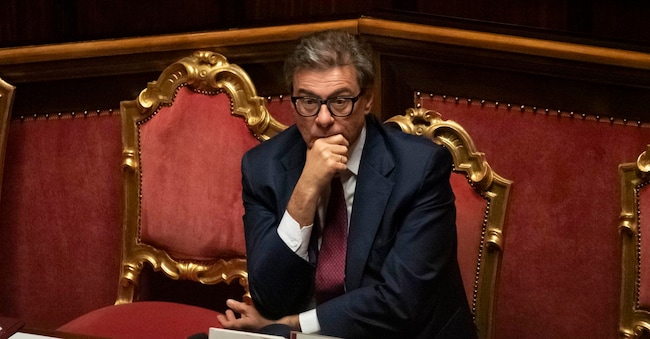
Yesterday, too, Giancarlo Giorgetti was particularly keen to put the brakes on and to warn everyone of the risk of dark times ahead. ‘Dark clouds are gathering on the horizon,’ the Minister for the Economy had warned early this morning whilst presenting the Budget Policy Document (DPFP, the domestic version of the programme of which the DBP for the EU is a more detailed elaboration) to the Chamber of Deputies. “When the weather forecast predicts a storm,” he said at Montecitorio, “before heading out to the open sea, it is wise to check the condition of the vessel.”
The cover-up
Comments of this sort form the mantra that Giorgetti has been following for weeks, and which he repeated on Monday at the majority party meeting and during the hearing before the Budget Committees, before reiterating them yesterday to an almost deserted Chamber of Deputies. ‘They don’t want to work,’ snapped the Finance Minister at those who pointed out the almost total absence of MPs at the start of proceedings, shortly after 9 am – well after dawn. The same refrain was heard in the evening at Palazzo Chigi, helping to smooth over some differences within the majority regarding the raising of funds to finance the measures.
The figures speak for themselves. Alongside the €14.4 billion per year in additional deficit under the clause – split equally between energy and defence – the scope of the ordinary budget is extremely limited.
The revenue column is struggling to reach a target set at around 7–8 billion (yesterday’s *Il Sole 24 Ore*), a third of the already modest budget law passed last year.
Given such a shortage, and with no scope for deficit margins outside the clause, it is difficult to raise political objections to potential sources of revenue. This is confirmed by the willingness to seek contributions from banks and insurance companies, signalled yesterday by the centre-right Deputy Prime Minister Antonio Tajani, who has taken a firm stand against the proposal to shelve the IRPEF cut for the middle class, which would raise the income threshold for the 33 per cent tax rate from 50,000 to 60,000 euros per year.
As well as the financial sector, the bill will also be presented to energy companies, in line with the principle reiterated by Giorgetti himself, according to which ‘everyone who can contribute will do so’. The scrutiny of the officials at Via XX Settembre is also directed at gaming concessionaires, who may be asked to contribute one billion over two years, divided between the extensions of concessions for betting, bingo and slot machines, and the tender for scratch cards for 2028.
Upcoming events
All this is a necessary, but not sufficient, condition for launching a budget package that must decide between personal income tax cuts, tenuous rebates on healthcare costs, measures to boost the birth rate and relief on utility bills. On this last point, the Government is once again turning to the EU to draw on the clause to secure funds for direct aid to households. The nature of the budget package will depend on the EU’s response: the details of which will begin to emerge in a couple of weeks’ time, before it reaches the Chamber of Deputies around 28 October.


