IFA 2026

Acer at IFA 2026: from gaming to on-device AI – the PC is branching out into a thousand different forms

5' min read

Translated by AI
Versione italiana

5' min read

Translated by AI
Versione italiana

BERLIN – From a gaming PC that fits in both hands to a desktop AI workstation, via 3D laptops, ultra-lightweight models, 1,000 Hz monitors and even a Predator scooter. Acer is taking advantage of the traditional IFA 2026 event in Berlin to unveil one of the most diverse line-ups in recent years, in which the typical PC now represents only a fraction of the range on offer.

The overarching theme is, above all, specialisation: The ‘computer’ no longer does the usual things (a bit of everything, more or less quickly), but is increasingly giving way to devices built around specific uses: competitive gaming, local AI, mobile working, hybrid productivity, content creation and so on. And it is artificial intelligence that perhaps best illustrates this evolution, because Acer offers vastly different machines depending on whether you simply want to use AI or run complex models and agents locally.
Loading...

Gaming is becoming increasingly portable

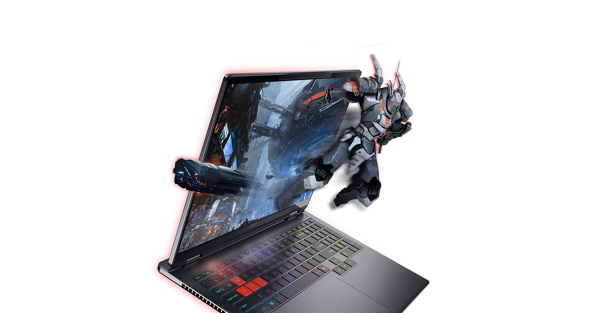
The most popular part of the announcements centres on the Predator Atlas 7, a handheld Windows gaming PC with a 7-inch screen that’s smaller than the Atlas 8. The aim is to offer an even more portable alternative to traditional consoles without sacrificing access to the PC catalogue and Xbox Game Pass, but it’s worth remembering that the average age of gamers is rising and that, beyond a certain age, screen sizes need to get bigger again.

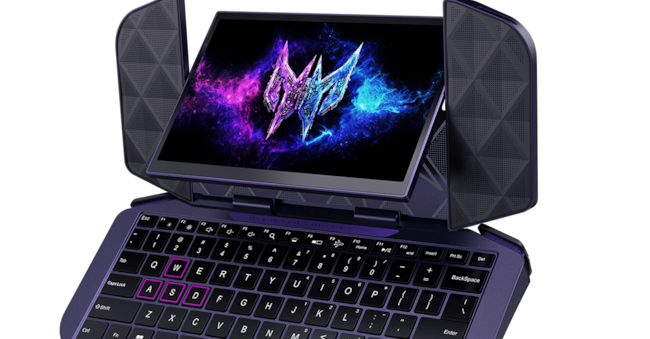
Even more intriguing is Project DualPlay Mini, which is currently just a concept that revisits a format we’ve seen before, but which never really caught on. It is a device capable of transforming from a handheld device into a small notebook via a mechanism that flips and rotates the screen to reveal a physical keyboard. In console mode, you play using traditional controls; when you rotate the screen, however, the keyboard appears and the device becomes a mini PC, which can also be connected to an external monitor. It’s an interesting experiment because it stems from a need for gaming whilst also appealing to those who use their PC on the move.
A laptop that transforms 2D into 3D

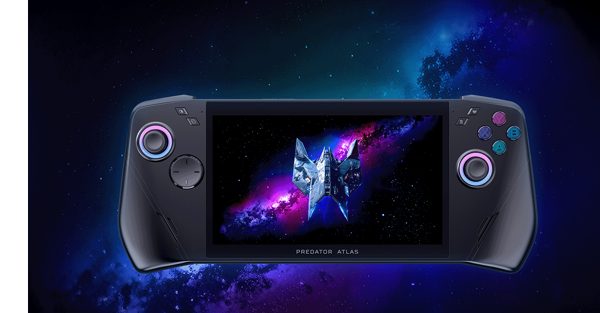
The Aspire G 3D 16 also sits halfway between gaming and content creation. It, too, revisits approaches we’ve seen before, but reimagines their use in a more pragmatic way. Its unique feature is the use of two cameras on the bezel to track the user’s eyes and calibrate the display in real time, so as to show 3D images without the need for dedicated glasses. The included software can also convert photos, videos and other 2D content into three-dimensional images, but it is in gaming, of course, that the benefit is most pronounced, with greater separation between foreground elements, the background and objects in the scene. As well as gamers, designers, CAD engineers and content creators may also find it very interesting.
A 1,000 Hz monitor is coming to eSports

Whilst the Aspire focuses on depth, the new Predator and Nitro monitor ranges take another feature to the extreme: speed.

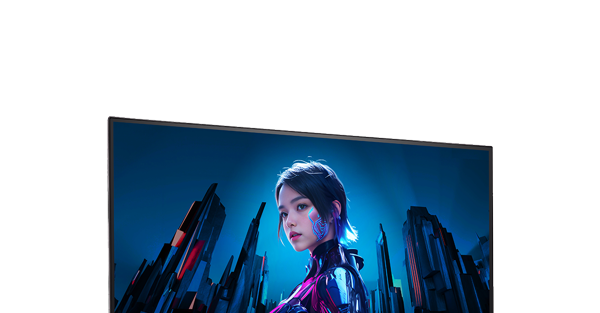
The fastest is the Predator XB253Q U1, Acer’s first gaming monitor capable of reaching a refresh rate of 1,000 Hz. It has Full HD resolution, and the target audience is certainly not gamers looking for spectacular scenery, but rather the world of eSports, where minimising latency and motion blur is more important than image sharpness. It brings to mind the days when competitive Quake players would lower the resolution to the minimum to achieve the highest possible frame rate. The model will arrive in Europe in the first quarter of 2027, starting at €1,099.

Local AI can be divided into two approaches

However, it is in the field of artificial intelligence that Acer’s announcements become most interesting from the perspective of the evolution of the PC. Acer has unveiled two concepts for machines designed to run AI and agents directly on-premises, but based on very different hardware philosophies.

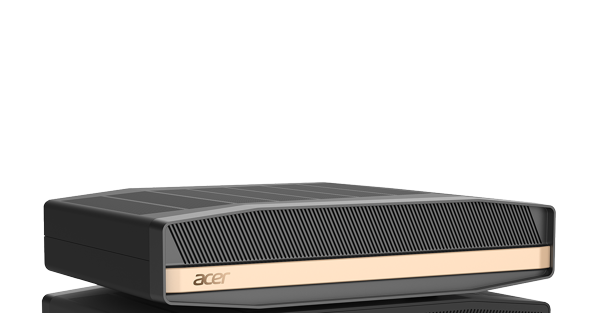
The first is the Acer SFF RTX Spark, a compact desktop built on the new NVIDIA RTX Spark platform. The system combines an NVIDIA Grace CPU and Blackwell RTX graphics architecture, with up to 128 GB of unified memory and 1 petaflop of AI capability. The stated target audience includes AI developers and creators, and the aim is to provide a machine capable of running demanding AI applications and agents locally on the desktop, without constantly relying on the cloud for data and inference. The second is the Veriton RI110 AI Mini Workstation, which instead utilises a more conventional PC architecture based on Intel Core Ultra and Arc graphics. Acer states that it supports models with up to 120 billion parameters, with a maximum of 96 GB of memory, and, most importantly, the ability to expand the system by connecting external GPUs via OCuLink.

We are therefore beginning to see a differentiation in the range of workstations designed for intensive AI use, with a very clear message that not all personal AI necessarily has to rely on a specialised NVIDIA architecture, nor does it necessarily have to be cloud-based. Among other things, Acer offers its own AI Agentica environment called Qubi Claw, where agents operate locally within a sandbox.

Loading...

Repairability and lightness

Turning to the more traditional business sector, one of the most interesting products is the Acer Vero 16. In this case, the novelty lies not so much in the inclusion of AI – it is a Copilot+ PC – but rather in the attempt to tackle the issue of the computer’s lifespan in a practical way. Acer has, in fact, added a fourth ‘R’ to the traditional ‘reduce, reuse, recycle’ formula: ‘repair’. The battery and SSD can be replaced by the user; the base can be opened without tools; the hinge is removable; and even the I/O port covers have been designed to facilitate maintenance. For those who prioritise weight above all else, Acer has unveiled the Swift Blade 14, a 14-inch notebook weighing in at 799 grams and measuring 12.9 millimetres thick. It is clearly designed for those who spend much of their day travelling with their laptop in a bag, whilst still offering the option of an OLED display with a resolution of up to 3K.

There is a 16-inch version, the Swift Air 16, but it weighs 1.5 kg. Both will be available in Europe from December.

The most unusual accessories: ePaper and three monitors in a bag

Rounding off this flurry of announcements are a few less traditional products, but ones with a clear purpose and, at times, an innovative twist. The most original is probably the Acer EP130K, a 13.3-inch portable ePaper monitor. It is designed for tasks that require long hours in front of a screen, perhaps outdoors or in places where glare can be a nuisance. It is touch-sensitive, can display images in colour or black and white, and utilises the bistability of ePaper, retaining the displayed image even when the power is switched off. It’s a shame about the rather high price of 749 euros.

The PD163Q P3 is a truly impressive piece of kit – a sort of portable multi-monitor workstation. Once opened, it provides three 15.6-inch displays connected to the laptop via a single USB-C port: including the laptop’s own screen, this gives you four screens in a single mobile workstation. It is aimed at those who work with many windows, dashboards, timelines or applications simultaneously and will cost 349 euros.

Copyright reserved ©
Loading...

Brand connect

Loading...

Newsletter

Notizie e approfondimenti sugli avvenimenti politici, economici e finanziari.

Iscriviti