
Adèle Haenel: 'Locked in the silence of abuse I felt I was dying'
"I left the abusive world of cinema because I wanted to live!": the great French actress at Fifdh in Geneva vindicates her decision to leave the big screen and, having become an activist, explains what solidarity and resistance means to her

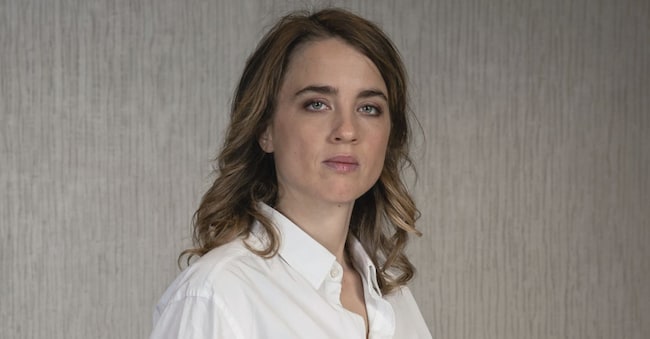
"When you refuse to be dehumanised, you also refuse to be dehumanised by others. Mine was a life choice, I had to live!". This is how the French actress and activist Adèle Haenel vindicated her choice to leave the abusive world of cinema, during the panel discussion 'Solidarity is not a slogan', held at the Human Rights Film Festival and Forum (Fifdh) in Geneva, which was also attended by the US essayist and activist Sarah Schulman and the Italian-French journalist Constant Spina.
"I refused to collaborate with a system that was suffocating me, a patriarchal system based on sexual violence against children. It had become unbearable for me to be in denial. That's how solidarity came into my life, it's not that I wanted to help others, I didn't see another way to live," added Haenel, who had director Christophe Ruggia convicted of molesting her when she was between 12 and 15 years old and who, during the evening of the 2020 César Awards, walked out of the room shouting "La honte!" protesting against the awarding of the prize to Roman Polański. "Solidarity I don't think is something one-way, it is an exchange, an exchange of practices of resistance," Haenel said from the Fifdh stage.
'I involved myself in the #metoo, but I did not break the silence alone,' she responded to a remark by Spina that she had opposed a system that relied on silence, breaking it. 'There were people before me who did it, who made my word possible. In the silence in which I had enclosed myself, I had the impression that I was dying. My drive was not intellectual, I wanted to live! Then on the way I met other people who opened my eyes to Palestine, the colonial order, global apartheid. I joined their struggle. Solidarity and resistance for me are a practice of life'.
'I was amazed at the ability to act on reality that I had,' Haenel said. 'When I denounced #metoo I was afraid, I thought I would explode, I thought that when you talk about sexual assault there is a before and an after. But no, there isn't, and then I started to take a liking to this kind of posture, to be upright, to stand up to those who attack us,' she added, talking about the 'contagion of courage' that exists in demonstrations, for example those in Iran, and that 'makes us very powerful as a collective body'. And referring to those who tell her that she has paid dearly for her decision to leave cinema, for what it implies in terms of money and visibility, Haenel said, with her characteristic intensity: "This makes me proud to live. At the end of my life I will say to myself 'I have lived my life'".
The discussion, which followed the beautiful documentary Portuals, by Perla Sardella, was about the possibility of behaving in solidarity despite the times. Schulman emphasised that it is crucial at this time to seek alliances with all the people with whom you agree on at least some points and try to forge links. "And if you really don't agree with anyone, at least try to find two people with whom you can read the news together!" Haenel also said something similar: "The neo-liberal, capitalist world destroys the human connection, the empathy we can feel for others. There is work to be done to rebuild these bonds'.


