News

Administrative capacity, Sondrio leads the race of chief municipalities

Maqi index snapshot of local authorities i based on 11 parameters: politicians less educated in inland areas, South penalised in budgets Last Catania

by Michela Finizio

5' min read

Translated by AI
Versione italiana

5' min read

Translated by AI
Versione italiana

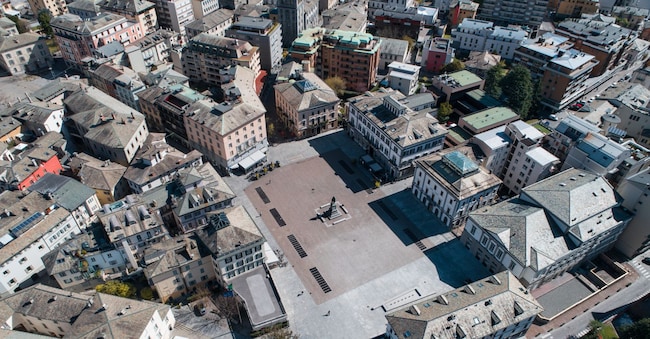
The local authorities of the 112 provincial capitals have a greater administrative capacity - on average - than the other Italian municipalities, thanks to fewer financial constraints and more qualified civil servants. And among the capital cities, Sondrio is the best performing municipality, followed by Savona and Genoa.

At the bottom, however, the statistics penalise Isernia, Agrigento and Catania. Measuring the qualitative characteristics of 7,725 local authorities - increasingly at the forefront in the provision of public services, management of funds and administrative activities - is the new Municipal Administration Quality Index (Maqi), which aggregates 11 statistical indicators divided into three dimensions (structural, behavioural and financial) that are fundamental for assessing the performance of local governments.

Loading...

Developed by a team of researchers in applied statistics in the social sciences (Augusto Cerqua and Costanza Giannantoni of La Sapienza University, Federico Zampollo of the Gran Sasso Science Institute and Matteo Mazziotta, manager of Istat), the study uses annual public data provided by certified sources and collected since 2001.

CLASSIFICA DEI COMUNI CAPOLUOGO DI PROVINCIA IN BASE AL MAQI

Loading...

Scientific Research

"The Maqi index, which measures the administrative quality of Italian municipalities, can become a very useful internal tool for local authorities. It should serve the administration to self-assess itself and understand where it is a priority to intervene, as well as citizens to evaluate local government'.

Matteo Mazziotta, central director of Sistan and Territory for ISTAT and a member of the research team that developed the Maqi index is convinced of this, using the methodology devised years ago by Mazziotta himself to construct composite indices and now used by the main statistics offices and international organisations. The strength of these indices was also discussed last week: the Maqi index was mentioned in the panel 'The numbers of municipalities. Granular statistics for understanding and deciding', organised by Ifel and Istat, during the Anci national assembly in Bologna. "The appointment was well attended," Mazziotta recounts, "because local administrators are now aware of how official statistics data have become essential working tools for guiding intervention policies on the territory.

The composite index, calculated for over 7,000 Italian municipalities, was first presented in the scientific journal Social Indicators Research last January. 'It is one of the most widely read and studied journals in the world for measuring social and economic phenomena,' Mazziotta explains, 'and it is not easy to get there. The research is currently 'bouncing around' in academia and, less than a year after its submission, is already highly cited. Moreover, while the scientific production process is proceeding - as always - slowly, the majority of studies with a territorial approach involving the local institutional aspect are already using the Maqi index in work-in-progress projects presented at scientific conferences.

LE MAPPE

Loading...

The rankings of the capitals

 Focusing on the performance of the 112 capital municipalities and the average values measured in the three-year period 2021-2023, extracted by the research team for Il Sole 24 Ore del Lunedì, some specificities of local public administration emerge: the financial data of local authorities, for example, penalise the municipalities in the South; observing the levels of education and gender parity in local councils, moreover, the performance of inland areas stands out negatively.

The Maqi index does not measure the output that each council is able to offer in the territory, in terms of services or opportunities (to measure which other data would be needed, which are not examined here), but photographs the technical, political and managerial characteristics of local administrations. "The final index rewards local authorities that do fairly well, in a stable manner, in all indicators, while penalising those that do badly even in some of them," explains Federico Zampollo of the Gran Sasso Science Institute.

QUALITÀ E CAPACITÀ DEI BUROCRATI LOCALI

Punteggio dei capoluoghi di provincia, in base a 4 parametri statistici

Loading...

1) First of all, the index measures the quality of the administrative machine, combining data on human capital (average years of education of civil servants), staff turnover (high turnover can compromise continuity and operational skills), staffing (number of employees per 1,000 inhabitants) and absenteeism (average absenteeism per employee). An undersized or unstable Pa can compromise the ability to implement public policies. "In Italy, we have a problem with the progressive reduction of administrative personnel in local authorities: we have gone from 7.4 employees per 1,000 inhabitants in 2001 to 5.4 per 1,000 in 2021," says the researcher.

Metropolitan cities seem to have an advantage here, with Milan and Rome among the top five according to the first set of four indicators. More generally, the capitals have more educated employees than the average, and about six per thousand inhabitants (5.3 per thousand nationally). Aosta is the capital city with the lowest absenteeism (10 days per employee), while Caltanissetta has an average of 41 absences per employee.

QUALITÀ DEI POLITICI LOCALI

Punteggio dei capoluoghi di provincia, in base a 3 parametri statistici

Loading...

2) Secondly, the index captures the structural characteristics of local leadership, including the years of education of the mayor and other representatives (deputy mayor, councillors and council president), gender parity in political bodies and the share of administrators with white-collar profiles (clerks, professionals, managers). Political skills and professionalism favour strategic vision, planning and democratic legitimacy. "The mechanisms of politics," adds Zampollo, "incentivise the most educated profiles to compete in large municipalities because the salary is correlated to the resident population, based on thresholds. This is another reason why inland areas are penalised in this area'. The politicians with the most years of study behind them are to be found in Crotone (18 years, compared to an average of 14 in the 7,000 municipalities surveyed); among the leaders of the capitals, education levels and the share of white collars exceed the national average; gender parity is below average.

FINANZE PUBBLICHE LOCALI

Punteggio dei capoluoghi di provincia, in base a 4 parametri statistici

Loading...

3) Finally, the analysis also assesses the management effectiveness, executive autonomy and financial sustainability of local authorities through the indicators on expenditure rigidity (incidence of fixed expenditures on the budget), expenditure capacity (ratio between actual and ascertained expenditures) and collection capacity (% collection of revenues) and the share of budgeted investments. Here, the North-South divide emerges most clearly, with no particular virtuosity on the part of metropolitan cities: the last three places of Trapani, Agrigento and Isernia contrast with the podium places of Bergamo, Bolzano and Cuneo. In the capitals, in particular, the spending capacity (79%, against the average of 73%) and the collection capacity (75% against 73%) are higher. The investment rate, on the other hand, stands at 13%, compared to the national average of 24%, with a record 63% in L'Aquila. Economic performance, more than bureaucratic and political performance, is affected by the country's structural fragilities. In Sondrio - ranked first in the final synthetic index - the spending capacity is 84 per cent against 76 per cent in Catania; the collection capacity is 77 per cent while the Sicilian capital stops at 67 per cent. Lastly, investments in Sondrio are close to 20 per cent of expenditure, while in Catania they do not exceed 7 per cent.

Analysing the evolution of the index over time, significant improvements in the educational level of employees emerge (from an average of 10.5 years of schooling in 2001 to 13.1 in 2023), a reduction in absenteeism per employee, a decrease in employees per thousand inhabitants and, in recent years, an increase in staff turnover. There is also a decrease in expenditure rigidity and an increased collection capacity.

Copyright reserved ©
Loading...

Brand connect

Loading...

Newsletter

Notizie e approfondimenti sugli avvenimenti politici, economici e finanziari.

Iscriviti