
“Adopt an archaeological artefact”: an appeal from Naples to local councils and citizens
A project by the Metropolitan City to promote lesser-known heritage sites. The first 200 proposals have been collected. The initiative was presented at the BMTA

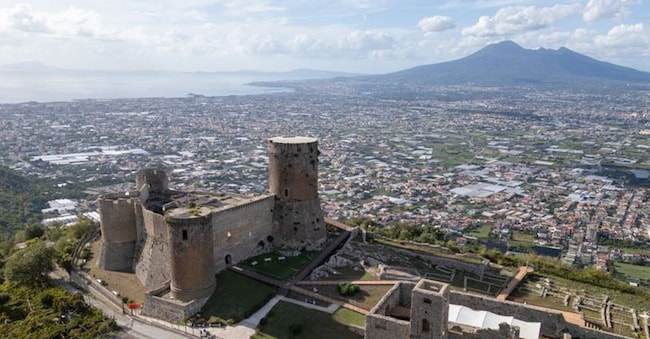
In a region rich in archaeological heritage, with sites both large and small – the latter often forgotten – managing and promoting all of this is a near-impossible task. Often, the priority is simply to protect these sites, particularly in the case of smaller sites from which it is difficult to generate income. With a view to improving these efforts, the Metropolitan City of Naples, led by Mayor Gaetano Manfredi, has launched a project. Or rather, it has launched an appeal: ‘Adopt an archaeological site’, a project which aims, precisely, to improve the promotion of the entire heritage of the area with the highest archaeological density in Italia.
The initiative – which will be eligible to draw on the 10 million in funding that the metropolitan city has earmarked for culture – was presented at the BMTA, the Mediterranean Archaeological Tourism Fair, now in its 28th edition, which is currently taking place in Paestum, the city of temples.
“Each of the 92 municipalities that make up the Metropolitan City of Naples,” says Manfredi, “preserves at least one trace of its past: Roman villas, necropolises, underground chambers, the remains of aqueducts and ancient settlements, which, taken together, make the metropolitan area of Naples the region with the highest archaeological density in Italia – in terms of both the number and extent of the sites relative to the size of the territory – and, in all likelihood, in the world. These are assets of extraordinary value that often remain on the fringes of tourist circuits and even beyond the knowledge of local communities: a heritage that is simply waiting to be integrated with UNESCO sites, so that it can become a driving force for tourism, cultural development and economic growth.’
It all starts with an initial screening. Local authorities, citizens and businesses – in short, the local community – are asked to identify which heritage sites should be promoted, thereby bringing to light even those that are as yet unknown, in response to the call for expressions of interest launched by the Metropolitan City of Naples. The survey has already yielded interesting results: in less than four months, around 200 archaeological sites have been identified for potential restoration work. Further proposals will be accepted until February, when the deadline closes.
“The project is off to a promising start,” comments Vincenzo Cirillo, a councillor for the Metropolitan City appointed by the mayor to oversee the promotion of the local area. “We have received not only suggestions, but also well-structured proposals that already see the beginnings of public-private bodies ready to take action.”


