Adventure and discovery at the Rossini Opera Festival

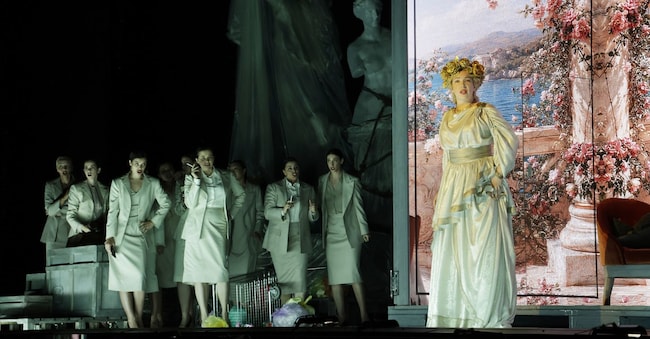
One always returns from the ROF feeling all the richer, and each time is invariably dazzled by the grandeur of the Pesaro region. For at the Rossini Opera Festival – now in its 47th edition – despite the inevitable ups and downs over the years, the spirit of adventure and exploration remains. In this year’s somewhat sparse programme, ‘Le Siège de Corinthe’ stands alone as the centrepiece – the opera first performed in Paris, marking its 200th anniversary to the day. It feels as relevant today as if it had been written yesterday, with its themes of besiegers and the besieged, invaders, destroyers, rubble and the fragments of survival. The new production rests on two strengths: the first, and most crucial, is the protagonist, Pamyra (with the accent strictly on the ‘a’), sung by today’s most celebrated prima donna, Vasilisa Berzhanskaya, whose beauty and charm are inversely proportional to the complexity of her Russian surname’s pronunciation. No one else possesses her effortless precision, her artful articulation of every single note – absolutely every one – savoured with the fluidity of a keyboard virtuoso. And with an iridescent tone that, starting from a mezzo-soprano foundation with a soft central timbre, now soars powerfully even into the upper register: without losing its richness, remaining fluid and seductive. Fantastic.
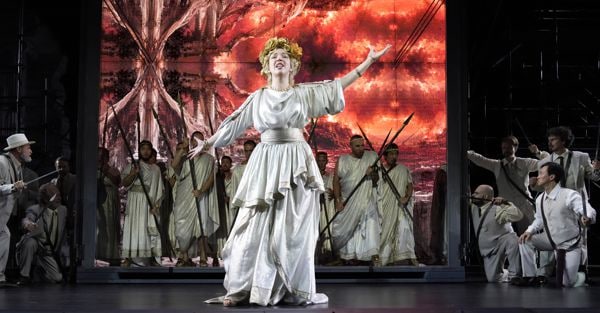
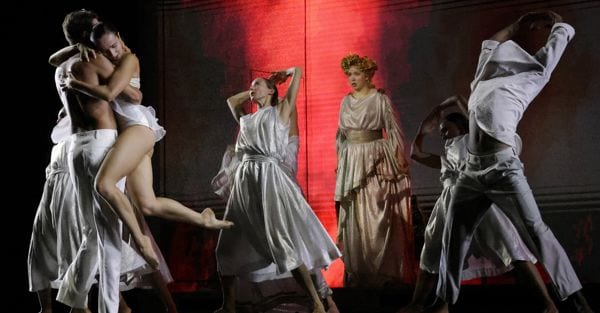
She is doubly fantastic because, in essence, she was born here – Vasilisa, at the ROF – where, just ten years ago, she sang alongside the promising young talents of the bel canto school (though she already had a solid foundation acquired elsewhere, being a native of Essentuki, a spa resort in the Caucasus region). There are many top-class female voices today, but none possesses her magnetic musicality, a blend of technique and class: no affectations, no affectations on stage. Almost aloof in her movements, she embodies all the aristocracy of a true artist. Rossini seems to have written the role of the heroine in *Le Siège* with her personality in mind: a young woman torn between an authoritarian father (one can really sense that the opera was conceived in Naples) and her love for Mehmed II, who would go on to destroy her homeland, Corinth, though she met him in Athens where he was wandering under an assumed name. In the world depicted by this three-act story, consisting solely of assaults and war, Pamyra’s golden thread provides a saving grace of femininity: at first combative and patriotic, in memory of her lost mother; then withdrawn into a private world of pure love for the charming and captivated stranger, whom she must renounce. A pedal of death will always accompany her; what a stroke of genius of Rossini to weave it into the narrative from the very start. Right up to her suicide, preceded by a Prayer (“Juste ciel, ah! ta clé
“mence”) sung entirely in half-voices, the most difficult singing technique. It is a masterpiece of Berzhanskaya’s artistry to bring it to such a conclusion.
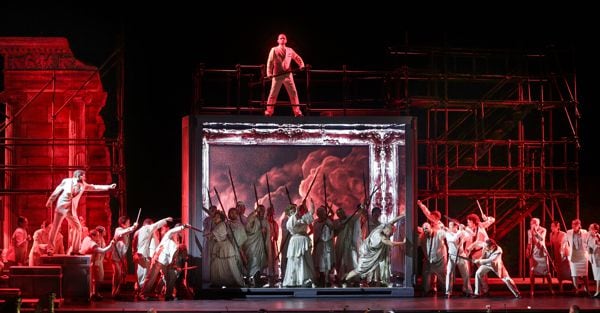
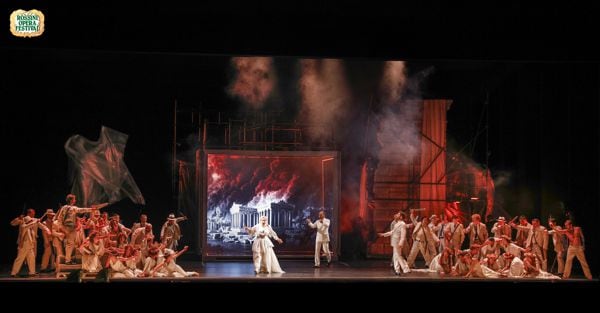
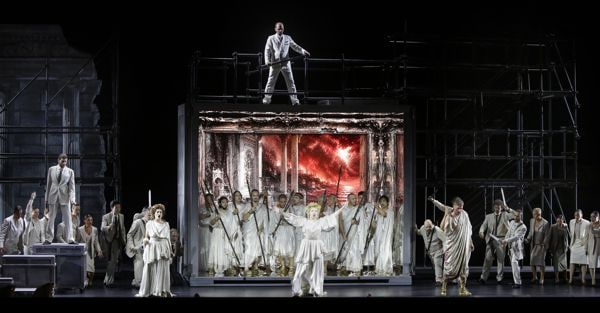
The second strength of the new *Siège* is Davide Livermore’s direction. It is clean and uncluttered, nothing new in terms of its powerful, highly personal style, yet stripped of all superfluity. Even the gesture of Mahomet urinating on the ruins of the Greek temple – which, incidentally, is already submerged beneath colourful rubbish bags – is consistent with an interpretation of exemplary clarity: it is we who are besieging Corinth, that archetype of beauty with its statues of the Venus de Milo and a dancing sister, wrapped in large plastic sheets, pointlessly preserved alongside other remains of classical statuary in large crates that open and close like miniature theatres within a theatre – refuges with backdrops that are by turns idyllic and deadly in D-Wok’s now-familiar design videos. A refuge from a lost world, a cultured reference to street theatre, they bear the ‘Rossini Opera Festival’ logo on their exterior. Yet in the final image, they reveal a landscape covered only by a mountain of rubbish. The reflections remain open-ended.
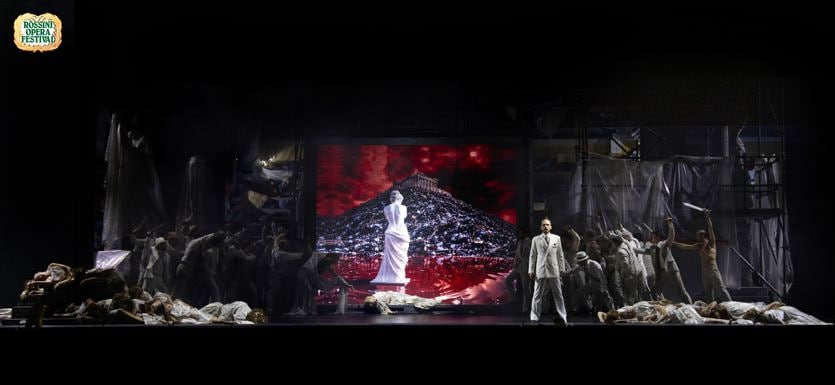
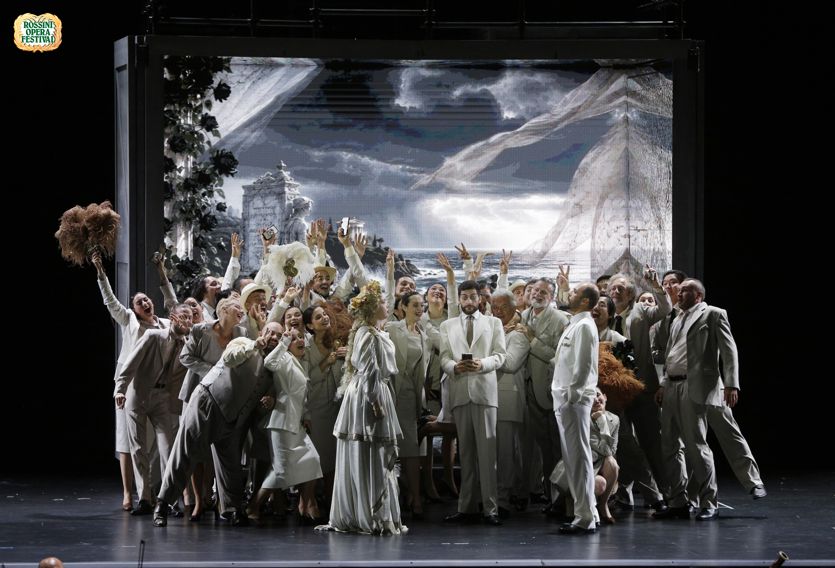
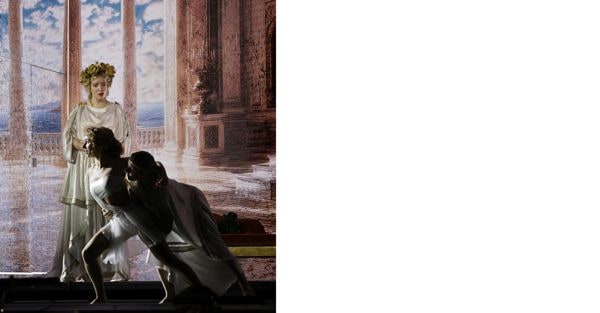
The distinct difference in attire between the besiegers and the besieged is also immediately apparent in Gianluca Falaschi’s stage outfits (let’s not call them ‘costumes’ any more): the Corinthians wear peplos, and the girls wear short skirts; Rossini wants them to exude a Christian air in the final choruses, where the blessing of the flags expresses, in words and music, their calling to martyrdom. A sacred, magnificent scene. The Turks, on the other hand, are also all dressed in white and cream, but in jackets, trousers, ties, waistcoats and Borsalino hats: they’re either smoking or taking photos on their mobile phones, or both. Constantly. A simple yet direct observation of our everyday lives. One of them embodies the unpleasant outcast, always standing to one side (a theatrical figure, yes, perhaps superfluous here) whilst picking his nose, biting his nails and cleaning the soles of his shoes by hand. The fourth and final precious surprise of this ROF, following the rediscovery of a rare score (a critical edition by Damien Colas Gallet, not yet published in the corpus of Rossini’s works), after the unforgettable Pamyra, after the authentic Livermore – a beacon in this summer’s Italian productions, in a contest of modesty – here is the final surprise: the Ventidio Basso Theatre Chorus. Already heard in previous editions, it now shines, having matured in both vocal quality and professionalism. In *Le Siège*, they sing practically throughout. And Rossini demands refined polyphony, incisiveness and shifting character from them, in the two contrasting roles of attackers and the attacked. Prepared and conducted by Pasquale Veleno, they respond with first-rate professionalism – perhaps the finest heard this summer – whilst usually performing in the small but cherished theatre scene of Ascoli Piceno.