Aero 2026, sustainable aviation enters the industrial phase
Record fair in Friedrichshafen shows a concrete transition: batteries, hydrogen and new aircraft reshape regional transport between technical constraints and industrial opportunities

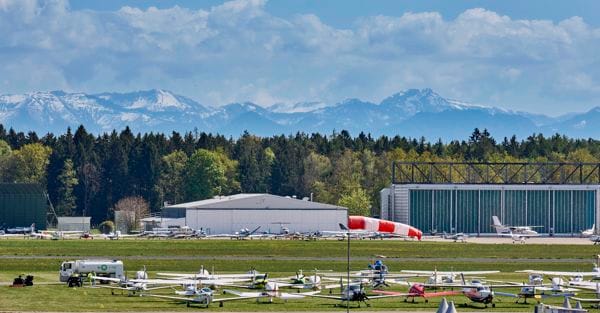
In Friedrichshafen, where general aviation continues to recognise itself every spring, the most interesting fact is not only the growth of the fair, but its continuous change of pace and function. AERO 2026, the leader in its sector, is setting a new record: it presents itself with more than 860 exhibitors from around 50 countries, after a 2025 edition that had already exceeded 760 exhibitors and 32 thousand visitors; numbers that confirm its centrality, but that today tell a different story. This is no longer just the historical home of light, sport and recreational aviation, but now represents executive aviation, regional aviation and the platforms of the future with equal weight. And one only has to walk through the exhibition centre to understand why Friedrichshafen remains a unique place: on one side the halls and taxiways of the airport, on the other side of the runway the Dornier Museum and, a little further on, the Zeppelin hangar. Here, aviation history is not the backdrop: it physically coexists with what tries to replace it.
"The response from the industry has been overwhelming," said AERO show director Tobias Bretzel. "This growth is the result of continuous and focused work, built in constant dialogue with exhibitors and visitors."
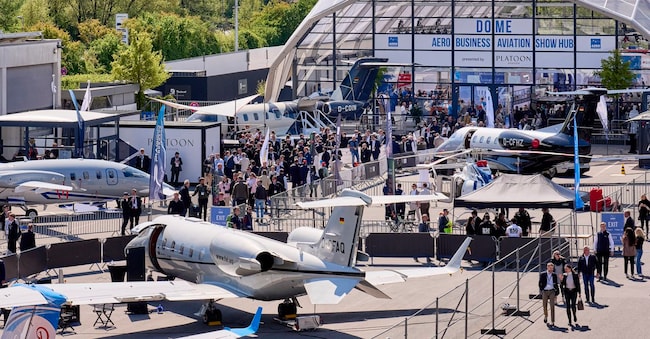
Business aviation occupies three entire pavilions plus the Business Aviation Dome on the outside forecourt, with fifty aircraft on display compared to thirty at the previous edition. Debuting in Europe is the Cessna Citation Ascend by Textron - Pratt & Whitney Canada PW545D engines, Garmin G5000 avionics with autothrottle - and for the first time at AERO also the Cessna SkyCourier, a twin-engine turboprop high-wing utility aircraft. Also on display were Dassault's Falcon 6X, Bombardier's Global 6500, Daher's TBM 980 in its European premiere, and the Kodiak 900. Piaggio Aerospace, taken over in 2025 by Turkish drone manufacturer Baykar after years of receivership and now operating under the name Baykar Piaggio Aerospace, is carrying the P180 Avanti EVO. It is a step that goes beyond its presence at the exhibition: it marks the return of a historic Italia brand within a new industrial logic, in which piloted aircraft, unmanned systems and aerospace integration can once again speak to each other.
The Italian presence is also particularly in evidence thanks to Tecnam, which occupies one of the most significant spaces at AERO, well over a thousand square metres. The Campania-based manufacturer, a world reference in piston-powered aircraft, confirms an industrial line based on operational efficiency, low consumption and advanced engines - from the latest Rotax to diesel solutions for training - with a wide and competitive range on the international scene.
Hall A7, dedicated to innovation, hosts Volocopter for the first time with the VoloXPro: a 600-kilogram maximum take-off weight eVTOL, ultralight category, base price 490,000 euro. Volocopter was taken over by Diamond Aircraft in 2025 after insolvency proceedings. Certification as a DULV ultralight is expected by the end of 2026; VoloCity, a commercial air taxi, aims instead for EASA certification by the same date to start operations in 2027. Also in the same pavilion is AURA AERO with the new design of the ERA, a nineteen-passenger French hybrid-electric regional aircraft with a promise of up to an 80 per cent reduction in CO2 emissions on regional routes of up to 1,000 nautical miles.