
Alfa Romeo Milan, Junior and surroundings: the 'alfisti' guide has disappeared
Is there still room for real Alfa Romeos? A difficult question
by Pier Luigi del Viscovo
 Aggiungi Il Sole 24 Ore
ai preferiti su Google
4' min read
4' min read
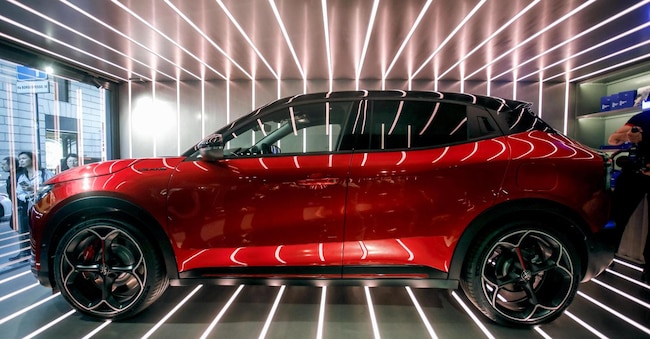
That the launch of an Alfa Romeo causes a stir is only to be expected. It is still a national heritage to which many Italians are attached, although not to the point of buying cars. It's just that the discussions reveal a sense of unfulfillment, almost a disappointment that then found vent on issues that are not very relevant and, let's face it, even a tad specious.
One object of criticism is the body: it looks like that car and that car. Of course, today they all look a bit alike. It is no longer the time when from the pencil of true artists came the Thema, the Croma and the Saab 9000, all on the same floorpan and yet so different. Until along came the genius of Pininfarina, who even derived the 164 from that project, leaving the world open-mouthed. So instead of criticising that a compact SUV looks like any other compact SUV, why doesn't anyone ask why such uniformity? Where have the priorities of aesthetics gone? What has replaced them? Fuel consumption? Safety? The desire to always and only attack the majority segment of demand, neglecting niches?
Then the name: Milan, not Piazza Duomo. It started out as a specious polemic and ended up à la Ennio Flaiano: serious, but not serious.
There is clearly an underlying malaise. Heck, it's not often that you greet a new Biscione car. One expects something different, something unique. An Alfa Romeo, if that's fair to say, not just any SUV with the badge stuck on it. Years ago, a brilliant Silvio Berlusconi teased Fiat, suggesting they put the Ferrari badge on the Panda in order to sell a truckload of them. As a fine marketing man, he knew it was just a boutade that would not work. A brand is a brand. Not every product can stand up to every brand.
Alfa Romeo is one of the very few brands in the world to embody a type of motorist: the Alfista. A person who wants to feel the road, has a sporty drive and wants to appear so. In Turin they know what that is: for the Stelvio ad they used 'pure alfista'. But then all the adverts, from Giulia to Tonale via Stelvio, avoid it. The protagonist is charming, but in the mainstream sense, very polished bordering on weak. The payoff insists on the 'mechanics of emotions' and 'Italian heritage', as if Alfa Romeo needed that, given that it is itself a symbol of Italianness. But above all, the cars do not race, the 'fast&furious' adrenalin is missing.

