Urban regeneration

Affordable housing: Redo Sgr's 5Square project wins the Uli Europe Award

The development - which transforms five buildings in Milan into accessible housing - is promoted by Fondazione Cariplo and Regione Lombardia and has the Cdp Group as anchor investor. The other challenges are Scalo Greco-Breda, ex-Macello and Caserma Mameli. But the municipality is being asked for clear rules, streamlined bureaucracy and realistic parameters. Because rising construction costs jeopardise sustainability
by Laura Cavestri

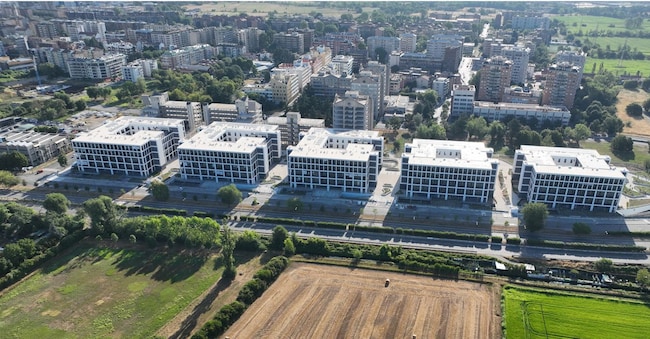
L’area di 5Square a Milano

5' min read

Translated by AI
Versione italiana

5' min read

Translated by AI
Versione italiana

An international award - and it is the first time that an Italian project has won the prestigious European recognition - and an authoritative and clear point of view on the issue of housing affordability, especially in large cities such as Milan. The 5Square affordable housing project in Milan - developed by Redo Sgr - has won the Uli Europe Awards for Excellence 2025, a prestigious European award for real estate development.

The 5Square project

This is the first time that an Italian project has won this award in the competition which, now in its sixth edition, celebrates the highest standards of quality in urban planning and real estate practice, evaluating projects according to strict criteria: planning, sustainability, social impact, resilience, architecture and design.
Situated on a former disused commercial area, 5Square is a 10,000 square metre affordable housing reuse project that has transformed an urban void into a community. The project was developed by Redo Sgr, through the Fondo Immobiliare di Lombardia, promoted by the Cariplo Foundation and the Lombardy Region and with Cdp as anchor investor, through the Fia fund of Cdp Real Asset Sgr, and with Barreca & La Varra as designer and Fondazione Housing Sociale as technical-social advisor.

Loading...

The 5Square project stems from the transformation of an abandoned and degraded real estate sector, consisting of five unfinished tertiary buildings in the Vigentino district south of Milan. The buildings will be energy class A2, powered by renewable sources. The project offers 468 homes at affordable rents, integrated with social, educational services and community spaces, promoting social cohesion and quality of life.For years this area has been an urban wound and a social problem. After a long and complex patrimonial and urban planning process, it was possible to redefine the intended use and restore life to these properties, unlocking the area's development. The intervention is not limited to offering residences at lowered rents and prices, but implements a concerted urban planning operation with the public administration, which provides for: a nursery school and kindergarten (0-6 years), spaces open to the area to support families and encourage a work-life balance; health, rehabilitation and dental services; creative and social workshops: spaces for people with disabilities, with employment paths and leisure time initiatives, local shops and pet services.
Residential services, on the other hand, include sheltered flats for minors and young adults: pathways to autonomy and social reintegration; accommodation for single-parent households and mothers with children; residences for people with disabilities.

"5Square is proof that it is possible to combine sustainable investments with architectural quality, social innovation and environmental sustainability," said Fabio Carlozzo, CEO of Redo Sgr.

"Among the elements evaluated by the jury," said Antonino Turicchi, CEO of Cdp Real Asset Sgr, "in addition to the excellent characteristics of the specific project, the innovative financial and governance structures weighed in positively, as well as the possible replicability of the projects, all elements that characterise our operations in the sector through the Fondo Investimenti per l'Abitare and the other funds of funds managed by Cdp Real Asset.

"The exceptionality," said Gianandrea Barreca and Giovanni La Varra, Barreca & La Varra, "lies in the fact that a building designed to house offices - in a city that has thousands of cubic metres of disused tertiary buildings - can have a second life. The task of urban regeneration architecture today is to take on the mistakes of the past, correcting, remediating, adapting and shaping new domestic landscapes".

The Scalo Greco-Breda and the former Slaughterhouse of Milan

Meanwhile, Carlozzo recalled, "Three weeks ago, the City Council gave the go-ahead for the first of the Plans implementing the Programme Agreement for the transformation of Milan's former railway yards. We are talking about the 'Scalo Greco-Breda' Implementation Plan", which develops the "L'Innesto" project financed by Redo, the winning project of the Reinventing Cities 2019 Bando Reinventing Cities 2019 and "envisages the construction of a new carbon neutral social housing district, while over 60% of the total area will be allocated to green and public spaces". The area involved covers a total area of approximately 63 thousand square metres between Via Breda, Via Rucellai, Via Gilardi, Via Sesto San Giovanni and Via Torcello in Municipalities 2 and 9, and is owned by Redo Sgr Spa, which is also developing the project together with Fondo Fil.
There will be 21,000 square metres of social housing, divided into subsidised residential housing for sale, lease-to-own and co-housing (approximately 8,300 square metres); residential housing for rent at moderate and/or agreed rents, subsidised rents and social co-housing (approximately 10,600 square metres); residential housing for rent at social rents (a minimum of 2,000 square metres). Shops and commercial areas are planned on the ground floor of the buildings, as well as an agreed university residence.

And again, there is the new Milan district that will be built on the Art Nouveau buildings of the former public slaughterhouse in Viale Molise. The public space will be redeveloped by Redo Sgr, which won the invitation to tender from Palazzo Marino. The six buildings will be granted surface rights for 90 years, for a consideration of approximately 12.8 million euro. The agreement will apply to all the buildings except the fourth, which will become a cultural space (for which the surface right will last six years).

The challenge of combining accessibility and sustainability

"Today," added Carlozzo, "the areas available for building are few and far between, and net of reclamation, which often has to be done, you are good if you can build at 2,100-2,200 euro per square metre. This means that, with the additional charges, it is difficult, in Milan, to go out on the market - even with affordable homes - for less than 3,000 euro. So are rents per square metre, in the city at no less than 85-90 euro per square metre per year. It's hard to stay within the parameters of the municipality, which sets a limit of 80 euro per square metre per year for housing at controlled prices". The reference is to the Milan City Council's Housing Plan, which - in the absence of a national plan - sets itself the ambitious goal of creating 10,000 affordable dwellings within ten years, with calmierated rents at a maximum of 80 euros per square metre per year (about 400 euros per month for 60 square metres), aimed at workers with medium-low incomes, through the recovery of urban areas and public buildings, focusing on sustainability, urban regeneration and inclusiveness, with calls for tenders underway for the first areas.

'Out of 2350 flats built,' Carlozzo said, '800 we have sold at EUR 2,120 per square metre and 1400 are rented out at EUR 70 per square metre. Today we have 12 projects underway for 3,000 flats in social housing, about one third of the housing units the municipality would like to build. However, the redevelopment of the former Mameli Barracks area in Milan, which won the Reinventing Cities 2019 competition, only took six years for an implementation plan. Today, material and construction costs remain high, urban planning procedures are complex, and to cover the 75 to 100 euro per square metre rent bracket, the cooperative model must be supported, and patient institutional capital must be included'.

Copyright reserved ©
Loading...

Brand connect

Loading...

Newsletter RealEstate+

La newsletter premium dedicata al mondo del mercato immobiliare con inchieste esclusive, notizie, analisi ed approfondimenti

Abbonati