
Afghan delegates in Brussels to discuss repatriation
The EU Commission: this measure applies only to those responsible for ‘serious crimes’. The International Federation for Human Rights: ‘This legitimises the Taliban regime’

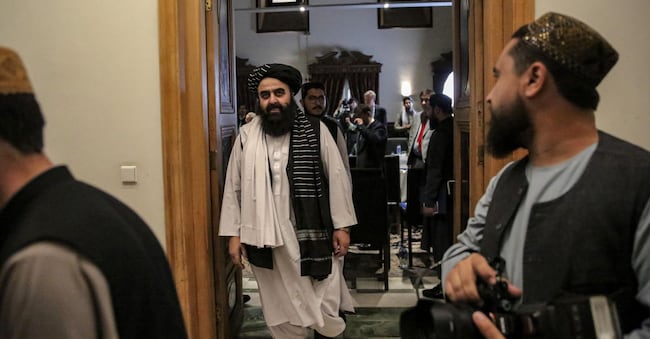
The European Commission’s decision to invite an Afghan delegation representing the Taliban regime to Brussels has caused quite a stir. Some non-governmental organisations have criticised the move. Today’s technical-level meeting focused on the repatriation of Afghan citizens, and effectively confirms the controversial crackdown that the 27 Member States are imposing on the European Union’s migration policies.
“Inviting the Taliban to talks on European soil,” said Alexis Deswaef, president of the International Federation for Human Rights, “confer a form of political legitimacy on an anti-democratic regime responsible for gender-based persecution and other serious human rights violations under international law. By engaging in such discussions, the European Union (...) is undermining its own commitments to respect for human rights and the rule of law.”
At a daily press briefing here in Brussels, European Commission spokesperson Markus Lammert explained that the initiative comes after 20 Member States (including Italy) wrote to the Commission in recent months asking the European Union to coordinate talks with the Taliban regime. The aim, he clarified, is to facilitate the repatriation of individuals responsible for ‘serious crimes’ or who pose ‘a threat to the security’ of member states.
Following the meeting, the EU spokesperson merely explained that 15 Member States had also taken part in the discussions (Italia did not specify whether or not it had been present). According to information gathered by the Belgian press, the Belgian Foreign Ministry granted the five-person delegation a one-day visa to be used exclusively in Belgium (excluding the rest of the Schengen Area). Among the delegates was the spokesperson for the Afghan Ministry of Foreign Affairs, Abdul Qahar Balkhi.
The issue is controversial for a number of reasons. On the one hand, Afghanistan is a country that can hardly be considered safe, not least because it is ruled by a dangerously reactionary regime. On the other hand, the European decision to negotiate with the Taliban regarding the possible deportation of Afghan citizens comes at a time when the European Union has just approved restrictive measures on migration, including ‘parking zones’ in third countries where irregular migrants awaiting repatriation are to be held.


