
Afghanistan: UNICEF reports that 2.6 million girls have been denied higher education since 2021
The only country in the world where secondary and higher education is effectively denied to girls and women. Catherine Russell, Executive Director of UNICEF: “A country cannot prosper when half of its young people are held back. Afghanistan’s future lies outside the classrooms, waiting to be able to return.”

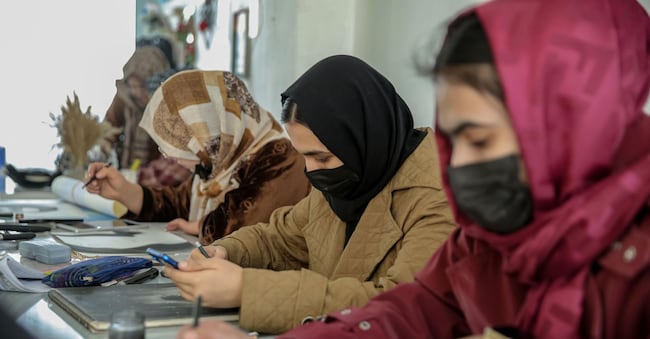
According to UNICEF, more than 2.6 million girls in Afghanistan have been denied secondary education in the five years since the de facto authorities took power. Afghanistan remains the only country in the world where secondary and higher education is effectively denied to girls and women. Since September 2021, girls have been prevented from accessing formal education beyond Year 6, whilst since December 2022, women have been barred from attending universities. “Five years may seem like a short time in a country’s history, but they represent a crucial period in a girl’s life,” said Catherine Russell, Executive Director of UNICEF. “A classroom offers much more than just learning. It gives a young girl a voice and the chance to realise her full potential. Furthermore, it acts as a shield against child labour, early marriage, violence and abuse. When schools closed, that protection was lost, just when girls needed it most.”
Risks are increasing for those who do not attend school
Girls who do not attend school are exposed to greater risks in terms of their safety, including child labour, abuse, early marriage and gender-based violence. These risks increase with household poverty and displacement, both of which are widespread in Afghanistan. Since 2023, over 2.7 million people have returned from Iran and Pakistan; 60 per cent of them are children and young people.
The practical implications for the workforce
The repercussions extend beyond the girls directly affected. A UNICEF analysis published in April 2026, entitled ‘The Cost of Inaction on Girls’ Education and Women’s Labour Force Participation in Afghanistan’, found that the country risks losing up to 20,000 female teachers and 5,400 female healthcare workers by 2030. The number of female teachers in basic education has already fallen by more than 9 per cent, from nearly 73,000 in 2022 to around 66,000 in 2024. The proportion of women in the civil service fell from 21 per cent to 17.7 per cent between 2023 and 2025.
Economic output loss
The same analysis estimates that restrictions on girls’ education and women’s employment cost Afghanistan US$84 million a year in terms of lost economic output, with these losses increasing for every year that the restrictions remain in place. The consequences also affect the next generation. As the proportion of uneducated mothers rises, so too do the risks of low birth weight, inadequate vaccinations and growth delays among their children, placing further strain on a healthcare system already under pressure.
UNICEF continues to support education
Despite the restrictions, UNICEF continues to support education in Afghanistan. In 2025, over 3.7 million children in state schools received emergency educational support, 442,000 children took part in community-based learning programmes – 66 per cent of whom were girls – and 232 schools were built or renovated.

Brand connect


Newsletter Scuola+
La newsletter premium dedicata al mondo della scuola con approfondimenti normativi, analisi e guide operative
Abbonati