The name

After 122 years, another Pope chooses to be called Leo. Here are his predecessors

From Leo XIII, author of the social encyclical Rerum Novarum, to the first Leo of the fifth century

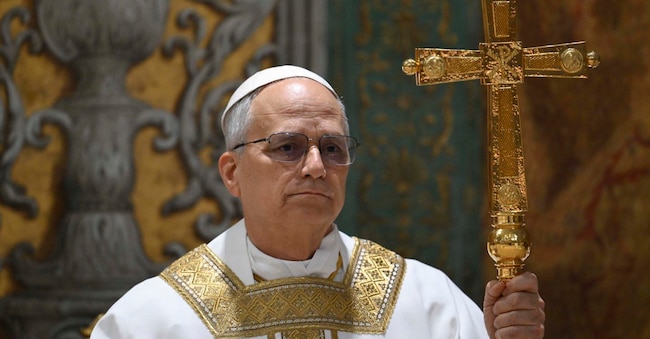
by Annalisa Godi

 (Photo by Handout / VATICAN MEDIA / ANSA)

3' min read

3' min read

One hundred and twenty-two years after the last one, a pope once again goes by the name of Leo, marking 14, indeed XIV.

Robert Francis Prevost chose the name Leo, following a tradition dating back to 440, with the election of Leo the Great: the Western Roman Empire still existed and the schism with the Orthodox Church had not yet occurred.

Loading...

The Last Pope: Leo XIII

Before Prevost, the last Pope to choose the name Leo was Vincenzo Pecci, who was elected to the papal throne in 1878 and died in 1903. He was the 256th pontiff and had a great interest in social issues with his encyclical Rerum Novarum: while condemning socialist doctrine, he denounced the social repercussions caused by the expansion of industrial capitalism and called for the establishment of workers' trade union associations.

It is thought that one of the reasons Prevost chose the name Leo XVI is to place himself in continuity with his predecessor of the same name, who was attentive to social issues. But another hypothesis is that it is a reference to Brother Leo, who, according to religious vulgate, was a close friend of Saint Francis, the name Jorge Bergoglio chose when he was elected pontiff.

Eighteenth Century and Renaissance

It was the year 1823, Annibale della Genga ascended to the throne of Peter with the name of Leo XII: under his pontificate there was the Jubilee of 1825, in the same year he had to deal with the secret society of Carboneria, with which he used his hard fist: during the Jubilee, he guillotined the two Carbonari members Angelo Targhini and Leonida Montanari in Piazza del Popolo in Rome.

At the beginning of the 17th century, Alexander de' Medici, known as Leo XI, became pontiff on 1 April 1605. His pontificate lasted just 27 days, making him the ninth shortest in history.

Leo X, born Giovanni de' Medici, second son of Lorenzo the Magnificent, became Pope in 1513. He was the last pontiff to be a simple deacon when he was elected. His pontificate lasted eight years. In 1517, Martin Luther presented his 95 theses against indulgences: it was Leo X who excommunicated Luther with the bull Decet Romanum Ponteficem.

The Year One Thousand and the Kings of Germany

Let us jump back about 500 years and arrive at 1049: Brunon of Egisheim, the fourth German pope in history, took the name of Leo IX: under his pontificate the process that led to the Eastern Schism, which gave birth to the Orthodox Church, began.

Before the year 1000, the popes who took the name of Leo were many, and of them only the name assumed after their election to the papal throne is remembered.

Starting from the foundation of the Holy Roman Empire, the popes had to reckon with imperial power: this was the case with Leo VIII, who was imposed as pontiff by Otto I in 963, was driven out of Rome by the population, and died in 965.

Leo VII (936-939) was the first of the popes imposed by Alberic II of Spoleto, a leader who ruled Rome from 932 to 954. Leo VI's reign lasted about six months, in 928: he was elected pope at the behest of Marozia, queen consort of Italy, wife of Hugh of Provence, king of Italy from 926 to 947. Leo V was pope for only 40 days, between 903 and 904: he was deposed by the antipope Christopher.

Leo IV was a leading pope in the events of his time. Elected in 847, without the authorisation of Lothair I, who at the time ruled Italy and was Emperor of Germany, he built the Leonine walls in Rome to defend the city from attacks by Saracen pirates and founded the Anti-Saracen League.

Leo III's pontificate was very long, especially if we consider that he reigned from 795 to 816, a good 21 years. He crowned Charlemagne king of the Holy Roman Empire in Aachen.

The Early Popes: Roman Era and the Early Middle Ages

About a year of rule for Leo II, who was elected after mid-682 and died at the same time the following year. The Church sanctified him.

The first pope to be called Leo was elected in 440: a time of turmoil, because a few years later the Western Roman Empire would fall. He was part of the Roman embassy that met Attila and convinced the Hun to leave Italy. Not only that, his pontificate established the primacy of the Roman Curia over other episcopates. For these and other deeds in which he was a protagonist, Leo I went down in history with the epithet 'Magnus'.

Copyright reserved ©

Brand connect

Loading...

Newsletter

Notizie e approfondimenti sugli avvenimenti politici, economici e finanziari.

Iscriviti