
After 60 years, the new Mud Angels still save books in Florence
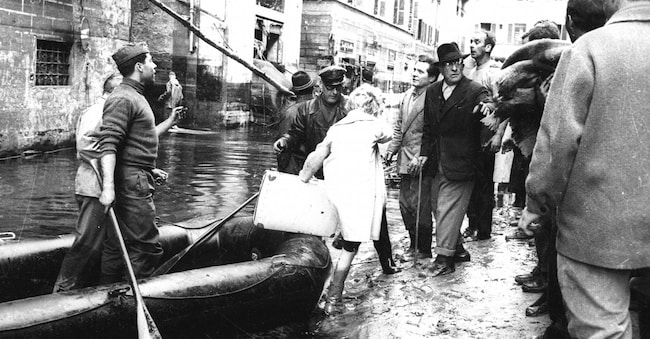
In the past, it was the Mud Angels who saved the city of Florence from an event that changed the perception of Florentines, the 1966 Flood: the historical and cultural heritage of a city was destroyed (or, in the luckiest cases, damaged) in a few hours and in the Biblioteca Nazionale Centrale di Firenze (Bncf) - the city's historic institution - a million books were affected by the disaster. Now, 60 years after 4 November 1966, the city is proposing a number of initiatives not to forget. Among these is one involving the heirs of the Angeli del Fango: the Bncf has launched a programme to return 30,000 inaccessible volumes to the community. Involving everyone: the students of a well-known Florentine school, the Michelangiolo classical high school, the users of the Canova Isolotto Library and - who knows - other interlocutors driven by love for Florence. The aim is to identify and relocate some 30,000 miscellanies that the flood deprived of their markings, rendering them effectively invisible to catalogues. The heart of the project is cooperation, as it was in 1966: after 4 November 1966, in addition to the volumes, all inventories, volume and card catalogues, i.e. the key to a book in the library, were also damaged. This year, again on 4 November, there will be a restitution day where we can take stock of the miscellaneous recovery project. Initially, the project involved the students of the Michelangiolo high school: the students, under the guidance of the librarians, will take care of the flooded miscellanies to be identified through research in the library's catalogues. Then the users of Canova Isolotto - having heard about the project - asked to join. And so it was: 'The project is open to everyone,' Bncf director Elisabetta Sciarra was keen to point out. "The aim," she added, "is not to use volunteers to carry out a library function, but to involve citizens in a process of patrimonialisation and heritage education through the recovery of a small part of our miscellany
Among the initiatives between 20 June and 3 July this year will be a Summer school for 10 students on the subject of cataloguing manuscript fragments. Organised by the Bncf, in collaboration with the Associazione Manoscritti Datati d'Italia, the Ente Nazionale Giovanni Boccaccio and the Istituto nazionale di Studi sul Rinascimento, it is aimed at young graduates who intend to tackle the study and cataloguing of manuscript and printed fragments extracted from the bindings of flooded volumes. "As administration," added the Councillor for Culture of the Municipality of Florence Giovanni Bettarini, "we are proud to support this project that sees BiblioteCanova Isolotto as a fundamental bridge between the citizens and the National Library. Culture is not an abstract concept, but a common good that must be cared for together. Thanks to the willingness of the users of District 4, who have become active volunteers, we show that public reading libraries and large state institutions can work together. It is a virtuous example of how the area can take care of its own history: the return of these 30,000 books is a victory for the entire Florentine community'. Mirko Dormentoni, president of District 4, emphasised the value of 'community spirit' and the 'civic sense that gave so much in those years and is still active' in Florence. Today as then.

