
After the Olympics and Paralympics, will we all become more sporty?
If the Sinner myth is responsible for a wave of aspiring tennis players, there is now a surge in enrolments for skating, hockey and ski mountaineering courses. Will the attraction for winter sports last?

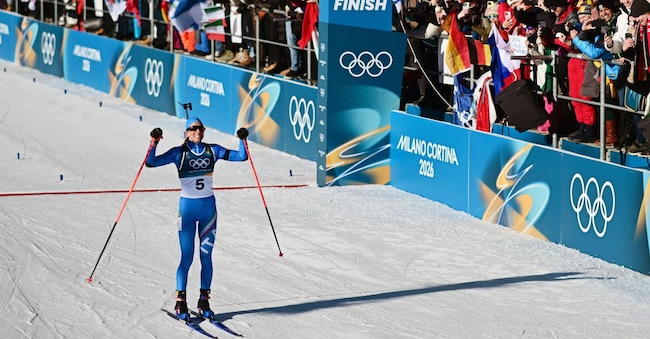
After the Winter Olympics in Milan Cortina it is time for the Paralympics. Once the medals are all awarded, the athletes will return to their routines. Yet, something has perhaps already changed, at least in the collective sporting imagination. Skating gyms are struggling to find a free place, ski mountaineering courses already have waiting lists, even ice hockey has seen an increase in requests for trials, especially at the new Arena in Milan Santagiulia.
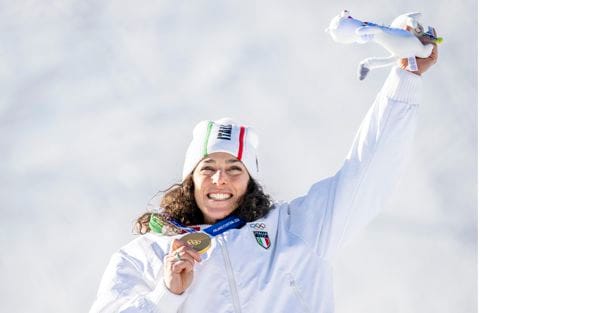
This is nothing new. It happened with Sinner and tennis, with Luna Rossa and sailing, with curling after Italia's Gold at the Beijing 2022 Winter Games. But what triggers this collective metamorphosis? How does this contagion of desires build that transforms millions of people from passive spectators to practitioners? The answer is probably rooted in ancestral mechanisms. "The athletes of the Olympics, ever since their foundation in 776 B.C., were veritable stars. They were likened to heroes, celebrated in the songs of the poets, and received extraordinary honours from their homeland,' explains Giorgio Ieranò, lecturer in Greek literature at the University of Trento and author of many popular books on the relevance of myth. "The Olympic champion is never just a technically superior athlete: he is an archetype, a condensate of values and collective aspirations that transcends sporting performance. Milon of Croton, the colossal wrestler who was said to be a friend of Pythagoras, did not fascinate the masses simply because he won. He fascinated because he embodied an ideal of human perfection. Just like today's Olympic champions: we admire them not just for their timed time, but for what they represent in the symbolic economy of society. Why this happens is quickly said: every competitive event is an amplifier. 'Sport interacts with socially relevant processes by widening their range of influence,' explains Nicola Porro, former sociologist at the University of Cassino and president of the European Association for the Sociology of Sport. 'It functions in some way as a megaphone of feelings of belonging (for example, to the local community) that, through processes of emotional identification, are processed and produce over time an authentic shared imaginary'. Each Olympics returns to the community a transfigured, idealised, heroised image of itself.
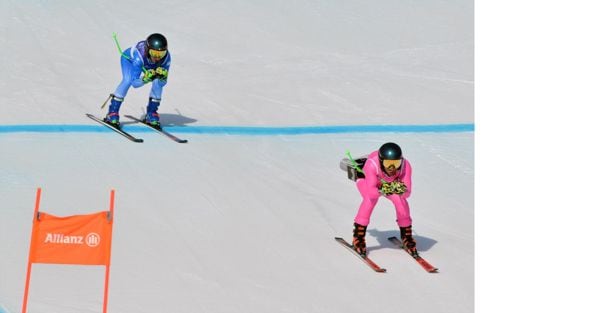
Other factors come into play in the momentum of imitation and thus in the boom of enrolments in courses and training. 'If we look at ancient texts, the spirit of emulation was not so much about practising this or that sport,' explains Ieranò. 'Of the athletes, they admired and tried to reproduce above all the moral qualities: the severe discipline, the capacity for endurance, the strength of resistance'. He continues: 'The athletes in turn took the heroes of myth as models: first and foremost Hercules, the hero par excellence, the great agonist of the Twelve Labours'. A symbolic chain that climbs from step to step, from the aspiring beginner to the champion, from the latter to the mythological hero.
A parent enrolling their child in the best tennis school may not be betting on having the next Sinner in the house, but they do want to offer a system of rules and values: determination, the ability to handle pressure, the acceptance of error. Tennis, like sailing, or curling or skiing, are means, not ends. And Ieranò also highlights the risks of emulation without criteria. "Already in antiquity there were young people who did their utmost to strengthen their bodies by practising a sort of natural doping, obtained by swallowing exaggerated quantities of food. It is said that Milo consumed eight kilos of meat and five litres of wine a day. Even Galen, Marcus Aurelius' court physician, warned against blind doping'. In the age of supplements and extreme diets, the warning seems even more topical.
The most fascinating aspect of the Olympics 2026 and of all major sporting events, however, is the opening up of a horizon of identification of the individual with a larger 'we'. 'Cheering is not just 'passion',' explains Porro. 'It is also an unconscious identity strategy, sometimes a true ritual of confirmation'.


