The interview

'Against the cultural poverty of the South, a grand alliance between the public and private sectors is needed'

Florindo Rubettino, publisher

by Vera Viola

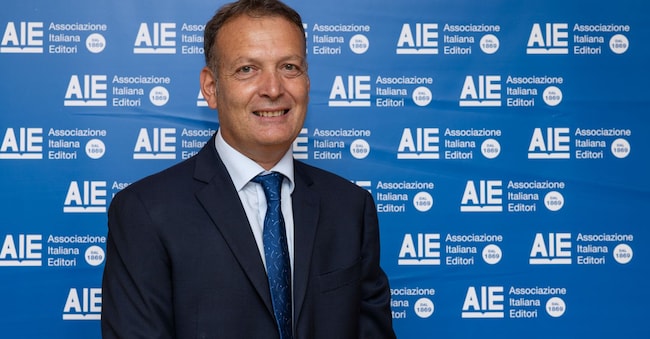
L’editore. Florindo Rubbettino , delegato al Mezzogiorno dalla presidenza dell’Aie

3' min read

3' min read

"Let us start with two clarifications: the issue of the reading and cultural consumption gap in the South is not just a problem of the South but of the entire country. Just as it is not just a problem of publishers and booksellers, it is also an economic and social issue'. Florindo Rubbettino, a second-generation Calabrian publisher and delegate to the South of Italy of the presidency of AIE, the Italian Publishers' Association, has embarked on an information campaign on the cultural divide in the southern regions that started in Naples and will touch all the regions.

So you will involve operators not only from the south, but from the whole country?

Loading...

Yes. The cultural divide is one of the gaps that unfortunately exist in the country, and as in other fields in this one too, we believe it is a national problem. The president of the IEA, Innocenzo Cipolletta, did well to put the Mezzogiorno at the centre of his action.

We start from a snapshot of reality that reveals staggering data.

That's exactly right. We wanted to do a very innovative survey that takes several parameters together. And the first fact that stands out is the existence of a direct relationship between the reading index and the endowment of cultural infrastructure in the area. We are thinking of bookshops, events, libraries, book fairs... We are therefore convinced that if you do not improve the reading infrastructure, you will not solve any problems.

How to grow the number and quality of such infrastructures, if there is little demand, to the point that newsstands close, bookshops barely survive....

We think that actions to promote reading should be promoted with broad participation. We are thinking of actions that involve public actors in the foreground that are often absent, but also private actors, institutions, operators, citizens and above all the third sector.

Mainly?

Pepe Research shows that in the South of Italy, cultural volunteering often plays a supplative role to cope with deficiencies in public infrastructures. Another of our analyses shows that the participation of the Third Sector in the South and the Islands is 29% and is higher than in the Centre-North at 24%.

How to intervene?

It is necessary to act on easily activated levers. In order to increase the number of bookshops, it is necessary to provide incentives for entrepreneurship as this is a low-margin sector and to support those who do not have many possibilities to buy books.

Is it only a question of resources to be invested then?

There is no doubt that more is needed, remaining on the subject of bookshops and more generally of culture buying, we also think it is necessary to propose with creativity. New, unconventional outlets must be thought of in order to relaunch stationery shops and newsstands and other outlets.

Like libraries, which are poorly frequented.

We are talking about a paradox here. There is no lack of facilities, but few accesses and loans. There is a lack of services, staff, training. Yet we have numerous examples of new libraries being built around the world and acting as a great attraction for young people, such as the Tromso library in Norway or Nikken Sekkei in Japan. Moreover, libraries must also be a response to educational poverty. Once again, the absence of public actors emerges. Yet after Covid, the government had made an extraordinary plan of investment in libraries, but the municipalities reduced their ordinary resources, thwarting the state action.

Does the school? have responsibilities?

Huge. The focus is placed on the quantity of what to study rather than on the pleasure of learning and thus reading. We should experiment with free reading practices, stepping outside the ranks to make room for curiosity.

So, the Aie calls for a grand alliance against the cultural poverty of the South?

That is indeed the case. But there is one category to which I would make a special appeal. It is that of successful writers, southern and otherwise, who could with their storytelling skills, attract young people and others.

Copyright reserved ©
Loading...

Brand connect

Loading...

Newsletter

Notizie e approfondimenti sugli avvenimenti politici, economici e finanziari.

Iscriviti