
More biocontrol and less chemistry against diseases and pests
A Manifesto signed by Agrofarma and Federbio to demand regulatory clarity and find new solutions to protect crops

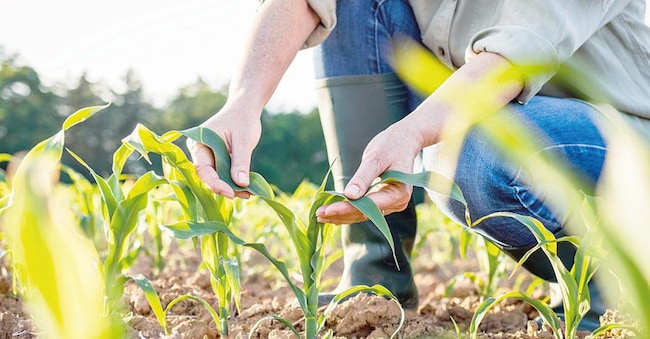
For years, there has been a strong push to cut down on the use of agrochemicals both in terms of available active ingredients and quantities used. A trend that has, however, clashed with the increasing difficulties farmers face in crop management caused by climate change and the arrival of new pathogens through trade. With this in mind, biocontrol tools are becoming increasingly important in agriculture. It is in this direction the 'Manifesto for Biocontrol' signed a few days ago by Agrofarma (the association of crop protection product manufacturers)and FederBio (the national federation of organic producers).
One of the first demands of the Manifesto concerns the definition of 'biocontrol', toidentify the products that can fall into this category. These are all those active ingredients that exist in nature and are able to guarantee the same functions in the defence of crops against pests that synthetic chemical products have performed so far. But a definition is needed because, to date, the term 'biocontrol' is not present in any regulatory text. "One of the hubs,' they add at Agrofarma, 'is for this definition to remain open to innovation, to open up new solutions, and to avoid limiting scientific progress.
Biocontrol therefore includes microorganisms, but also natural substances (including those reproduced in the laboratory but in fact identical to natural substances) and inorganic substances present in nature. A frontier that, if it is of fundamental importance for organic farming (which cannot resort to conventional pest control tools), also becomes interesting for conventional agriculture, which needs to diversify its 'toolbox', adding new tools but also reducing its environmental impact.
Among the key proposals of the Manifesto (which also aims to become a reference in the dialogue with institutions) is theaim to make the national authorisation system more efficient. Faster procedures are needed to introduce new substances. In order to improve the authorisation processes, the aim is to strengthen the dedicated resources and create an ad hoc evaluation structure to encourage the introduction of effective instruments.
"The Manifesto," commented the president of Federbio, Maria Grazia Mammuccini, "marks a decisive step towards encouraging the spread of organic farming and accompanying Italian agriculture towards a more sustainable and resilient model. In the last ten years, according to Agrofarma data, there has been an 18% reduction in the use of agrochemicals and a 133% increase in active ingredients of organic origin'.


