Agrigento to be done at a slow pace in the footsteps of Pirandello and among the Mediterranean gardens
During the summer, the Italian Capital of Culture and its territory become an open-air stage: history, art and culture come together. Events and exhibitions offer an opportunity to experience the Valley of the Temples and rediscover Sicily through the words and places of the great authors who have recounted it

5' min read
Key points
5' min read
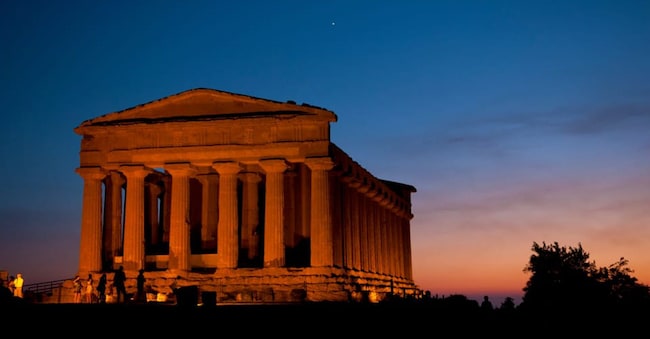
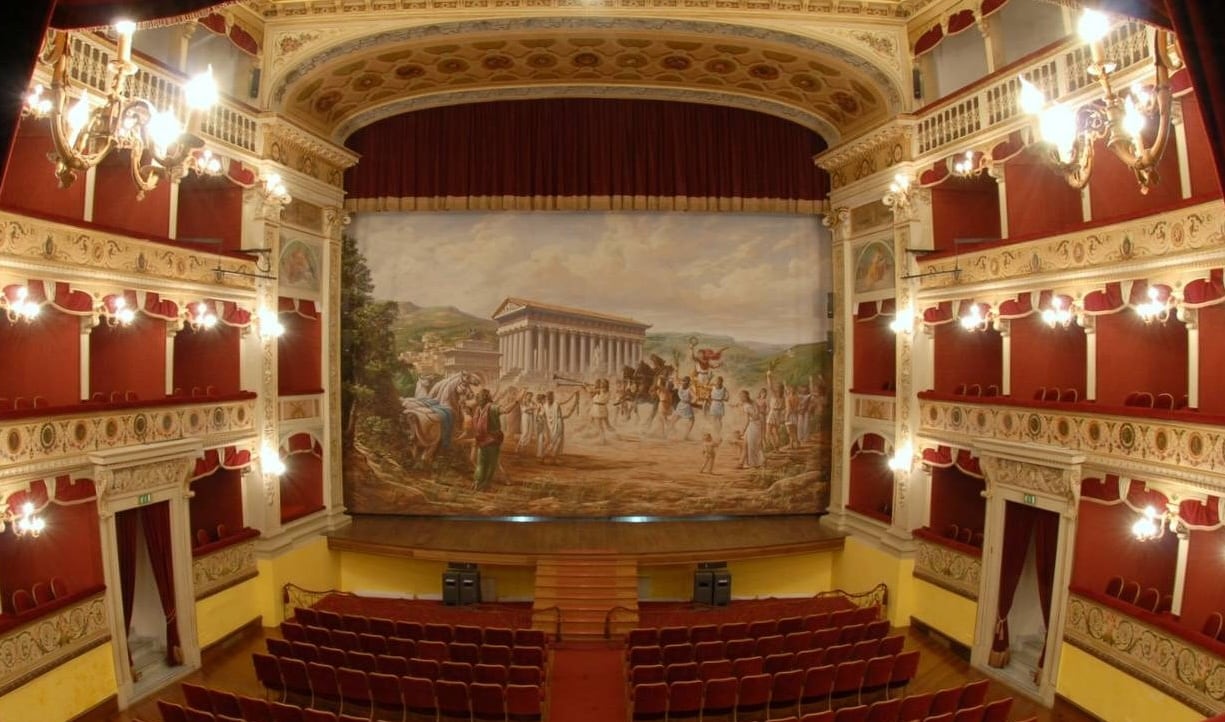
Akragas for the Greeks, Girgenti for the Normans, 'the city of priests and death bells' for Luigi Pirandello, who was born, lived and lies in Agrigento. Literature is one of the common threads running through the programme of Agrigento Italian Capital of Culture 2025. One confirmation of this is the 'Festa del Viaggio' (Journey Festival), from 26 to 30 May, an event promoted by Agrigento Capital of Culture 2025 with the Strada degli Scrittori (Writers' Road), as part of the 'Le Piazze della Capitale' project, an unmissable opportunity to explore, through words and images, the myths, stories and enchanted places of the Valley of the Temples and the city's literary 'squares'. At the same time (28,29,30 May) at the Pirandello Theatre there is 'Liolà Fest', a review dedicated to art, culture and creativity. The fulcrum of the event is the Luigi Pirandello Theatre, an architectural jewel, with richly decorated interiors, stuccoes and paintings recalling the splendour of 19th-century Sicily, and leading to the discovery of the life of the writer, winner of the Nobel Prize for Literature in 1934.
Literature and Botany
.Actually, in this corner of Sicily, another happy union is that between botanical heritage and literature that can be experienced by participating (even if only for a few stops) in Il Giardino del Mediterraneo, an itinerary developed by Roberto Bruccoleri, a cultural operator inspired by Professor Giuseppe Barbera's book Il Giardino del Mediterraneo. Stories and landscapes from Homer to the Anthropocene . The tour retraces some of the places and landscapes recounted by Barbera in the text, with one agronomic and biological viewpoint and the other literary and cultural. Stops include the Valley of the Temples and the Kolymbethra Garden in Agrigento.
Girgenti in the footsteps of Luigi Pirandello
We begin outside the city at Luigi Pirandello's birthplace in Caos (now owned by the Region of Sicily near Porto Empedocle), a late 18th-century rural building on a plateau overlooking the sea, dotted with olive and oak trees and where, following a pathway, we come to a centuries-old pine tree. Under this large tree Pirandello loved to linger and think, paint, rest, or write to his friends. And it is here that he wished to be buried. Not far away is Porto Empedocle, which at the time was the Caricatore di Girgenti, a useful port for the sulphur trade, to which the Pirandello family, who owned the mine, was linked. But it is in the historical centre of Agrigento that one can find the places or almost see the characters that inspired Pirandello's most famous works, such as I Vecchi e i Giovani (The Old and the Young), L'Esclusa (The Exclusion), La Giara (The Coffin), Il Vitalizio (The Life), Pensaci Giacomini (Think About Us), Il Fui Mattia Pascal (I Am Mattia Pascal), Uno, nessuno e centomila (One, No One and a Hundred Thousand). In 'I Vecchi e i giovani' Girgenti appears poor and desolate along the road leading to Porta di Ponte, the entrance to the city's main street, Via Atenea, known as the 'piazza' because it is a meeting place. We then arrive at Piazza Gallo, where the Law Courts once stood and where the architecture of the Town Hall, now home to the Chamber of Commerce, stands out. The itinerary continues to the Pirandello Theatre, formerly the Regina Margherita, located in the square of the same name. The walk, winding through the narrow cobbled streets of the Arab quarter, ends with a visit to the Lucchesiana Library, frequented by a young Pirandello, and the church of S. Maria dei Greci. Extensive descriptions in Pirandello's work are also to be found in the Church of the Itria, albeit under a different name (Santa Maria Liberale), and throughout the Santo Spirito district, around the Monastery. Not to be overlooked is the 'Passeggiata Cavour', from which Don Ippolito Laurentano overlooked, today Viale della Vittoria. The Valley of the Temples can also be admired from the Cathedral of San Gerlando at the top of a flight of steps on the edge of a cliff.
From the Garden of the Bishops to the Garden of Kolymbethra
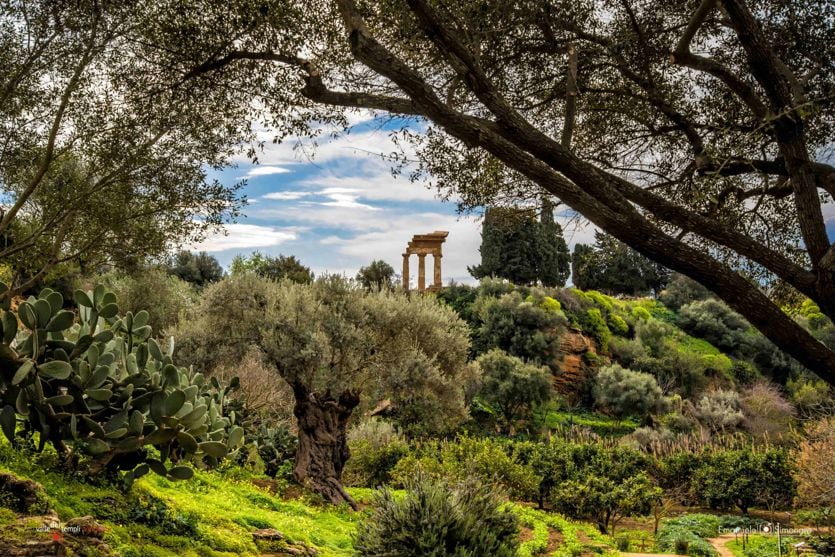
Not to be missed with its marvellous citrus trees inside the Diocesan Palace is the Bishops' Garden, a place that has an ancient history and is now a space for outdoor education and evening meetings and activities. Demands for ecclesiastical representation prompted the Bishops in the 16th century to enrich their palaces with gardens in the manner of civil palaces. In the Valley of the Temples Archaeological and Landscape Park, the beauty is so great that one's gaze frequently wanders. Along the way, one at least meets the Almond and Olive Tree Wood, that precious landscape that guards the remains of ancient Akràgas and preserves the memory of rural Sicily. One arrives at the Temple of the Dioscuri, at the foot of which is the marvellous Giardino della Kolymbethra, brought back to life thanks to the work of Giuseppe Lo Pilato, the Agrigento agronomist and landscape architect who was responsible for the recovery of this corner of paradise on earth, now the pride and joy of the FAI - Fondo per l'Ambiente Italiano, an ancient citrus grove snatched twenty-five years ago from a desolate state of abandonment, now more alive than ever with its rich biodiversity, starting with the sixteen ancient varieties of citrus fruits cultivated here from the early 1700s to the present day.
The Secret Passage to the Valley of the Temples
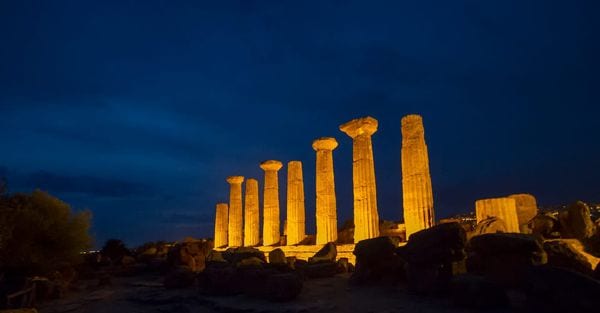
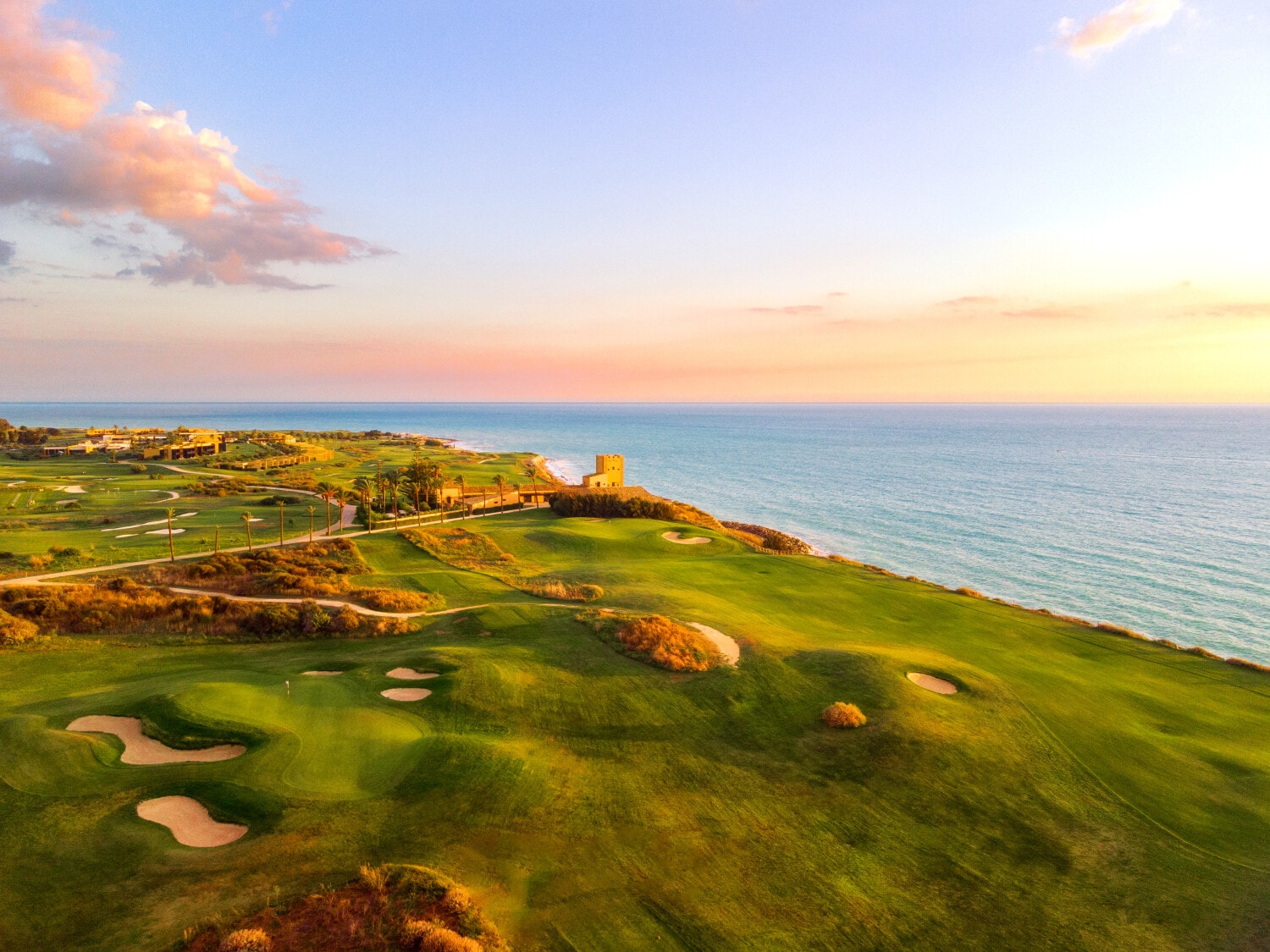
.A starting point for discovering the beauty of the Agrigento area is the Verdura Resort, a Rocco Forte hotel founded in 2009. The resort, which overlooks 1.8 km of the south-western coast between Sciacca and the Valley of the Temples, has twenty private villas, independent residences with the utmost privacy, in addition to the 203 rooms from 2021. On the estate of over 230 hectares, in addition to the two award-winning golf courses designed by Kyle Phillips, there are an olive grove, a citrus grove and a farm | The first itinerary offers the opportunity to experience the iconic archaeological site of the Valley of the Temples from a private and exclusive citrus grove, created by Cistercian monks in 1740. Here you can enjoy the sunset with a view of the Temple of Juno and the other temples during a picnic where you can taste traditional Sicilian recipes in a setting that oozes history, among ancient citrus trees and aromatic herbs. The experience includes a visit to the archaeological site, also available during the evening hours, which are preferable in the summer months.