Agro-industry

Agrofarma: the use of chemicals in the fields has decreased by 14% in 10 years

Ammonia emissions in Italy are already below the EU 2030 targets. Greenhouse gas emissions are also falling.

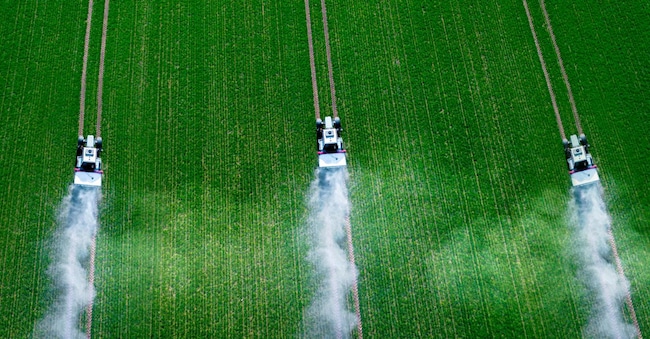
(Alamy Stock Photo)

3' min read

3' min read

A profound change is taking place in Italian agriculture along with an ever decreasing and more efficient use of agrochemicals. Agricultural environmental performance is making significant progress, but is losing some positions on the production front with some important and tangible phenomena of production substitution. This is the cross-section that emerges from the data of the Agrofarma Observatory managed this year by the agricultural consulting and analysis company, Areté.

"The improvement in agricultural environmental performance continues," commented the president of Agrofarma-Federchimica, Paolo Tassani, "emissions are falling but so is added value, and this is because we need to give time to the innovations adopted in recent years in the field of crop protection.

Loading...

According to data from Areté, illustrated by CEO Enrica Gentile, ammonia emissions are steadily decreasing, which in Italy are already below EU targets for 2030. Greenhouse gas emissions are also decreasing..

On the volume use of crop protection products, these have dropped by 14% over the last 10 years (the comparison is between 2020-22 and 2011-13). Much of this is due to optimisation in use. The volume of active ingredients used also fell sharply (-20%). At the same time, the strong growth of active ingredients of biological origin is confirmed. A symptom that a substitution process is under way.

Innovation brings less risk

.

In Italy, however, there is the largest reduction in the use of agrochemicals in the EU-27 accompanied by a significant increase (+6.4%) in low-risk active ingredients.

"Many of the reported indicators," explained Areté's CEO, "therefore underline how continuous innovation is taking place in the sector. Half of the 400 or so active substances today were produced in the last 10 years. While only 1% of the still active pesticides were created before 2000. Italy has a use rate of 56% for new substances, which is higher than the EU average'. At the same time, 83% of the agropharmaceuticals used have been approved in the last 10 years. "This is therefore an important process," added Tassani, "net of a complex authorisation process that does not help this substitution.

Worthy of note are also the results highlighted on the food safety front," continued Areté. "In fact, according to Efsa data, the percentage of Italian agri-food products totally free of residues rose from 63 to 66%. On the other hand, the percentage of samples of products found with residues exceeding legal limits dropped from 0.7 to 0.5%. Among individual productions this percentage is still 0.6% in the fruit and vegetable sector while it drops to 0.2% in the cereals sector.

Ulivo and durum wheat the most common

.

"The data," Gentile continued, "also provide an insight into the changes in European and Italian agriculture in particular. In Italy there is a high number of crops in production, 121. A number, in Europe, second only to Spain (125). An examination of the large crops, i.e. those planted on more than 100,000 hectares, shows that the most cultivated crops in Italy are olives and durum wheat, which boast areas of more than one million hectares. At the same time, a compression of some crops can be seen, first and foremost maize, whose cultivation has dropped by 32% and has been mainly replaced by soya and barley (+19%). Within the fruit and vegetable sector, there is the great progress of hazelnuts (+29% compared to 2013-15) while many other varieties show a decline (peach tree -21% and artichoke -14%)'.

Yields were also down across the board: soybean (-17.6%), olive (-13.4%) and alfalfa (-8.5%). Yields were also down for hazelnuts (-31%), a sign that the newly planted trees still have to enter the production phase.

"The new numbers of the Agrofarma Observatory," concluded President Tassani, "confirm the virtuous path of Italian agriculture towards the rationalisation of resources and the adoption of solutions increasingly oriented towards sustainability. With this project we want to make a contribution to overcoming the logic that associates the use of chemicals in agriculture with negative practices for the environment, providing an image of our sector that is far removed from false myths and fake news".

Copyright reserved ©
Loading...

Brand connect

Loading...

Newsletter

Notizie e approfondimenti sugli avvenimenti politici, economici e finanziari.

Iscriviti