Environment

Agroecology, Europe starts again from the countryside for sustainable and inclusive growth

From Italy to Spain, rural communities are leading the ecological transition with projects that regenerate the land, enhance traditions and open up new sustainable economic scenarios

by Davide Madeddu (Il Sole 24 Ore) and Ana Somavilla (El Confidencial, Spain)

(Adobe Stock)

4' min read

4' min read

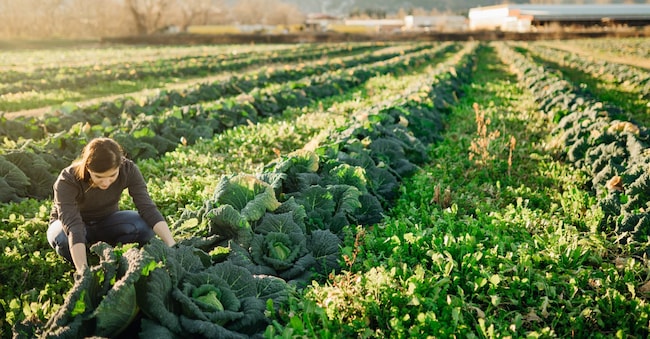
Across the European Union, a phenomenon is spreading that sees rural communities at the centre of a process of environmental and cultural regeneration. More and more local initiatives are focusing on enhancing biodiversity, starting from the countryside and recovering knowledge and traditions. It is in this context that agroecology - the set of sustainable agricultural practices that integrate the ecosystem, culture and local economy - has become a pillar of the policies promoted by the European Commission. And in this path that from Italy reaches France, Spain and other countries, rural communities are taking a leading role.

Restoring Biodiversity is Possible

"Communities have shown that the restoration of biodiversity in rural Europe is not only possible, but is already happening," reads a European Commission document recounting cases of biodiversity restoration in rural centres. They are healing landscapes, reviving knowledge and creating futures that are both grounded and resilient.

Loading...

Italian cases

.

The examples in Italy are different and range from region to region, where institutions also play a leading role with policies to support young people who want to safeguard both rural areas and production and traditions.

In this panorama of initiatives, there is the case of Apulia with the Casalina project that transformed an abandoned farm into a green oasis. In this scenario, through reforestation and permaculture, the dry and cracked land has started to come to life. The project restored the degraded land, and built a community of shared purpose, involving migrant workers, hosting events and planning future agroforestry systems inspired by syntropic agriculture.

In Sardinia an even broader scenario. In order to encourage a return to the countryside, the Region has launched the 'Terra ai giovani' (Land for young people) project in recent years, with which it has supported entrepreneurial initiatives carried out by under-30s but, above all, the projects of those who have decided to return to the countryside. That is not all, however, because other programmes that see rural communities involved in international settings have also been launched.

The Barbagia District

And it is precisely in this sphere that the Barbagia rural district has launched a series of projects in which the valorisation of biodiversity, traditions and local production is combined with international agreements. And after an international cooperation project with Lebanon, the district has also pursued initiatives with Kyrgyzstan through a protocol with the chamber of commerce for the activation of a direct import and export channel, also in the field of tourism, and the creation of a legal and assiduous channel for the procurement of labour for the Barbagia and Sardinian countryside, to fill the gap represented by the lack of agricultural personnel.

The Roads of Emilia Romagna

In the Italian panorama, there are also other initiatives carried out by institutions, such as that of Emilia Romagna, which in order to enhance rural communities has decided to allocate resources to combat depopulation 'and make rural areas more attractive as places of residence, study, work and psycho-physical well-being'.

From France to Hungary

The international panorama then registers initiatives in various EU countries, as a report by the European Commission also recounts. One goes from France, where there are several projects including the one called Farm for Cats where syntropic agriculture is being experimented with, "a regenerative method that imitates natural forest systems to build fertile and biodiverse landscapes", to continue with the case of Germany, where the Sieben Linden Ecovillage is increasing its long-standing agroforestry work.

Other examples can be found in Hungary where in some centres fruit trees are combined with climate-adapted species.

The case of Spain: the growth of organic farming

.

According to the Revista Española de Estudios Agrosociales y Pesqueros, organic farming in Spain "has been growing at a fast pace since the late 1990s", favoured by consumer interest in healthy, contamination-free products and growing environmental awareness.

At the end of 2023, the utilised agricultural area (UAA) devoted to organic production reached 2,991,881 hectares, an increase of 12% over the previous year. If non-agricultural organic forests are also considered, the total reaches 3,161,038 hectares.

The most extensive crops are dried fruit (310,096 hectares), olive groves (292,868), cereals for wheat production (261,924) and vineyards (166,285). The most active regions are Andalusia (1.5 million hectares), Castilla-La Mancha, Catalonia, Extremadura, Murcia and Aragon.

Spanish public institutions are often active in promoting vocational training. The Zaragoza Dinámica programme, for example, offers free courses for professionals, young farmers and unemployed people.

According to Gonzalo Palomo, president of the Spanish Society of Organic Agriculture and Agroecology (SEAE), 'the key is to recover traditional practices - so-called retro-innovation - without losing sight of science and technology. The goal is to reduce the dependence on synthetic chemistry inherited from the Green Revolution and valorise endogenous resources, respecting natural cycles, animals, and social and labour rights'.

In regions such as Girona, Malaga and Sierra de las Nieves, organic districts are being promoted that unite agricultural production, social movements and scientific research, although an organic regulatory framework that fully regulates the different dimensions (ecological, organic, social) is still lacking.

The food crises of the past - such as that of rapeseed oil or mad cow disease - have helped to reinforce mistrust of industrial agriculture, prompting many consumers to look for healthy, bio-diverse products that guarantee a fair income for farmers. Today, freedom of food choice also means protecting biodiversity and reducing pesticides, with positive effects on climate and collective awareness.

Virtuous examples include: the Almería plateau, home to the largest regeneratively managed almond tree cultivation in Europe; the APANEMA project in Mallorca, which covers the entire supply chain 'from field to table' with civic participation; and initiatives in the Valle del Guadalhorce (Malaga) and Orduña, where agricultural tradition is combined with local policies to revitalise the economy and recover the landscape.

The sector is growing at 10-13% per year, driven by international demand. New cooperatives are springing up to support the conversion to organic and improve the marketing of products. Cooperative supermarkets and direct sales are bringing back models similar to the old emporiums, adapting them to the demand for certified and local products.

Despite the fact that the European Ecolabel guarantees strict controls, there is still debate about the risk of elitism and fraud. Many autonomous communities, in fact, impose stricter standards than the European regulations, particularly on the control of water resources, to ensure that the certification reflects truly sustainable practices rooted in the territories.

*This article is part of the European collaborative journalism project "Pulse"

Copyright reserved ©

Brand connect

Loading...

Newsletter

Notizie e approfondimenti sugli avvenimenti politici, economici e finanziari.

Iscriviti