
Air India, opposing hypotheses on the 787 Dreamliner disaster
Human error assumption shows shortcomings: Alpa Indian pilots' association calls for 'fair and fact-based investigation'
by Mara Monti
3' min read
3' min read
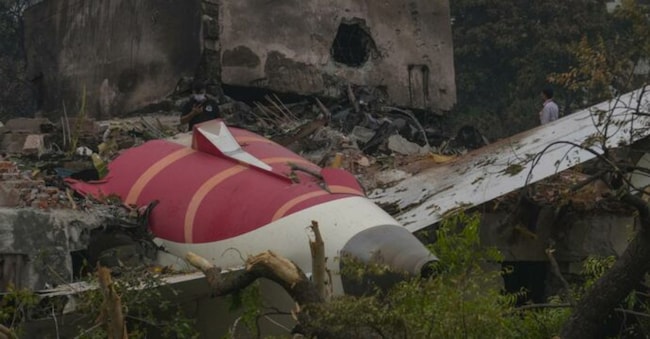
The preliminary report on the Air India crash a month ago where 260 people lost their lives has just been filed, but a definitive answer on the causes is still far from being revealed, while criticism from experts, pilots and families involved is mounting. Although a sequence of events is outlined, the report does not explain the underlying cause of the shutdown of both engines, leaving many doubts as to whether the investigation is prematurely leaning towards human error or a heinous act provoked by the supposed depressive state of one of the pilots.
The first to raise criticism were the Indian pilots themselves who through ALPA India, the trade association at the Montreal-based International Federation of Air Line Pilots' Associations, in a statement rejected the presumption of pilot error and called for a 'fair and fact-based investigation'. The question remains as to why the Boeing 787-8's fuel switches switched from Run to Off, cutting off fuel to both engines in the take-off phase when thrust is at its highest. Among the questions raised is a potential software glitch in the aircraft's fuel delivery systems, which experts are asking to be investigated starting with an examination of the Thrust Control Management Assembly (TCMA), which manages engine thrust based on flight phase. "A malfunction could have misunderstood the state of the aircraft, causing it to reduce acceleration as if it were still on the ground, a disastrous mistake during take-off," Neelam Mathews, an Indian aviation expert, explains to Il Sole 24 Ore.
Already in 2018, the FAA the Federal Aviation Administration, the American flight authority had brought the attention of airlines in a 'Special airworthiness information bulletin' to the fuel control switches warning them to be careful not to unintentionally defuse fuel access through the switches. A warning that did not constitute a danger, in fact it recommended not obliging the companies to the controls. Checks that Air India, however, according to the report, did not carry out because they were not mandatory, but maintenance records show that the throttle control module, which includes the fuel switches, had been replaced in 2019 and 2023 on the very aircraft involved in the accident.
Another aspect to which attention is being drawn is the FADEC (Full Authority Digital Engine Control), which controls fuel flow and ignition. Any anomaly could block the fuel supply or prevent the engine from restarting after shutdown. What is still unexplained is why the fuel control switches, usually protected by manual locks, found themselves in the Cut Off position, i.e. switched off, a few seconds after take-off. Although they were designed to resist accidental movements, some experts speculate that the software - which triggers the refuelling of the engines - may have disabled the protections. Whether software bugs triggered the switches, or if they were ignored, may have contributed to the malfunction, but this remains to be proven.
Mathwes recalls that an incident with similar circumstances to that of Air India AI171 had occurred in 2019 with Japan's All Nippon Airways (ANA), fortunately without damage. While taxiing, the TCMA system misinterpreted the state of the aircraft and reduced the engines, believing that the aircraft was still stationary. As a result, the engines reacted by reducing thrust, even though the aircraft was in motion. The cause was a fault in the TCMA's software that incorrectly reported to FADEC that the aircraft was on the ground. Although there were no injuries, the US National Transportation Safety Board concluded that the TCMA had malfunctioned and requested an overhaul of Boeing's software. This incident is not mentioned in the report, but meanwhile the Indian Aviation Authority has ordered its airlines to examine the fuel switches on all Boeing models.


