
Air traffic controllers, the challenges between staff shortages and the AI era
IFACTA's European convention kicks off in Bologna as it prepares for the arrival of the first remote control tower in Brindisi

I ritardi accumulati dai passeggeri in volo in Europa hanno toccato la cifra record di 12 milioni di minuti la scorsa estate, secondo i dati di Eurocontrol, l’organizzazione europea per la sicurezza del volo, tra scioperi, maltempo e soprattutto insufficiente spazio aereo per il costante aumento del traffico. «Sempre più spesso accade che lo spazio aereo europeo venga chiuso da un giorno all’altro per il capriccio di uno sciopero dei controllori del traffico aereo in un singolo Stato, bloccando i voli in arrivo e in partenza e costringendo i piloti a cambiare la traettoria», fa sapere Airlines 4 Europe, un’organizzazione lobbistica a livello europeo che ha riunito i principali ceo delle compagnie aeree per lamentare i disagi che ricadono sui vettori, oltre che sui passeggeri. Per aggirare le ricadute degli sciopero, le compagnie aeree chiedono l’arbitrato obbligatorio prima che venga indetto uno sciopero, un preavviso di 21 giorni per
A long list of desiderata that air traffic controllers will have to discuss during the European convention of their organisation, the IFACTA (International Federation of Air Traffic Controllers' Association), in Bologna until Thursday. "They consider us the bad guys of air traffic, but we, together with the pilots, are the last bulwark to guarantee flight safety," explains Alessandra Cola, president of Anacna, the National Association of Air Navigation Assistants and Controllers that in Italy counts around 2,000 air traffic controllers.
The convention in Bologna will also be an opportunity for a confrontation with one of Europe's leading airlines, Ryanair, which has made its campaign against air traffic controllers a flagship: the Irish carrier has been calling for a reform of Air Traffic Control for years, going so far as to appeal to the President of the European Commission, Ursula Von der Leyen, to ask 'for an urgent reform of the inefficient European system and to protect overflights', is the request coming from Dublin. 'We want a direct confrontation with Ryanair and to explain what our prerogatives are for working together,' adds Cola.
The American case is emblematic: the Shutdown is also involving hundreds of air traffic controllers in the blockade of activities, in this case of sky control, with thousands of delayed or cancelled flights. "The situation in the United States is not comparable with that in Europe, where the shortage of personnel has been evident for years.
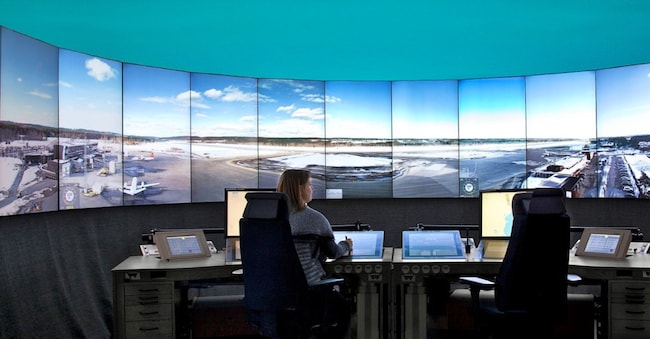
However, even in Europe the shortage of personnel remains the dominant theme, while technology is advancing to support activities in its various phases, from communicating with pilots to making quick decisions in difficult situations and with complex information. Such as the management of war borders that reduce the space for manoeuvre and complicate flight control. And in the future, sub-orbital flights will have to be supervised, the aero-taxis currently confined to the Grottaglie airport in the test phase.


