
Planes, 40,000 cancelled flights and jet fuel sting
On the industry accounts comes the doubling of the spot price of fuel

Key points
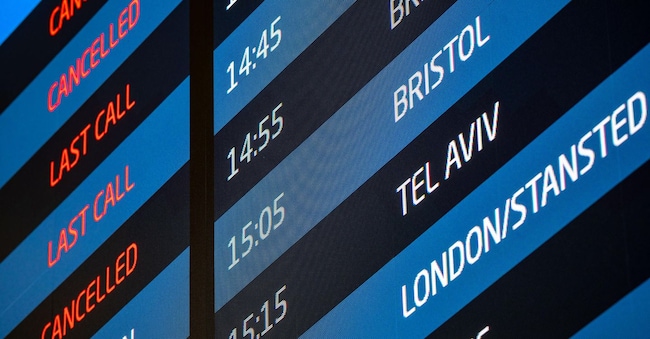
Operation 'Epic Fury' is shaking up the world of air transport, causing airline stocks to plummet dramatically. Despite some timid attempts at recovery by the Gulf carriers, which have started flying again with a limited number of flights - yesterday about 159 from Dubai, 29 from Abu Dhabi, 51 from Muscat and 10 from Doha in Oman compared to a thousand daily flights before 28 February - in fact airspace in the area is still closed. Remaining open are Oman and Saudi Arabia from where most of the repatriation flights, organised by the governments, are carried out, Riyad and Muscat being the closest airports to the crisis areas. A wave that will not subside and has led to 40,000 flights being cancelled since 28 February, the biggest upheaval in the sector since the pandemic. Uncertainty is beginning to mount among insiders as hopes of a quick resolution to the conflict fade. And inevitably the damage is being counted. The most immediate is the rise in the price of oil, but for the airline industry there is much more: from hedging contracts, to network exposure to Middle Eastern and Asian destinations, to non-airline activities offsetting core ones, all of which determine which airlines are better protected and which are not in the current crisis.
The increase in jet fuel
Airline stocks yesterday fell from a low of 2 per cent to a high of 8 per cent, but since 28 February the declines have been in double figures: easyJet -14 per cent, Air France-KLM -20 per cent, Ryanair -7 per cent, Lufthansa -15 per cent, Wizz Air -30 per cent, IAG -16 per cent, Delta Air Lines -10 per cent. A tension mounted with the rise in oil prices since the beginning of the conflict, with Brent at around $100 per barrel. However, aircraft need aviation fuel, which has risen most sharply in recent days, signalling the scarcity of refinery processing: the differential between the spot price of oil and jet fuel (the so-called crack to jet) "has increased considerably as the refining 'crack' has risen from $25 to $100 per barrel, essentially doubling the spot price of jet fuel. However, the futures curves suggest an easing of prices by the end of the summer,' explains Bernstein analyst Alex Irving, a yardstick often used for hedging contracts.
European airlines, unlike American ones, use hedging contracts to cover themselves against these price spikes, but not all of them hedge themselves in the same way. Moving ahead of its competitors was Ryanair, the Irish low-cost airline that renewed its hedging contracts before the outbreak of the conflict with hedges to 2027 for about 80% of its fuel needs. Its ceo Michael O'Leary has already said that it will use this advantage not to increase air ticket prices, in a summer when European destinations will be preferred to long-haul ones. Lufthansa is also among the carriers with the highest coverage ratio at around 77% for 24 months. After all, fuel accounts for 35% of the total costs of low-cost airlines and 20% for legacy airlines. All European carriers, to a greater or lesser extent, have adopted hedging contracts, at least since the Covid crisis, unlike American carriers which have not covered these risks for 20 years, preferring to pass on any increases or decreases in this cost item directly to the price of air tickets.
The network factor
The exposure of the network to destinations to the Middle East and Asia weighs in assessing coverage of the crisis. Among the European companies, the most exposed is the Hungarian low-cost carrier Wizz Air which, despite the closure of its joint venture in Abu Dhabi, has staked 8% of its network on this area (Israel, Jordan, Saudi Arabia and the United Arab Emirates) and is the only one to have already announced a downward revision of its 2026 profits by €50 million precisely because of the crisis in the Gulf. Lufthansa, IAG and Air France-KLM have respectively 3.5%, 3% and 2.2% of the scheduled air traffic for the region, Ryanair only 0.6% with flights to Amman in Jordan which it has not cancelled so far despite the fact that the route to Tel Aviv is not among the safest at this time. Easjet, on the other hand, has no exposure.


