
Airport Plan, 305 million passengers expected by 2035
Presented in Rome, the strategic document foresees the creation of 13 integrated systems to replace the 41 current airports. The development of intermodality between rail and air, digital control towers and electric vertical take-off aircraft are planned

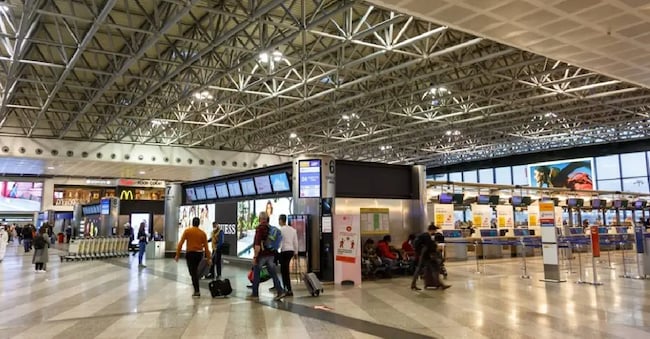
Thirteen integrated systems will be created to replace Italy's current 41 airports: this is envisaged in the new National Airport Plan for 2026-2035, which estimates 305 million passengers from the current 230 million by then. Long awaited by operators, the plan takes its cue from the experience of the Puglia region and is set to revolutionise the Italian transport system.
The strategic document drawn up by the Mit and entrusted to Enac was presented in Rome in the presence of the Minister of Infrastructure and Transport, Matteo Salvini, and institutional representatives, sector operators and social partners. The idea is to overcome the concept of catchment area by focusing on the capacities of airports, including smaller ones, while safeguarding local realities. Sustainability, digitalisation and technological innovation are the pillars on which the plan is based, leaving room for intermodal integration with the railway system to improve accessibility and reduce environmental impact.
The project identifies several strategic areas: North-East, North-West, Milan with the airports of Linate and Malpensa, Emilia-Romagna, Tuscany, Lazio, Rome Fiumicino, Campania, Apulia, Calabria, Western and Eastern Sicily and Sardinia. Particular attention is devoted to the development of cargo traffic, today concentrated mainly on Milan Malpensa, with the aim of extending it to the airports of Brescia, Grottaglie, Rome and Bologna.
The idea of integrated airport areas stems from the experience of Apulia, where the regional airports - Bari, recognised as being of international importance, Brindisi, Foggia and Taranto-Grottaglie - have for years been the first in Italy to adopt a synergic management model. As the president of Aeroporti di Puglia, Antonio Maria Vasile, explained: 'Networking Puglia's airports according to the logic of cooperation, sustainability, intermodality, digitalisation, overcoming a fragmented vision of the airports, has allowed us to strengthen Puglia's competitiveness. The fact that our model, Italy's first and only airport network, is taken as a reference is a source of pride
The plan focuses on the themes of sustainability, through the use of alternative fuels, and digitalisation, with the development of digital control towers: the first digital control tower is located in Brindisi from where the traffic of 13 minor airports is controlled. Special attention is also paid to intermodality, with the integration of air and rail transport. The document also includes the future of urban mobility, with electric vertical take-off aircraft (eVTOL), designed to improve connectivity between cities and airports, and the spaceport: Grottaglie will be a hub for suborbital flights and new aerospace activities.


