Enac Report

Airports, over 229 million passengers in 2025 (+5%)

Low cost airlines dominate with 63% of passengers (+6% over 2024). Fiumicino first airport and over 50 million passengers. Traffic doubled in 20 years

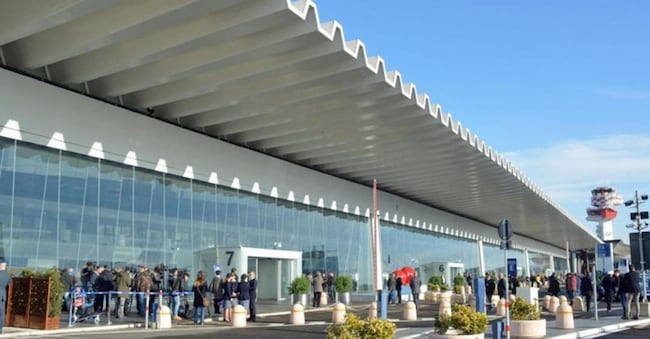
L’aeroporto di Fiumicino ha superato i 50 milioni di passeggeri per la prima volta nel 2025

3' min read

Translated by AI
Versione italiana

3' min read

Translated by AI
Versione italiana

Important increase in passenger traffic in 2025 with total volumes of 229.7 million and +5% over 2024. Cargo flights are also on the rise with over 1.2 million tonnes and a +2% increase over 2024. Rome Fiumicino airport is confirmed as the leading airport for passenger traffic with about 50.9 million and a 22% share of total traffic.

Low-cost airlines are confirmed as the dominant item, having carried 63% of total passengers, amounting to 145.4 million passengers (+6% compared to 2024), while traffic on traditional carriers stood at 37%, amounting to 84.3 million passengers (+3% compared to 2024). These are the figures published by Enac on airport traffic in 2025.

Loading...

The distribution of passenger traffic by geographical area shows that international traffic (EU and non-EU) represents the largest component with 157.2 million passengers, or 68% of the total: EU 43%; non-EU 25%. Domestic traffic, on the other hand, recorded 72.5 million passengers, or 32% of the total.

Traffic by airport (domestic, international EU and non-EU) shows a discrete concentration in the top five airports, which account for over 54% of passenger traffic. The main airport by traffic volume is confirmed as Rome Fiumicino, which for the first time exceeds the 50 million passenger threshold, with 50.9 million and a 22% share (unchanged vs 2024). It is followed, in order, by Milan Malpensa (14%; 31.million), Bergamo Orio al Serio (7%; 17 million), Naples Capodichino (6%; 13 million) and Catania Fontanarossa (5%; 12 million).

With regard to the cargo segment, Milan Malpensa airport is confirmed as the leading airport with more than 764 thousand tonnes handled and a share of 61 per cent.

The geographical area with which the greatest flows are observed is the European Union (43%), while the first country in terms of volume is Spain, with a 14% share (equal to 22.5 million passengers) and Rome Fiumicino - Madrid Barajas as the main route. Internationally (EU & non-EU) they are followed, in order, by the United Kingdom (10%; 16 million), France (9%; 14 million), Germany (9%; 13.5 million) and Poland (4%; 7 million). Overall, connections with origin or destination the first five countries account for about 49% of international traffic and show positive rates of change compared to 2024, with peaks of +32% for Poland, which overtakes the United States in the top five".

domestic traffic, with its 72.5 million passengers (32% of total traffic), shows substantially unchanged volumes compared to the previous year. Rome Fiumicino is still the leading airport in terms of traffic volumes, with a 14% share, equal to about 10 million passengers. International traffic, with 157.2 million passengers (equal to 68% of total traffic), grew by 8% compared to the previous year. The geographical area with the most traffic is the European Union (43%), with Spain as the first country and Rome Fiumicino - Madrid Barajas as the main route.

"The increase in air traffic by 2025," commented Enac President Pierluigi Di Palma in a note, "is a strong and unequivocal signal of the sector's definitive recovery and the centrality of air transport for the country's economic growth, competitiveness and connectivity. The sector confirms itself as a strategic lever for the national economy, capable of supporting tourism, business and international competitiveness', highlighting the growth of smaller airports such as Reggio Calabria, Rimini, Pescara and Trieste.

For the President of Assaeroporti, Carlo Borgomeo, "The 230 million passengers that will transit through Italian airports in 2025 represent a very important goal for the sector, which has more than doubled its volumes in twenty years, from 113 to 230 million travellers. This result confirms the solidity of the sector and its resilience, even in a complex global context, marked by geopolitical tensions and protectionist measures that condition international flows". Assaeroporti added that "Cargo also recorded significant performances, consolidating its role in the logistics sector, which is crucial for the competitiveness of Italian companies. Our hope,' Borgomeo concluded, 'is that the institutions can accompany and encourage this growth path'.

Copyright reserved ©
Loading...

Brand connect

Loading...

Newsletter

Notizie e approfondimenti sugli avvenimenti politici, economici e finanziari.

Iscriviti