
Airports, here are the top ten world mega airports: for Europe there is only London but for international transit
In a study, air traffic scenarios with staggering numbers. Atlanta tops the charts. Dubai and Dallas but the race of Asian and Middle Eastern hubs is unstoppable. Giuricin (Bicocca): 'Italy must invest in infrastructure'

Key points
The geography of global air traffic has changed and the Old Continent risks being left behind. This is what emerges from a study by Andrea Giuricin, transport economist and researcher at Bicocca University, presented on 17 November in Milan during the conference 'Airport infrastructures and the development of air transport' organised by Cesisp - University of Milan-Bicocca for the Public Finance course. The dossier speaks of a 'centre of gravity of air transport that is shifting eastwards', while the large Asian and Middle Eastern airports 'are dominating the sector with colossal investments, including public ones'. In 2006, 36 million passengers were enough to enter the world's top 20, today 50 million are no longer enough, and the threshold will gradually rise towards 100 million.
The top ten: here are the top positions
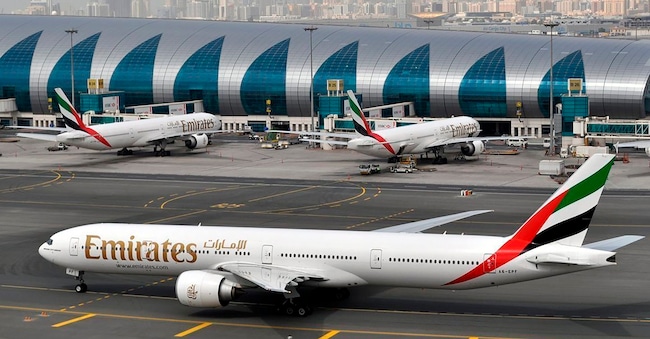
To understand what scale of numbers we are moving on, one has to look at the rankings. In 2024 the world's largest airport remains Atlanta with 108.1 million passengers, followed by Dubai (92.3 million) and Dallas-Fort Worth (87.8 million). No European airport appears in the top ten. However, London Heathrow is among the international airports, where it is second with 79.2 million, behind Dubai and ahead of Amsterdam with 70.7 million.
Italy stronger than France and Germany in the post-pandemic
Between 2019 and 2024, Italian traffic grew by 13.8%, or 33 million more passengers than before. A result that 'allowed Italy to overtake France in terms of total passengers'. France, the Netherlands, and Germany, on the other hand, recorded drops of 0.8%, 6.1%, and 12%. "Weighing on this is the loss of competitiveness towards Asia", also due to the closure of Russian air space. Turning to Italy, Rome Fiumicino remains the pivot of the Italian system: it has increased from 30 to 49 million passengers and is expected to exceed 50 million in 2025. The Roman airport is among the top twenty in the world for international traffic, ahead of Munich and New York's JFK. In the last five years it has grown by 40%, more than Madrid, Dubai and Paris: 'Only Istanbul and Doha have done better'.
Who dominates today: Istanbul, Dubai, Doha
And one can also see why. In the 2024 world top ten, the superstars are five Asian or Middle Eastern airports, a reversal from 2006, when the ranking was dominated by the United States and Europe. According to the study, 'the relevant airports have completed investments worth tens of billions of euros', supported by long-term national strategies that have expanded runways, terminals and capacity. Dubai is building a new 200 million passenger airport; Istanbul is also aiming for 200 million; Riyadh and Addis Ababa are planning 100 million airports. Heathrow, in the long run, envisages scenarios of up to 150 million.


