
Airspace violations, how EU countries respond to threats
Airspace violations are increasing across Europe, from unauthorised drones to unknown aircraft. Italy, Spain, Austria and other countries are upgrading radar networks, interceptor fleets and anti-drone systems
by Silvia Martelli (Il Sole 24 Ore), Martin Tschiderer (Der Standard, Austria) and Enrique Andrés Pretel (El Confidencial, Spain)
 Aggiungi Il Sole 24 Ore
ai preferiti su Google
4' min read
4' min read
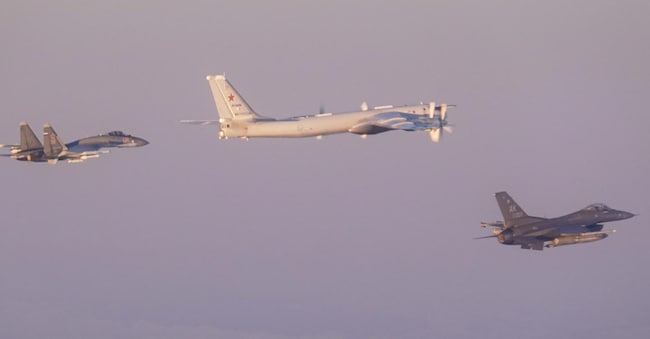
In recent months, European airspace has seen a significant increase in violations, both by unidentified drones and Russian jets. On 19 September 2025, three Russian MiG-31 fighter planes violated the Estonian airspace, provoking the intervention of Italian F-35 fighter jets that took off from the Ämari base. During the raid, which lasted 12 minutes, the Russian pilots responded with a salute gesture before retreating towards Kaliningrad.
A few days earlier, on 10 September, some 23 drones violated Polish airspace, leading to at least four of them being shot down by allied forces. The incident prompted Poland to invoke Article 4 of the NATO Treaty and launch Operation Eastern Sentry to strengthen air defence.
Denmark also experienced similar incidents: on 24 September, Aalborg airport was temporarily closed due to unauthorised drones, following a similar pattern to that observed two days earlier in Copenhagen.
In response to these threats, several European countries are enhancing their surveillance and air defence capabilities. These events highlight the growing need for common strategies and advanced technologies to secure European airspace in a context of increasing hybrid threats.
Austria
In Austria, airspace surveillance is entrusted to a mix of ground radar and interceptors. The 15 Eurofighters of the Austrian Armed Forces are responsible for neutralising drones detected by the national radar system Goldhaube. The main problem concerns small objects flying at low altitude, which are difficult to identify in time, although drones detected in time can be shot down with conventional weapons.


