
Aitala (International Criminal Court): 'there is an attack on the civilisation of rights'
The vice-president of the Cpi in Bologna: 'in the process of dismantling certain principles; there will be a bill to pay'

3' min read
Key points
3' min read
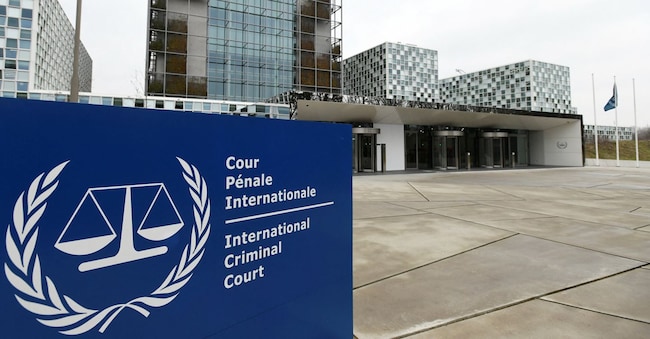
"Where were you? Where were you'? Rosario Aitala repeats it in English and Italian, the question that 'takes his sleep away'. In a few years' time, history will ask where jurists and intellectuals were while 'an attack on the civilisation of rights was taking place': how will this time in which 'a coincidence of interests between autocracies and some democracies declares war on an order of civilisation' be described? This is precisely what is happening, according to the judge and vice-president of the International Criminal Court, 'the dismantling of certain principles and in a few years time there will be a bill to pay'.
The lesson of the Cpi vice-president in Bologna
He speaks as a jurist at the University of Bologna, without going into specific cases, which he has dealt with, such as the arrest warrant for the Russian president Vladimir Putin or for the Israeli president Bibi Netanyahu, and without touching on the dispute with the Italian government over the failure to hand over the Libyan general Al Masri. All hot dossiers, such as Hungary's exit from the ICC or most recently, weeks after the Alma Mater seminar, the US sanctions against four judges.
The attacks on the Court
.In the Aitala technician's reflections, however, there is all the bitterness over 'the insults and accusations levelled at the Court of politicising and conducting a hybrid war'. "The war on the civilisation of legality is the war on what the law represents," began Attila Tanzi, professor of international law at the university; "the attack on the Court," agreed Michele Caianiello, a colleague in criminal procedural law, "is part of a moment of anti-globalisation of rights as well. In political jargon it would be called sovereignism.
So the choice of 'some states not to cooperate because they consider the International Court to be a political body' should also be read in this perspective, analyses Aitala, who admits that he is 'not surprised' by some failures to cooperate in situations of potential conflict between 'even valid internal political interests' and rights. Such as the case of Al Masri, whom Italy did not hand over to The Hague, but escorted back to Libya by state flight?
The International Crimes Code Commission
.He does not say so, but precisely in order to avoid situations of this kind, 'which would damage both the government and justice', the interministerial commission for a code of international crimes - of which Aitala was a member together with, among others, Emanuela Fronza, a lecturer at the University of Bologna and promoter of the seminar - had considered the advisability of 'not providing for a request from the Minister of Justice as a condition for proceeding in the case of crimes committed elsewhere'. Of the work of that body, set up by the then Guardasigilli Marta Cartabia and confirmed by Carlo Nordio, traces were lost after the announcement of an albeit partial approval in the Council of Ministers in spring 2023.


