
South Korean video art at the Masi
The country's culture finds international acceptance: eight artists presented from three generations
"K-NOW! Korean Video Art Today", hosted at the Museo d'arte della Svizzera italiana in Lugano, is a reflection of a fact: South Korean culture is becoming a global trend. In cinema, titles likeBong Joon-ho's 'Parasite' andPark Chan-wook's films have opened up a new debate; in literature, Han Kang's 'The Vegetarian'; then K-Pop music, skin-care and the myth of technological progress. In visual art too, some fairs are focusing on Seoul - from Frieze Seoul to Art-ONO -, while Korean video art is being watched with increasing attention. A corner dedicated to Korean culture and literature has even been set up at MASI. The exhibition at MASI, curated by Francesca Benini and Je Yun Moon, presents eight artists (the three plus one present in the collective) spanning three generations: the master Park Chan-kyong (1965), then the one born between the years 1970-1980 with Ayoung Kim (1979), Jane Jin Kaisen (1980),Sojung Jun (1982),Onejoon Che (1982) and Heecheon Kim (1989) and, finally, the younger 1990s represented by Sungsil Ryu (1993) and the eobchae collective with Kim Nahee, Oh Cheon-seok and Hwi Hwang. Most of the galleries contacted made no disclosure of the values of the artists represented in the Lugano exhibition.
Presence in Venice
Already at the Venice Biennale, which opened on 9 May, Liberation Space transformed the Korean Pavilion at the Giardini into a fluid and relational platform. The project, by Binna Choi with artists Goen Choi and Hyeree Ro, recalls both the liberation from Japanese colonial rule and the recent declaration of martial law by the South Korean president.
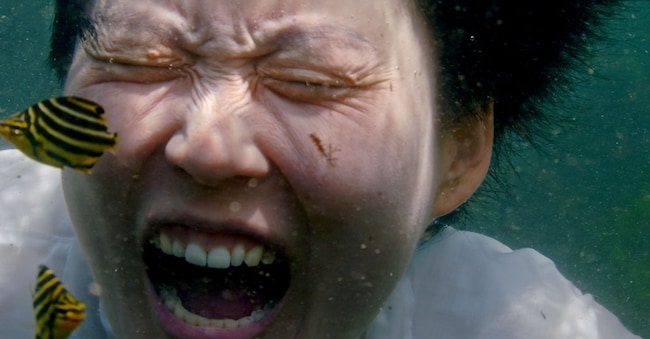
Among the most interesting presences at the Arsenale, included in the exhibition "In Minor Keys", is Yo-E Ryou. He has exhibited in spaces such as LAXART, Beaconsfield Gallery and Alternative Space LOOP in Seoul. Following a breakdown during her Covid period, she left New York and moved to Jeju Island, coming into contact with the haenyeo, women who dive without oxygen to a depth of ten metres to fish. "Breath Orchestra" reflects on breath and silence, the body and community life.
The exhibition in Lugano
The work refers in subject matter to the two synchronised videos that close the MASI exhibition: 'Offering' and 'Wreckage' by Jane Jin Kaisen, represented by Martin Asbæk Gallery (Copenhagen). In 'Offering', apneist women from Jeju dance underwater with sochang, a white fabric symbolising the life cycle. The flap of this veil passes over anemones and corals, mingling with their colours. 'Wreckage', on the other hand, reactivates the memory of the 1948 Jeju massacre through underwater images intertwined with propaganda footage of the US military. The repression of the uprising led South Korean government forces to drown numerous civilians opposed to partition along the 38th parallel of the Korean Peninsula. Making the work even more distressing is the lament of shamanKoh Sunahn, who survived the massacre.
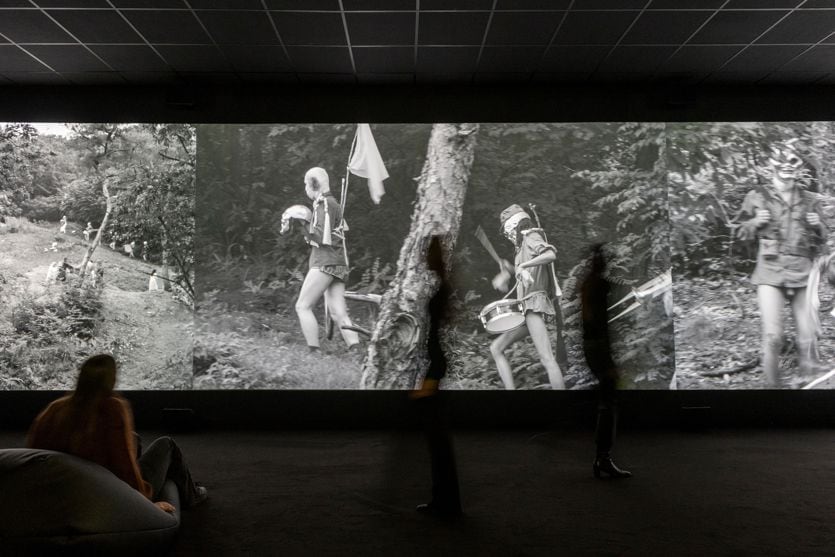
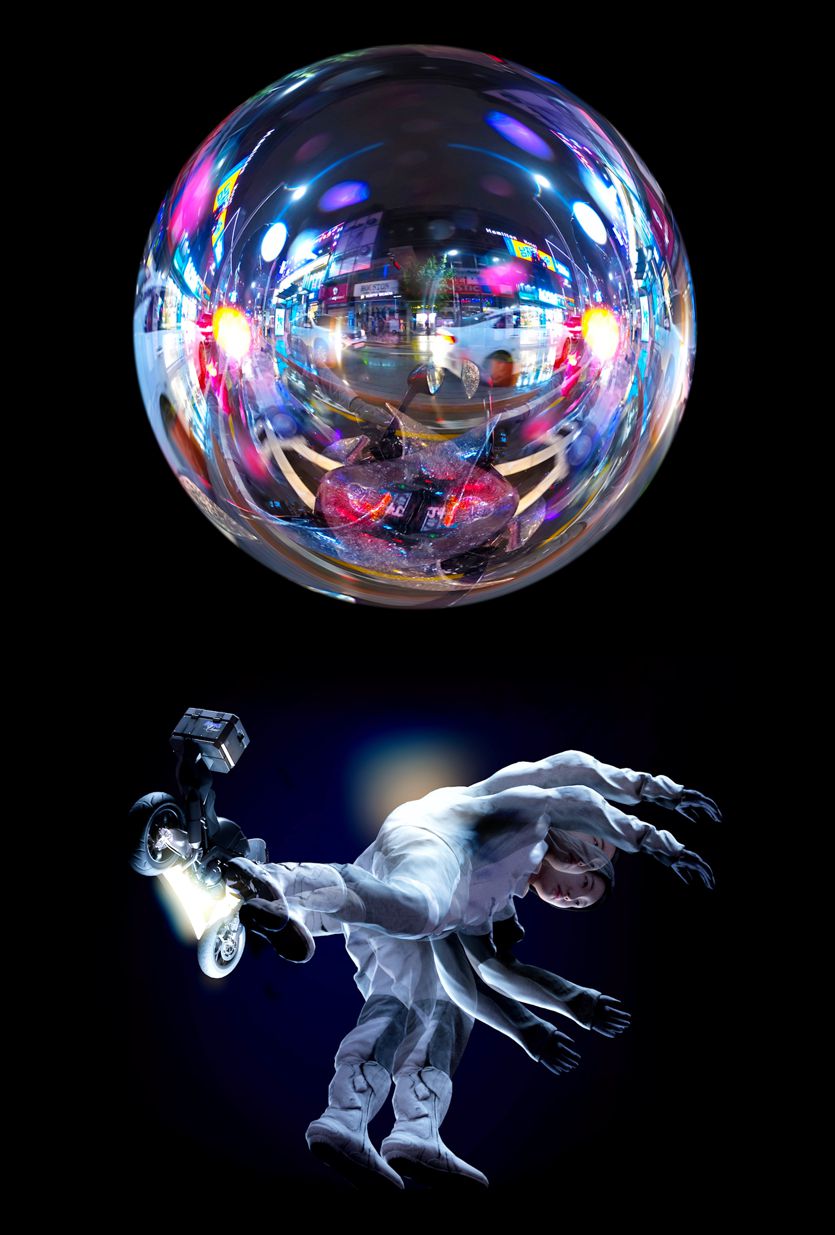
Chan-kyong Park is considered an 'institutional blue chip' artist in the Asian context. He is represented by Kukje Gallery in Seoul and has also exhibited at Tina Kim Gallery in New York. "Citizen's Forest", a three-channel video from 2016, develops a funeral procession immersed in a wooded landscape traversed by rituals, masked figures and apparitions of maidens in school uniforms. The work alludes to the Donghak Peasant Revolution, the Korean War, the Gwangju Uprising and, above all, the 2014 Sewol ferry sinking, in which 304 people, mostly students, died. Onejoon, who works with Hakgojae Gallery in Seoul, is known for his projects on postcolonial Asia. "Made in Korea", 2021, was created within the AfroAsia Collective, founded with curator Sun A Moon. The video follows the performance of Osinachi, a Nigerian musician employed in a Dongducheon textile factory who chooses to sing in Korean. The result is a hybrid piece between African highlife and trot, a Korean folk genre. Also in the exhibition, Sungsil Ryu, who works with P21 Gallery and DOOSAN Gallery, stages a virtual streamer that introduces the audience to the 'first-class citizenship' of contemporary Korea. Between glittery pop-ups, kitsch aesthetics and influencer language, the artist unmasks the toxicity of a competitive capitalism based on appearance. The video installation by Sojung Jun (Busan, 1982) starting from a fertile green landscape on the border between South and North Korea, a military zone, reflects on communities on the margins of society such as migrants and political refugees. The area depicted in his video, the 4 km wide and 250 km long DMZ is only accessible to researchers studying climate change, Jun has also studied and included in the video the migratory movement of some birds arriving from Siberia and finding refreshment here for the winter period. Ayoung Kim is also among the strongest names on the international scene today. Represented by Gallery Hyundai, she has exhibited among others at Hamburger Bahnhof, MoMA PS1 and the Venice Biennale. After the LG Guggenheim Award, the prices of the works have risen sharply. The video work "Delivery Dancer's Sphere" follows a Seoul rider trapped in a bug in the delivery system that doubles her into her own twin-clone, causing her to accumulate delays. The goal is to get to the address as quickly as possible so as not to displease customers and earn good reviews. The work reflects on the alienation of the gig economy and the algorithmic pressure of work performance. Heecheon Kim is represented by BB&M Gallery and has exhibited at the Centre Pompidou-Metz and the Asian Art Museum. The 1990 work 'Ghost', in virtual reality, follows a weightlifter traumatised by a serious injury. The viewer, wearing the visor, feels trapped in the thoughts of the athlete and perceives his own body as fragile and fallible. Kim thus demonstrates how new technologies can increase - not weaken - physical self-awareness. Finally, 업체eobchae, a collective composed of Kim Nahee, Oh Cheon-seok and Hwi Hwang, moves between speculative fiction and media art. After the DOOSAN Artist Award in 2021, their market has grown rapidly: the videos are being offered for up to around 20 million South Korean won (11,480.51 euros): "ROLA ROLLS" (2024) imagines a future without fossil resources. So we ask ourselves a question: can a video generated entirely by software still be called a 'video'?

