
The Water Resilience Lab is launched: a new model for managing resources in the Arno catchment area
The Kering Group’s initiative, which is open to companies and institutions, involves the issuance of resilience bonds by companies to raise the necessary funding

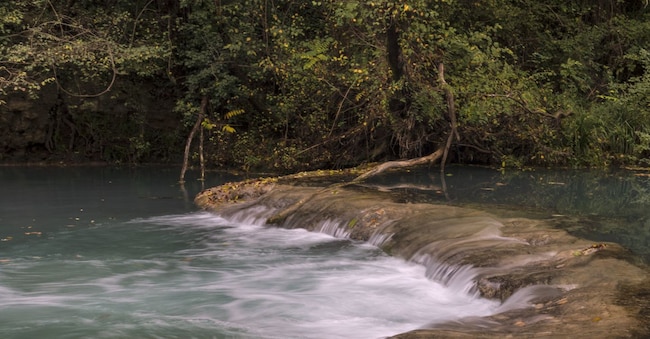
The action plan for the “Water Resilience” experimental laboratory is now ready– Arno River Basin, launched a year and a half ago on the initiative of the French luxury group Kering to coordinate public institutions, businesses, universities, the scientific community and financial operators in interventions along the River Arno, with the aim of protecting the basin – which stretches from the Casentino, crosses the Arezzo plain, flows through Florence and Pisa, and empties into the Tyrrhenian Sea – from drought, floods and pollution the basin that starts in the Casentino, crosses the Arezzo plain, flows through Florence and Pisa, and empties into the Tyrrhenian Sea.
“Collaboration between different stakeholders is essential to bringing about positive change,” explained Marie-Claire Daveu, Kering’s Chief Sustainability and Institutional Affairs Officer, whilst presenting the workshop at Palazzo Medici Riccardi in Florence, during the week marking the 60th anniversary of the flood that devastated the city and triggered an extraordinary outpouring of solidarity and international aid. “What has been lacking so far is a common platform,” added the executive, “which will coordinate various projects, measurement metrics, and actions by both the public and private sectors, and develop an innovative financial model.”
This innovation, to be combined with philanthropy, public funding and crowdfunding, takes the form of ‘resilience bonds’ – bonds that will be issued by companies or consortia to support these initiatives. “We are seeking to engage the insurance and banking sectors, as well as the business community,” explained Alessandro Leonardi, CEO of Etifor, a spin-off from the University of Padua specialising in consultancy and research in the field of environmental sustainability, which will manage the laboratory. “Our aim is to establish water resilience as a new asset class for investment,” Leonardi clarified. “We want to convert future risks into present value.”
The Water Resilience Lab’s funders include, in addition to the Kering Group, the other French luxury group LVMH, the Burberry brand, the artisanal perfumery brand Giardini di Toscana, and Italpreziosi, the Arezzo-based gold bullion manufacturer. In addition to these, there are organisations supporting individual projects.
So far, 1.5 million euros have been raised, more than 20 per cent of the amount needed to carry out the first six planned projects (worth six million euros), including four retention basins to collect water and reforest an area spanning Prato and Pistoia, along the Bisenzio and Ombrone rivers, as well as the reforestation of the Era river basin near Pisa. The ultimate aim is to retain 48 million cubic metres of water by 2050 to mitigate the risk of flooding in the Arno catchment, reducing peak flood levels by 16.8 per cent: the laboratory will take on 25 per cent of this challenge.

